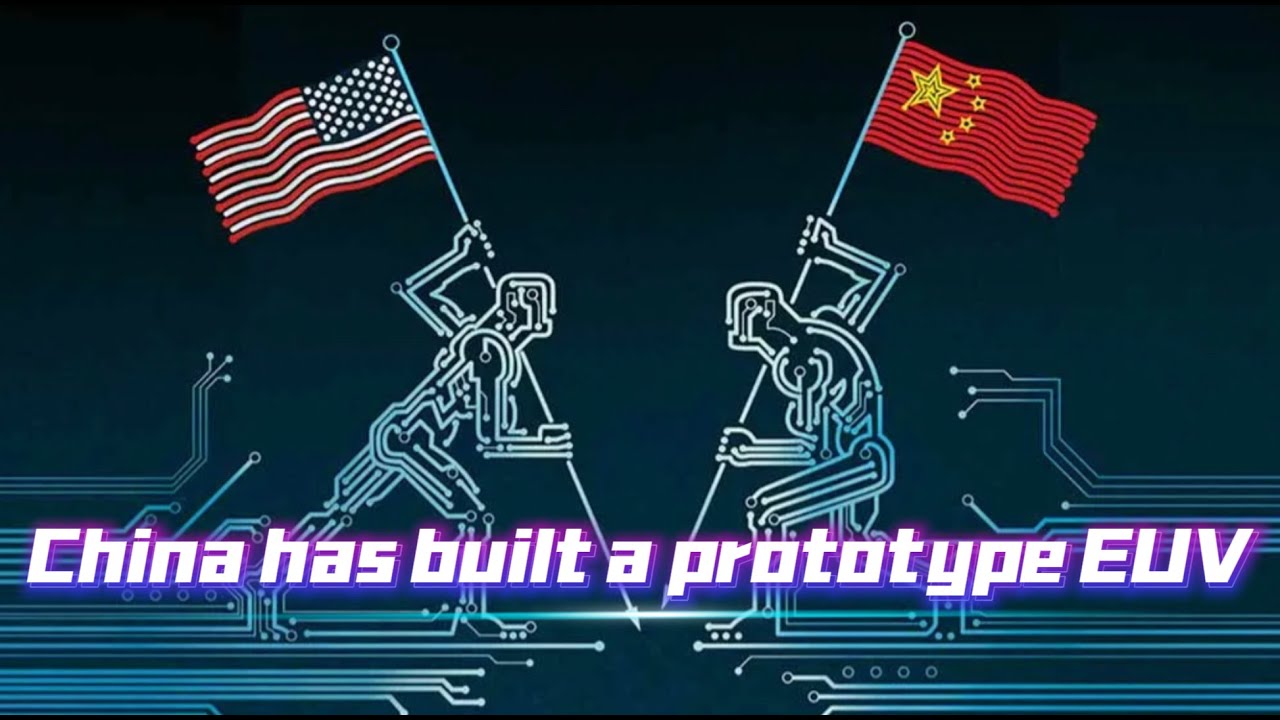
Reuters released an exclusive report on December 17, 2025, stating that China completed a prototype of an extreme ultraviolet (EUV) lithography machine in early 2025 at a highly confidential laboratory in Shenzhen, and it is currently in the testing phase. This prototype was built by a team including former ASML engineers through reverse engineering. It can already operate normally and generate extreme ultraviolet light, but it has not yet produced usable chips.
Actually, I reported on this matter in a video a long time ago, because such a major event cannot be kept completely secret in Shenzhen’s tech circles. Moreover, Reuters’ report is almost identical to what I described in my video at the time, because I have some connections in Shenzhen’s R&D circles. They are not part of Huawei’s core leadership, but they are senior R&D personnel. Now it is the end of the year, so the initial trial production goals should have been completed with actual usable chips available. Otherwise, they would not release information to foreign media.
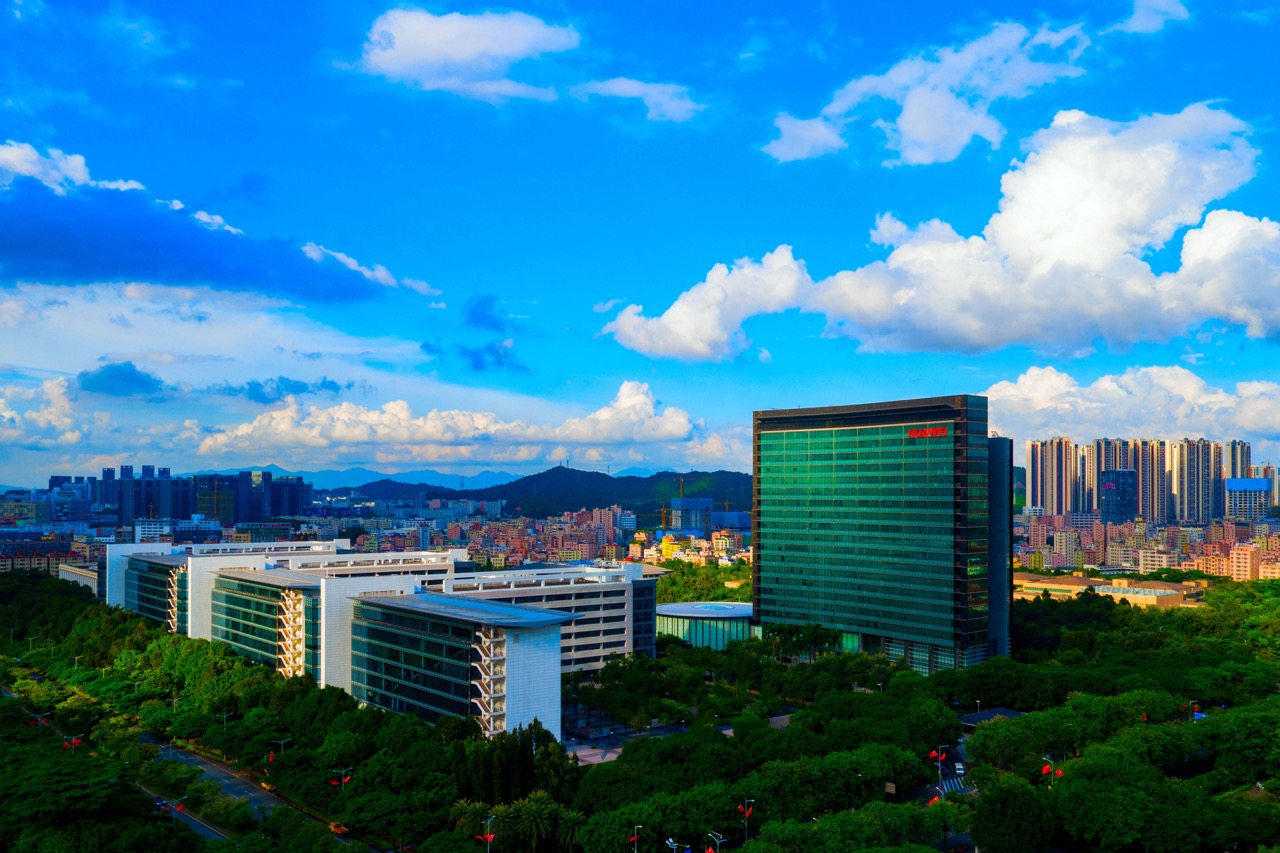
Specifically, the Chinese government at the highest level mobilized a massive research team, including research institutes and universities from various provinces, using a national mobilization approach similar to the US Manhattan Project to advance EUV lithography machine development. Huawei’s role was coordination and scheduling, because only Huawei has the strongest technical capabilities and rich experience in chip design and production.
Later, news emerged that the Shenzhen R&D cluster led by SiCarrier successfully tackled EUV, while the industrial cluster represented by Shanghai UEA tackled DUV. Currently, UEA’s DUV has been integrated into SMIC’s production lines for testing and production, basically achieving technology implementation. As for the EUV handled by Huawei and SiCarrier, news of successful technical verification came out a few months ago. Now even foreign media know about it, so trial production should begin in 2026.
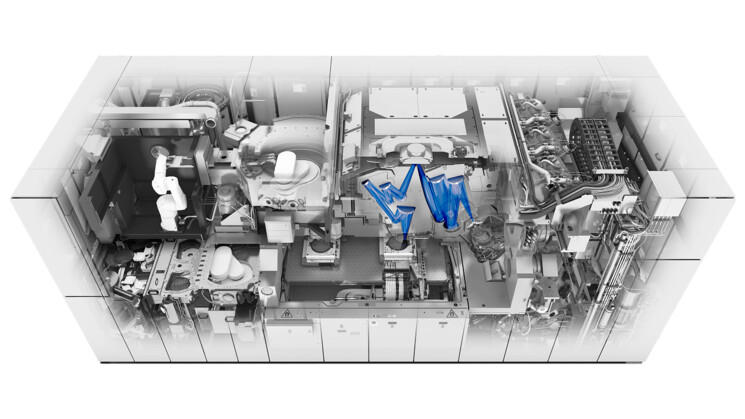
Just as I guessed in my previous video, China’s EUV is much larger than ASML’s products, almost filling the entire workshop. Many components were dismantled by China from second-hand lithography machines or even new ones, but China is rapidly replicating them through reverse engineering. The only difficulty is the EUV light source. Previous rumors said it was based on LDP, but Reuters’ information states that it uses the same LPP light source as ASML, though the volume is very large due to immature processes.
Reuters also reported that core personnel involved in the R&D have strict confidentiality agreements, so the leak to foreign countries should be an official active release. This marks that the technology is already independently controllable, with only the final step of engineering advancement left. China is completely unafraid of the US knowing the news and intensifying blockade efforts.
From the various rumors constantly emerging from Shenzhen’s R&D circles, I can roughly summarize the following. A large number of overseas Chinese engineers returned to China to participate in the R&D out of patriotism. These people had worked for many years at large companies such as Intel, TSMC, and ASML, scattered across different departments with good experience. Before being blocked, Huawei had also accumulated world-class experience in chip design and joint tuning with foundry TSMC.
Therefore, although the entire project was extremely difficult, China still overcame it quickly. This is because, unlike decades ago when overseas Chinese only brought their wisdom back to the country and developed nuclear weapons and satellites in primitive ways under backward industrial conditions, today’s China is the world’s factory with industrial capabilities, especially large-scale engineering capabilities, that are second to none and far ahead. The rewards that the Chinese government can offer these talents are also far better than in the past. Chinese high-end talents generally have strong patriotic sentiments, unlike Indian talents who basically do not return to their homeland after immigrating. Chinese people always hope their country will return to its historical peak.
Combined with Huawei’s product release rhythm, here is my prediction. Currently, China should soon completely resolve various issues encountered in trial production of domestic DUV, thoroughly occupy the market for 14nm and above, produce more 7nm chips through multiple exposures, and raise the yield of equivalent 5nm, that is SMIC’s N+3 process, to a good level, solving the problem of chips being usable and sufficient.
The production of Shenzhen’s EUV prototype does not mean it can be quickly put into production. Producing small batches of chips is not a big problem, but the enormous machine body, huge energy consumption, and possibly relatively large errors make its commercial value limited. In the short term, rapid iteration and optimization of the machine architecture are more rational. At least one iteration before investing in production lines for mass production is more realistic. In other words, in the next two to three years, the process advantages of US companies will still be difficult to shake.
However, time is on China’s side. Because improving chip processes beyond 2nm is extremely difficult, with costs rising rapidly leading to declining cost-effectiveness. Currently, even with absolute computing power advantage, the US has not defeated China in the AI field, and the gap between the two sides is getting smaller instead, showing that its technical route is facing bottlenecks. If the US cannot quickly break through the limits of chip processes and find a new revolutionary algorithm architecture, it can only anxiously watch the Chinese get closer.
Huawei leads NVIDIA in optical interconnection technology, which is another detail that cannot be ignored. This allows Huawei to build larger clusters and compete with NVIDIA in absolute computing power. Moreover, China has a huge advantage in electricity, whether in existing generation capacity, ongoing installed capacity construction, types of power supply, technological content, or the modernization level of the grid. China far leads the US. Once China’s EUV is put into production and eliminates the process advantages of US companies, the US technological hegemony will completely collapse.
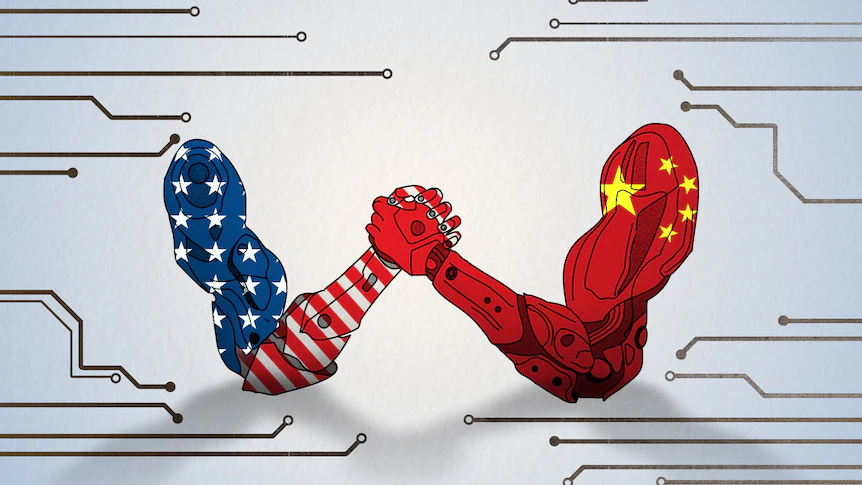
Therefore, the pressure is on the Americans. The Chinese people will never give the Americans a chance to breathe. Who wins the final victory in the technology war may be revealed in the next 2 years. If the US sanctions on Huawei caused China’s technology shock like the Battle of Moscow, then what is happening now is the Battle of Stalingrad. Whoever wins the competition in these two years will dominate the trend of the technology war and lay the foundation for victory.
This channel focuses on efficiency, mainly mocking the Bharat Empire, the clown king Modi, and the witch Palki Sharma, but occasionally releases some rational analysis videos. If you pay attention to my past videos, you will find that almost all my predictions from 1 year ago, whether in politics, economy, military, or technology, have very high accuracy. So I hope those Bharat Empire netizens in the comment section who instruct me on how to speak first download an IQ test set, check their scores before commenting. Otherwise, you will only provide me with more material and suffer my more brutal mockery.
Okay, that’s it for this video. I will share topics related to AI applications, YouTube operations, and online earning on the VoidHunzi channel. Everyone is welcome to follow. Have a pleasant weekend!