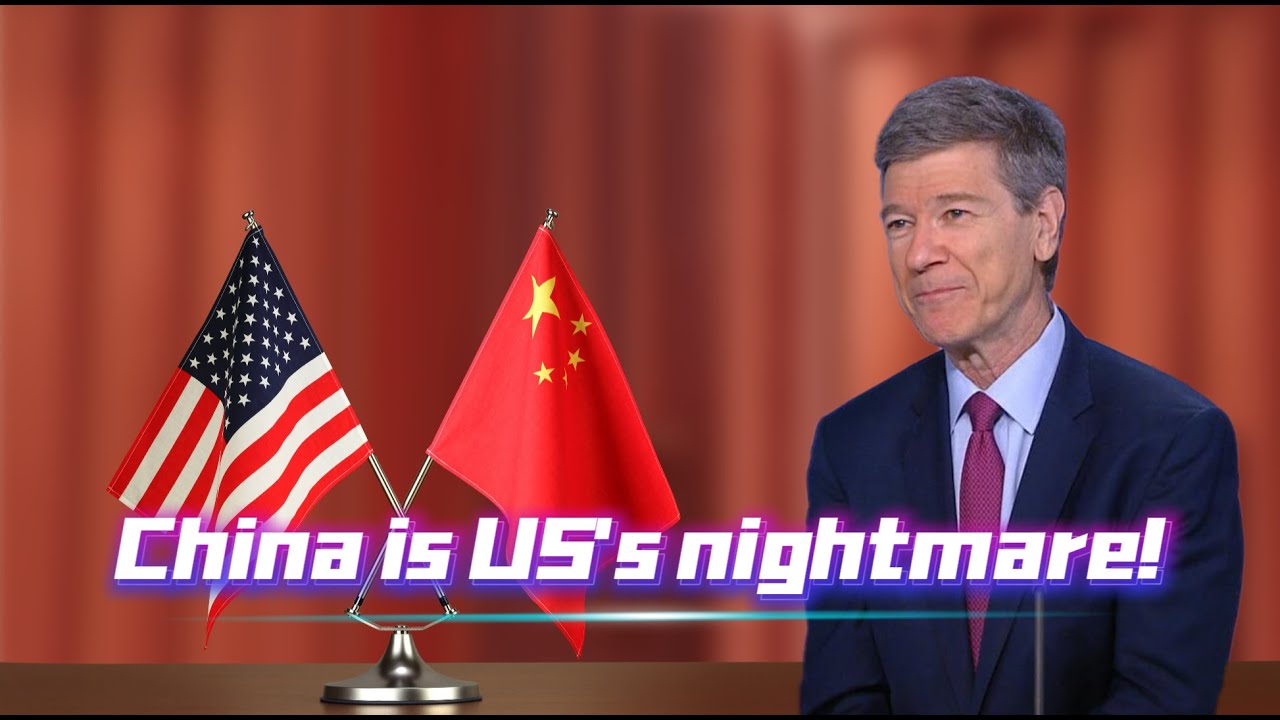
In this video, renowned economist Jeffrey Sachs provides a critical analysis of U.S.-China relations, the rise of China, and the shifting cycles of global geopolitics. He argues that the United States is currently in a “neurotic funk” because it is struggling to adapt to a multipolar world where it is no longer the sole dominant power.
Here is a summary of the key themes discussed:
1. China’s History of Unity and Peace
Sachs highlights that China is a 4,000-year-old civilization with a tradition of statecraft that spans over two millennia. He contrasts China’s historical stability with Europe’s history of constant internal warfare. He points out that, unlike Western imperial powers, China has historically been a non-aggressive state, noting that it went a thousand years without attacking Japan and has not been involved in a war for over four decades. He describes the U.S. perception of China as a threat as a “neurosis” rather than a reality based on China’s actual behavior.
2. The Psychology of U.S. Hegemony
Sachs critiques the American mindset that insists on being “number one” to maintain the ability to dictate terms to the rest of the world. He traces this behavior back to the British imperial model. Following the collapse of the Soviet Union in 1991, he argues the U.S. fell into a delusion of permanent global dominance, failing to realize that economic knowledge and technology would eventually allow other nations—specifically China—to catch up through peaceful trade and development.
3. The Chinese Economic Miracle
The video details China’s unprecedented economic rise. Sachs notes that since 1980, China has grown its economy approximately 40 times over. He asserts that China is now a larger industrial power than the United States and leads in several critical technological sectors, such as electric vehicles and green energy. He uses Tesla’s reliance on its Shanghai Gigafactory as an example of how integral China has become to global technological competition.
4. The End of Three Historical Cycles
Sachs posits that we are at a “hinge moment” in history, marking the conclusion of three major eras:
-
The End of European Dominance: The period of global ascent that began with European sea explorations around 1500 has finished.
-
The End of the British Imperial Age: Which effectively concluded in 1945 following the exhaustion of two World Wars.
-
The End of the American Empire: Sachs argues that the era of U.S. unipolarity is ending right now as the world transitions into a system of mutual respect and shared power.
Conclusion
Sachs concludes by referencing Adam Smith’s 1776 vision of a future defined by “equal force, mutual respect, and social justice.” He suggests that the current global tension stems from the U.S. refusal to accept a seat at the table as an equal rather than a master, calling for a shift toward cooperation instead of conflict.