Last episode I talked about how not to be replaced by AI. I admit it was a bit long-winded. After thinking about it again, the simplest principle is this: if replacing your job with AI does not improve cost-effectiveness or even makes it worse, then you don’t need to worry about being replaced. As long as your job can maintain better cost-effectiveness than AI for a considerable time in the future, you can sleep easy. This episode combines my actual workflow to discuss this topic in detail.
For example, the Mr Hunzi channel is an English-language channel, but my own spoken English only reaches the level of daily conversation with foreigners. It does not support excellent English script writing, let alone delivering an English script fluently in spoken form. I often get stuck on words. Of course, I could practice hard and improve my delivery, but I live in China and communicate with overseas friends mostly in writing. Even if I hired a professional training institution to train my spoken English, it would take more than six months to reach a level suitable for video production, possibly more than a year. However, YouTube and the audience won’t give me that much time to experiment. Long before I master the skill, my channel would already be dead. I could also outsource the reading to professional announcers, but the high cost is something I cannot afford. In this situation, using AI voice becomes a highly cost-effective solution.

AI voice is very suitable for political commentary or tutorial videos because these types of videos do not require complex emotional expression; they only need smooth presentation of ideas. All the large AI models I have set up locally can handle this task very well. Among online services, iFlyTek, Google, Microsoft, and other online AI voice services can also complete the job perfectly. I have used all of them and finally chose the most convenient Microsoft AI voice because its script control is more to the taste of tech enthusiasts and it does not have the content censorship mechanism that iFlyTek has. That said, for many people, Chinese AI voice technology may be cheaper and offer higher cost-effectiveness, and they don’t mind censorship for the content they create. So my choice is just personal preference, for reference only. I make dozens of videos every month and spend roughly ten to twenty US dollars. Although I can generate more customized and higher-quality voices with local AI models, I am a minimalist. Using online services allows me to continue my workflow anytime on any device. My quality requirement is “good enough,” and I don’t pursue perfection. As for local AI being free, I don’t care. Running an extra computer also consumes electricity, and the money saved is negligible.
Therefore, if your job is simple translation, whether text or voice, or if you are a voice actor without much special skill, your work has no difficulty for AI and you will soon be replaced. But if you are a professional translator for large institutions or government agencies, such as a spokesperson for the Ministry of Foreign Affairs, the difficulty of AI replacing you increases dramatically. No large institution or major government would dare hand over work that requires extreme rigor to AI. AI also struggles to express technical terms and emotions perfectly like professional humans do. Note that it is possible to achieve the same effect as professionals using AI tools, but the workload is enormous and not cost-effective.
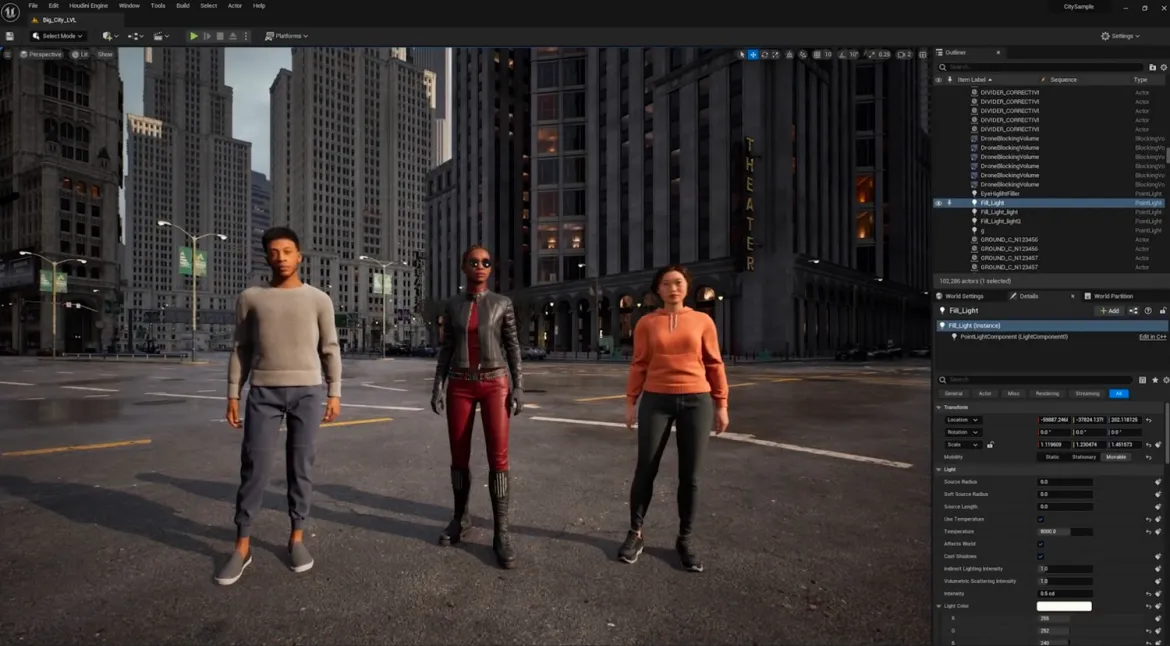
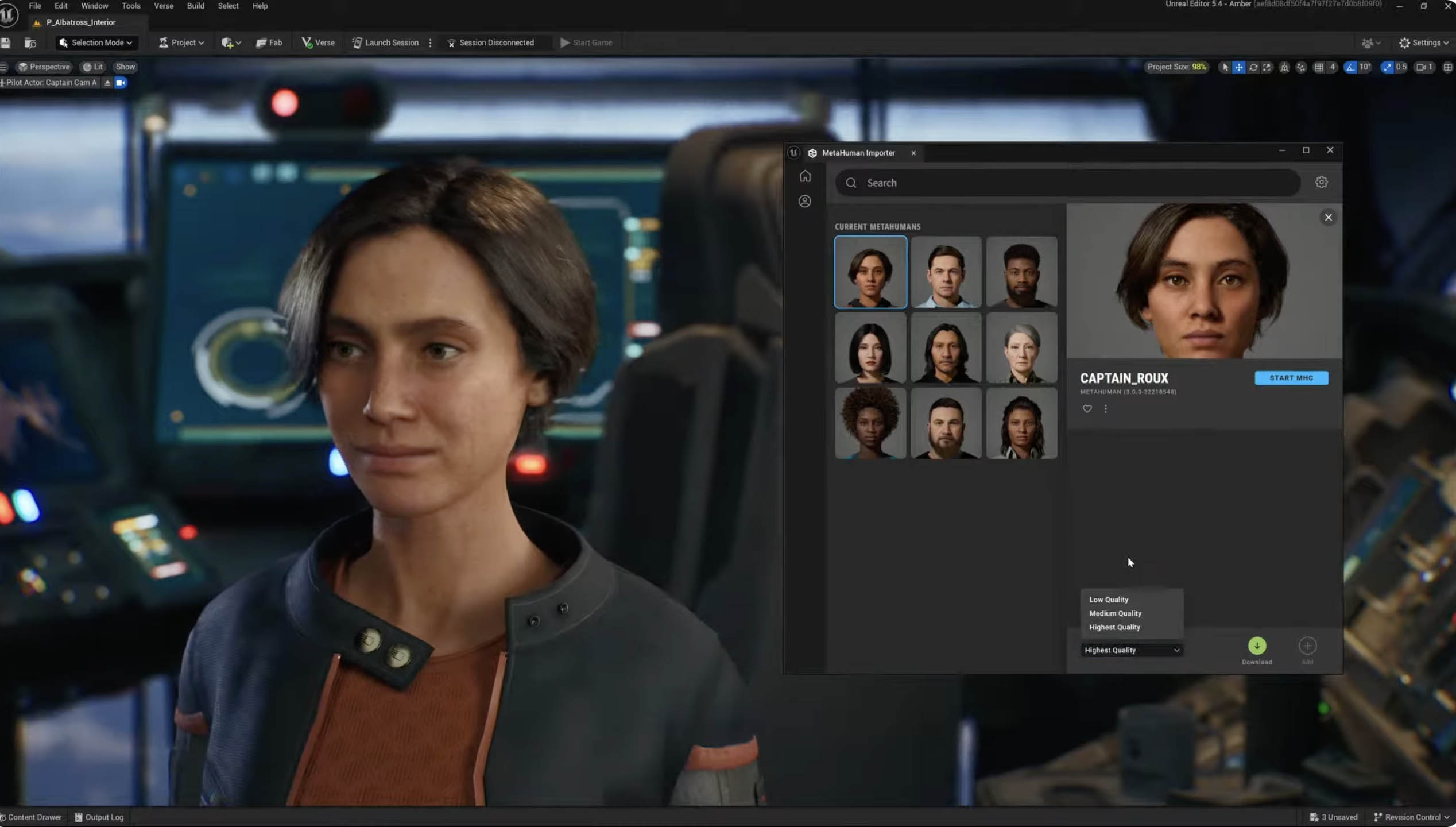
Let me talk about virtual avatars again. For many reasons, I personally don’t want to appear on camera. So on my Chinese channel I use a virtual anchor avatar that tracks my facial movements very well, can perform various actions, and can switch backgrounds at will. Compared to building real sets and appearing on camera myself, it has many advantages that are hard to replace. Besides this method, I can also apply filter effects in editing software and cover my real face with cartoon characters or shadow effects. Both approaches have extremely low cost and pretty good results. Especially for virtual avatars, if I want to pursue ultimate quality, Unreal Engine 5 can create stunningly realistic virtual characters placed in epic backgrounds with unbelievable rendering quality. All it requires is pairing my iPhone to capture facial expressions and a high-performance graphics card.
However, most people know that AI can also replace your real image in video with a virtual character or even any other image, such as a celebrity. We often see such videos in short clips, and some people use this technology in live streaming to liven up the atmosphere. But if you really plan to record a 15-minute or even 30-minute video, you will find the workload astonishing. Even with a top-tier graphics card running at full power, the final picture quality is only barely acceptable. It is difficult to achieve the simple efficiency of a virtual avatar. Moreover, local AI workflows for face-swapping videos are very fragile. They can hardly produce long continuous segments. Almost every time you record a segment it crashes, and you end up spending several hours on a single 15-minute video. Even for a few dozen seconds in short videos, many people still need half an hour to produce.
In this case, if you master the use of virtual avatars, especially high-end tools like Unreal Engine, your workflow becomes meaningful. It allows you to communicate directly with the audience and generate emotional interaction without showing your face. Under these circumstances, your technical skills give you an expressive advantage in video creation. You don’t need to worry about your job being replaced by AI, and you won’t need to change your workflow for at least the next few years.
Another example is programmers. Many people say that the current Gemini 3 and DeepSeek V3.2 have greatly improved coding abilities, with code quality already far surpassing most programmers, so programmers will be replaced. I want to say that programmers can never be fully replaced by AI. AI can write high-quality functional code when instructions are clearly constrained. This means that if an architect designs every module of the program, lets AI write each module one by one, then debugs and integrates the code to form an efficient whole, junior programmers and even some low-end algorithm engineers will lose their value. However, program design will always require people who truly understand the technical architecture, strictly constrain AI code specifications, verify AI code quality, integrate and debug code, and fix bugs. When new requirements arise, AI is limited by context length and finds it hard to understand the entire huge project and add new code from a holistic perspective. Human programmers must tell it in which module, according to what standards, to write what functionality.
In my spare time I wrote a brand-new navigation page for my forum. Current AI can perfectly complete the initial functional development according to my requirements and even output a decent UI interface, but once it involves deployment testing, cache optimization, and similar issues, it completely depends on my personal judgment. If the person using it does not understand the technical architecture characteristics of the Discourse forum, letting AI write it is simply impossible.
If your position is purely a web front-end designer who knows nothing about backend technology and only uses HTML, CSS, JavaScript, or frameworks to write some UI components and call backend data interfaces for layout, your job will soon be replaced by AI. AI can pixel-perfect imitate a webpage based on a URL, quickly generate new color schemes according to instructions, consumes very few tokens, costs far less than your salary, and is much more efficient.
But if you are a full-stack engineer who understands database design, language selection, architecture design, business model abstraction, cache design, front-end and back-end interaction, and all underlying knowledge, can grasp technical principles and command AI to work for you, then not only will you not be replaced, you will greatly increase in value. AI cannot replace you. Even if it wants to replace part of your functions, the cost would be extremely high. As an architect or full-stack engineer, you can even use AI to build workflows that replace an entire previous small team, start a business, and form a unique competitive advantage. In other words, basic algorithm engineers and junior UI designers can indeed be easily replaced by AI because AI has better cost-effectiveness. Architects and full-stack engineers cannot be replaced because human thinking and experience have very high value, and AI has no cost-effectiveness advantage.
Finally, current AI technology is essentially still an advanced data retrieval tool. It retrieves the content humans want from massive data and uses algorithms to analyze and present the most appropriate expression. Its underlying logic is still exhaustive enumeration and traversal, and it has nothing to do with real intelligence. However, as algorithms continue to improve, it will indeed sweep away all work that can be clearly defined and highly repetitive. Human value lies in subjective experience and comprehensive thinking. Find ways to become the master of AI instead of competing with it. Wherever AI can do the job, humans cannot compete with it.