Last night a netizen in the comment section reminded me that an Indian Tejas fighter jet had crashed at the Dubai Airshow. At the time I thought he was joking, because just yesterday in my video I had roasted the Tejas as industrial garbage produced by mankind and called Hindustan Aeronautics Limited a widow maker. Any aircraft that goes through maintenance at HAL will see its crash rate skyrocket. Since the founding of the Indian Air Force, thousands of aircraft have already been “reclaimed”. The engine, radar, flight control system and other critical components of the Tejas are all imported, yet Indians still claim it is an indigenously developed fighter. I once questioned whether this thing is powered by cow dung and lubricated with cow urine. Even funnier is that some Indians actually say it can beat the Chinese J20 and J35, which truly makes people burst into laughter.
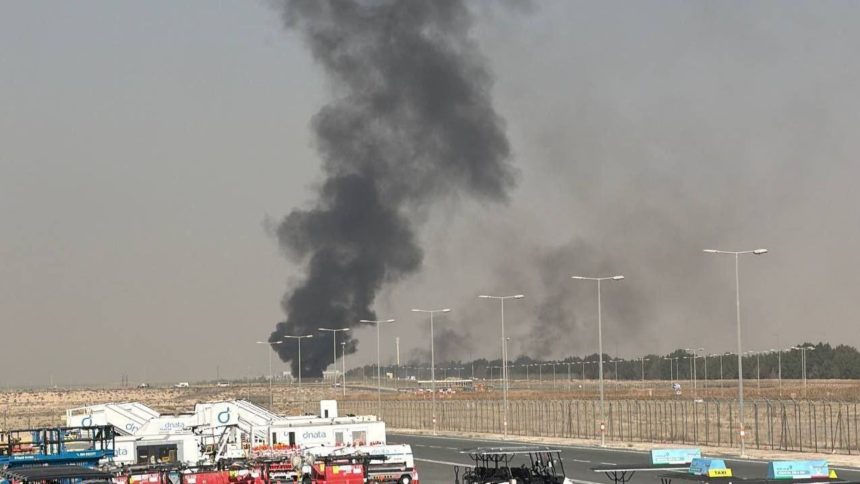
After the Tejas oil-leak video came out, I pointed out in my video that such a aircraft completely lacks safety. Modi only survived riding it because he was lucky; one stroke of bad luck and he would have lost his life. Less than a day later, someone told me the Tejas had crashed. The timing was simply too perfect.
So I suspected this netizen was deliberately making up fake news just to troll Indians.
But when I searched for the news, I realized I had wrongly blamed him. It was actually true. Many people at the scene filmed the entire crash process. The pilot failed to eject and lost his life. Let us observe a moment of silence for him. I hope his family can walk out of their grief soon, and I hope in his next life he is reborn in a more reliable country. I want to say that crashes happen in every country, but the frequency in India is simply too high. Being a pilot in India is a high-risk profession; every sortie could be the last flight.
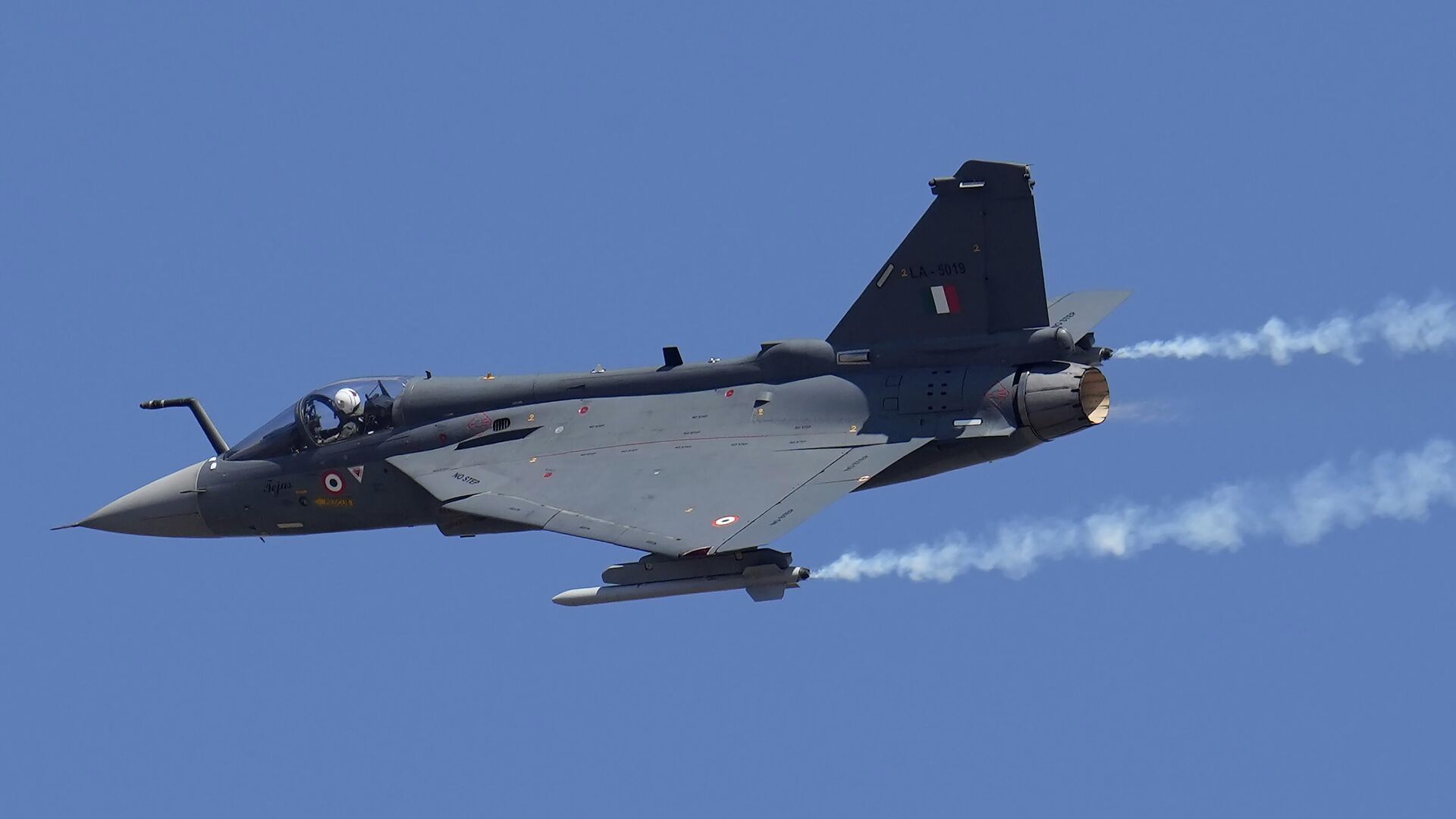
In reality, India’s industrial foundation is extremely weak, and Indians have an overly optimistic personality. They love to boast and exaggerate achievements. It is very difficult for such a country to push forward large-scale high-tech projects, because these complex programs are tightly linked. If any single link goes wrong, the problem gets magnified and affects the whole system.
With zero fighter-development experience, India proposed the Light Combat Aircraft program in the 1980s. The technical targets they set were actually higher than China’s goals at the time, and the project started earlier. Back then China was still working on J7 and J8 derivatives of the MiG-21. In the 1990s China launched the J10 program led by Chengdu Aircraft Corporation. By the time the J10 had entered service and the Shenyang J11 (a licensed Su-27 derivative) was already being massively upgraded and deployed, the Tejas was still stuck in the development phase. Only after China’s fifth-generation stealth fighter J20 had entered large-scale service did the Tejas finally begin limited production.
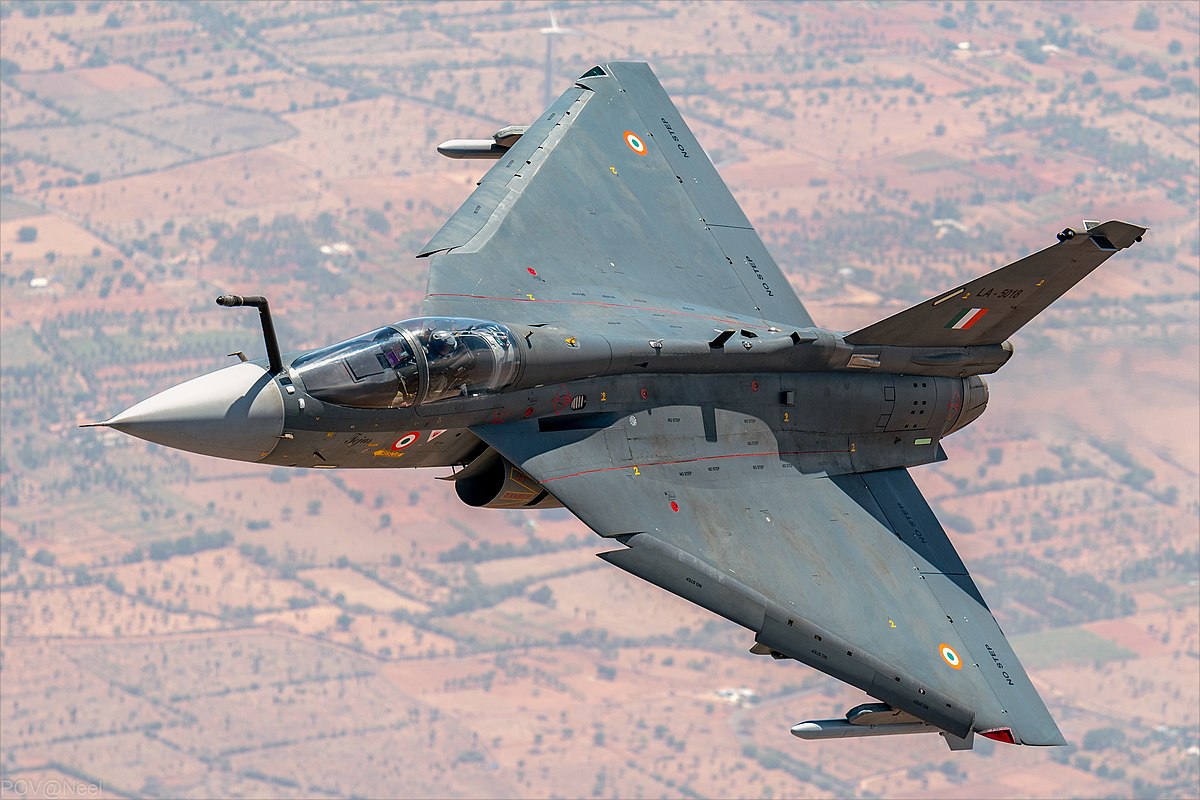
Today the Tejas program is effectively halted due to insufficient supply of American engines, and development of its improved variants has basically stopped. Indians can only keep bragging, but they cannot change the fact that it remains a backward, extremely unreliable fighter, genuine industrial garbage. Please note that more than 300 J20s are already in service and production continues, the J35 production line is ramping up, and its naval carrier version has completed electromagnetic-catapult takeoffs and landings on the Fujian aircraft carrier. By comparison, Hindustan Aeronautics Limited truly lives up to its title as the king of military jokes.
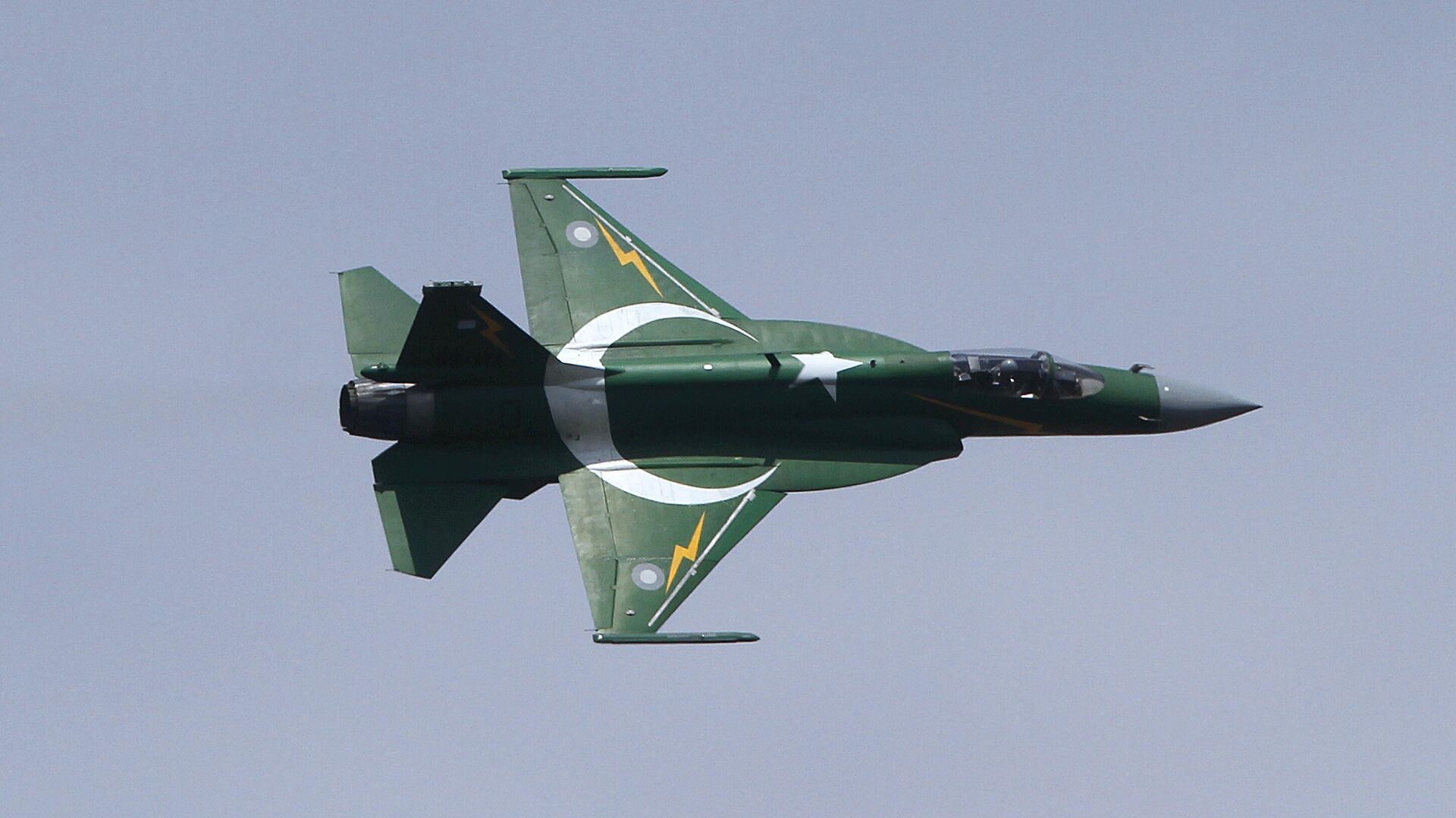
Apart from Modi, the clowns in the BJP, and the arrogant Modi fanboys on every social media platform, nobody in the world thinks this aircraft has any real value. It has neither given India genuine fighter-development capability nor wasted only money; more importantly, Pakistan’s JF17 has already seen combat with good results and has been exported to Azerbaijan. Azerbaijan, using Pakistani weapons, completely crushed Armenia, which had bought large quantities of Indian equipment. I really do not understand how India had the face to bring this piece of junk to Dubai to lose face. Is India not embarrassed enough already?
Trump has repeatedly confirmed in public that Pakistan shot down multiple Indian fighters. The loss of Rafales has humiliated Dassault of France, and Russian Su-30s have also had their reputation dragged through the mud by India. Now the Tejas has turned India’s “indigenous” fighter into a global laughing stock worldwide. So what is the Indian Air Force supposed to do now? When conflict with Pakistan breaks out again, what exactly are their pilots going to fly?
Here I want to remind the American aviation industry: the string of accidents at Lockheed Martin and Boeing has a lot to do with Indian engineers and the Indian supply chain. News of Boeing aggressively building an Indian supply chain is all over the internet, and I took screenshots long ago as evidence. A year ago I already said that not only would Boeing passenger-plane safety be devastated and its space launches suffer setbacks, but the readiness rates of US military fighters would also come under a huge question mark.
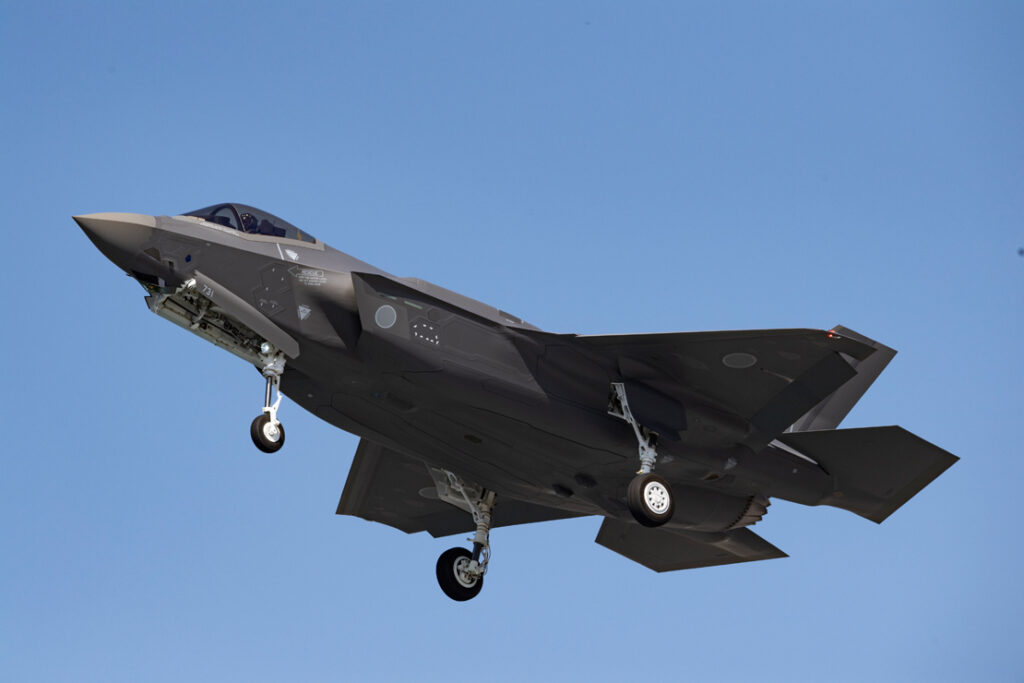
Today the F22 readiness rate is below 50 percent and the F35 is around 60 percent. Not long ago in the South China Sea incident, the US military lost an F18 and an anti-submarine helicopter within half an hour. I am not saying it is definitely the Indians’ fault, but the American tech sector is indeed dominated by Indians while Chinese-Americans were suspected and sidelined for a long time. The Indianization of American technology is relentlessly destroying US technological hegemony.
In contrast, China’s J20 and J35 fleets keep expanding, the sixth-generation J36 and J50 have successfully made their first flights, the Fujian carrier’s electromagnetic catapult system is stable and reliable, and the Sichuan carrier has begun sea trials. It too is equipped with electromagnetic catapults and can operate heavy fighters like the J35. China is walking the same path the United States walked in the late 20th century, becoming a major industrial power with a complete industrial chain. The path America is taking now is to keep blowing bubbles under beautiful financial reports from Indian CEOs. When they finally face real Chinese companies, they will discover they are not nearly as strong as they imagined.
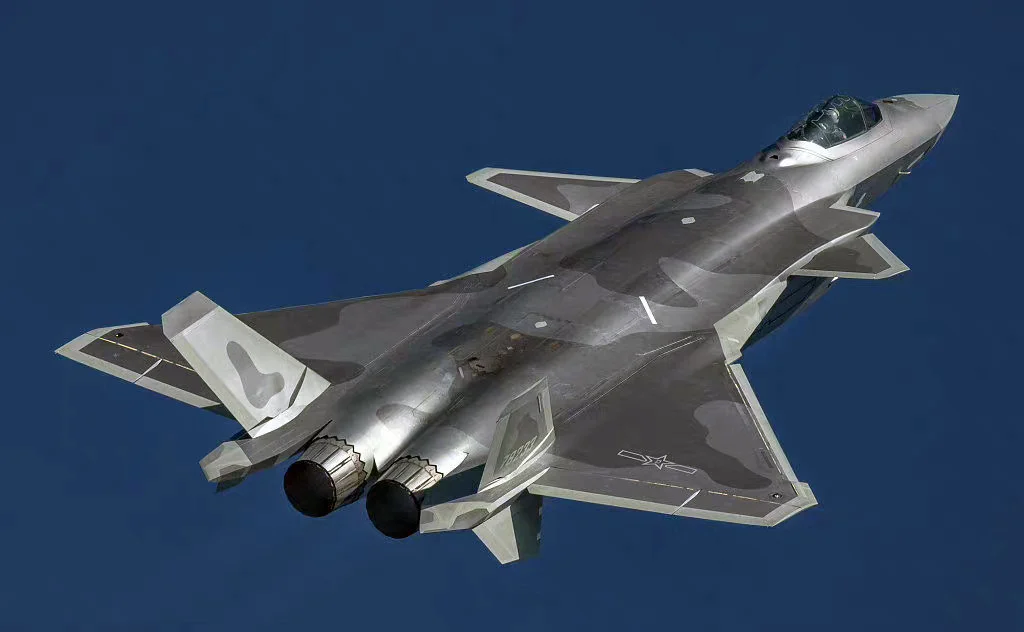
The Silicon Valley bubble is already shocking. If Americans wake up soon and stop the continued Indianization of Silicon Valley and the US tech industry, they can still rely on their existing advantages to compete with China. If they keep relying on Indian engineers, I can say with confidence that American technological hegemony will be completely lost within ten years.
I hope the people who curse me in the comments will go back and watch my old videos to see how terrifyingly accurate my predictions from a year ago have turned out to be. You should go to the hospital and get your brains checked. Stop saying I am jealous of Indian technology or the greatness of Bharat and that I slander Indian CEOs. I am merely stating facts and predicting the future, and reality keeps proving my predictions correct.

Do not forget my prediction about India’s manned space program. In 2025 you will definitely see I was right again. India will not be able to send astronauts into space. But I hope Indians stay clear-headed. If an accident happens in space, it will be an irreversible tragedy. At that point the only option would be to ask China for rescue, which would be even more humiliating. So brag less, build solid foundations first, and stop trying to compare yourselves with China. You simply do not have that capability.