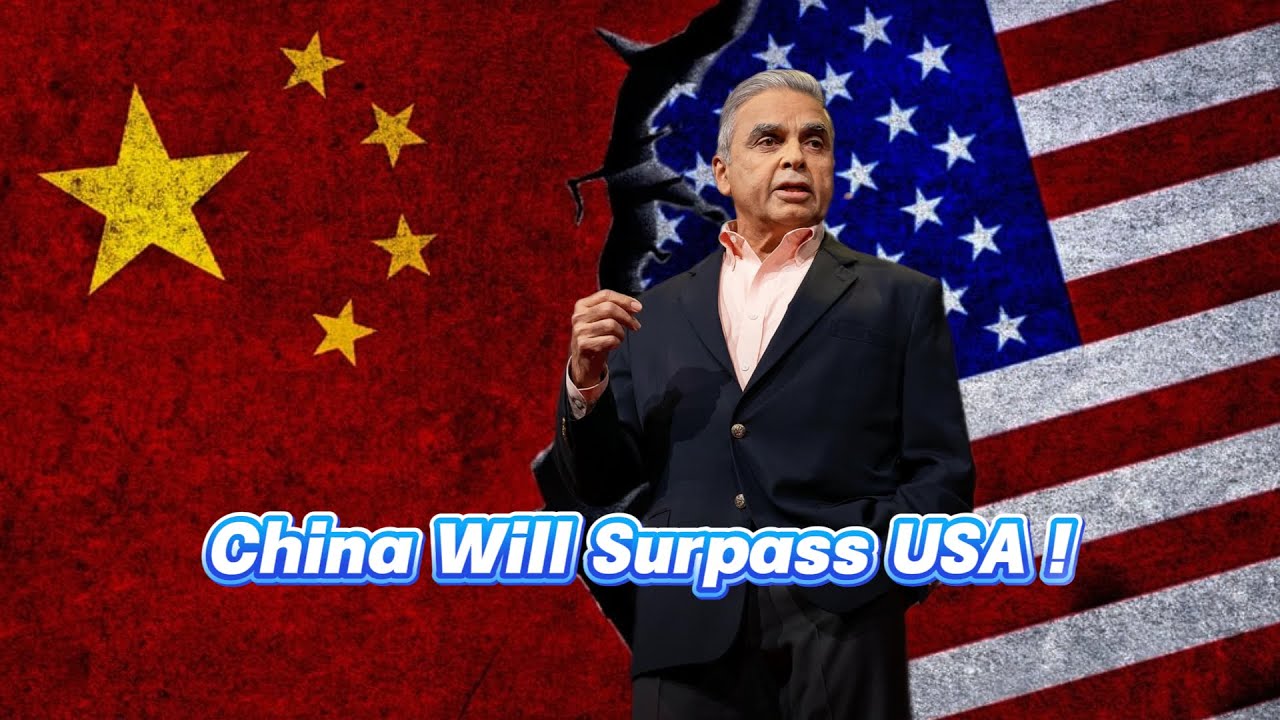
This outline summarizes the key arguments and structure presented by Kishore Mahbubani in the video.
-
I. Introduction: The Contradiction of Our Time
-
The speaker is tasked with persuading listeners that the world is getting better, despite the constant stream of “surface bad news” that fills media and creates a sense of profound anxiety.
-
To understand the future, one must recognize three structural contradictions that define the contemporary world.
II. First Contradiction: Surface Bad News vs. Structural Good News
-
Surface Bad News: This includes everything from starvation (e.g., Gaza) and geopolitical tensions (e.g., Trump’s tariffs on India) that dominate daily headlines.
-
Structural Good News (Improvements in the Human Condition):
-
Longevity and Health: It is the best time to be born in history. Infant mortality is dramatically down (from 50% for most of human history to 4% today), and life expectancy has risen sharply.
-
Peace: Statistically, the number of people dying from interstate wars is near the lowest point in human history.
-
Poverty Eradication: The rate of extreme poverty has fallen significantly. Specifically in Asia (including South, Southeast, and East Asia), the population living in extreme poverty dropped from 1.2 billion in 1990 to just 24 million recently.
-
Rising Middle Class: The global middle class is exploding, especially in Asia. This population grew from 150 million in the year 2000 to 1.5 billion in 2020, and is projected to reach almost 3 billion by 2030. This creates an “ocean of prosperity” surrounding countries like Sri Lanka.
-
III. Second Contradiction: The Pessimistic West vs. The Optimistic Rest
-
The West’s Confidence Loss: For 200 years, Western civilization drove human history through scientific, technological, and political revolutions. Today, that historically optimistic West is “drowning in pessimism,” while the rest of the world, particularly Asia, is optimistic.
-
The “Fatal” Cold War Victory: The West’s triumph in the Cold War led to complacency (epitomized by Francis Fukuyama’s “End of History” concept), effectively putting the West to sleep just as Asia (China and India) began to re-emerge to their historical position as the world’s largest economies.
-
Structural Challenges in the West:
-
Europe: European societies are living beyond their means, accumulating debt and deficits. Leaders know the necessary course corrections (more work, higher taxes) but are paralyzed by the fear of being unelected. The avoidable War in Ukraine illustrates Europe’s loss of strategic sense and autonomy.
-
United States: The US has functionally become a plutocracy, where public policy is designed to benefit the wealthy elite (top 1-3%) rather than the general population. This system has caused the living standards of the bottom 50% of Americans to stagnate for three to four decades, a fundamental unhappiness that led to the election of Donald Trump.
-
IV. Third Contradiction: Short-Term National Interests vs. Long-Term Global Interests
-
The Single Boat Analogy: The world’s 193 countries are no longer separate boats but 193 separate cabins on the same small, interdependent boat. The sensible course of action is to cooperate to save the global boat, particularly from the existential threat of climate change.
-
Obsolescence of Sovereignty: This need for cooperation is hindered by mindsets stuck in the 17th-century notion of national sovereignty (Treaty of Westphalia), which no longer makes sense when global problems affect all cabins equally.
-
The Geopolitical Contest: The world is simultaneously facing the largest geopolitical contest in history between the world’s number one power (the US) and the number one emerging power (China). This rivalry accelerates even as the “storm” of climate change accelerates—a state of global “madness.”
-
Hope and Responsibility: Hope lies in the increasingly responsible behavior of Asian countries. China, for instance, is making global contributions often ignored by Western media, such as selling 50% of its new cars as electric vehicles and implementing one of the world’s largest reforestation programs.
-
-
V. Conclusion
-
Humanity is certain to face serious challenges in transitioning from the old to a new geopolitical order.
-
However, the dramatic and significant improvements in the human condition, coupled with the rapid spread of knowledge and awareness globally, suggest that humanity will ultimately “rise to the occasion” to counteract the negative trends.
-