Executive Summary
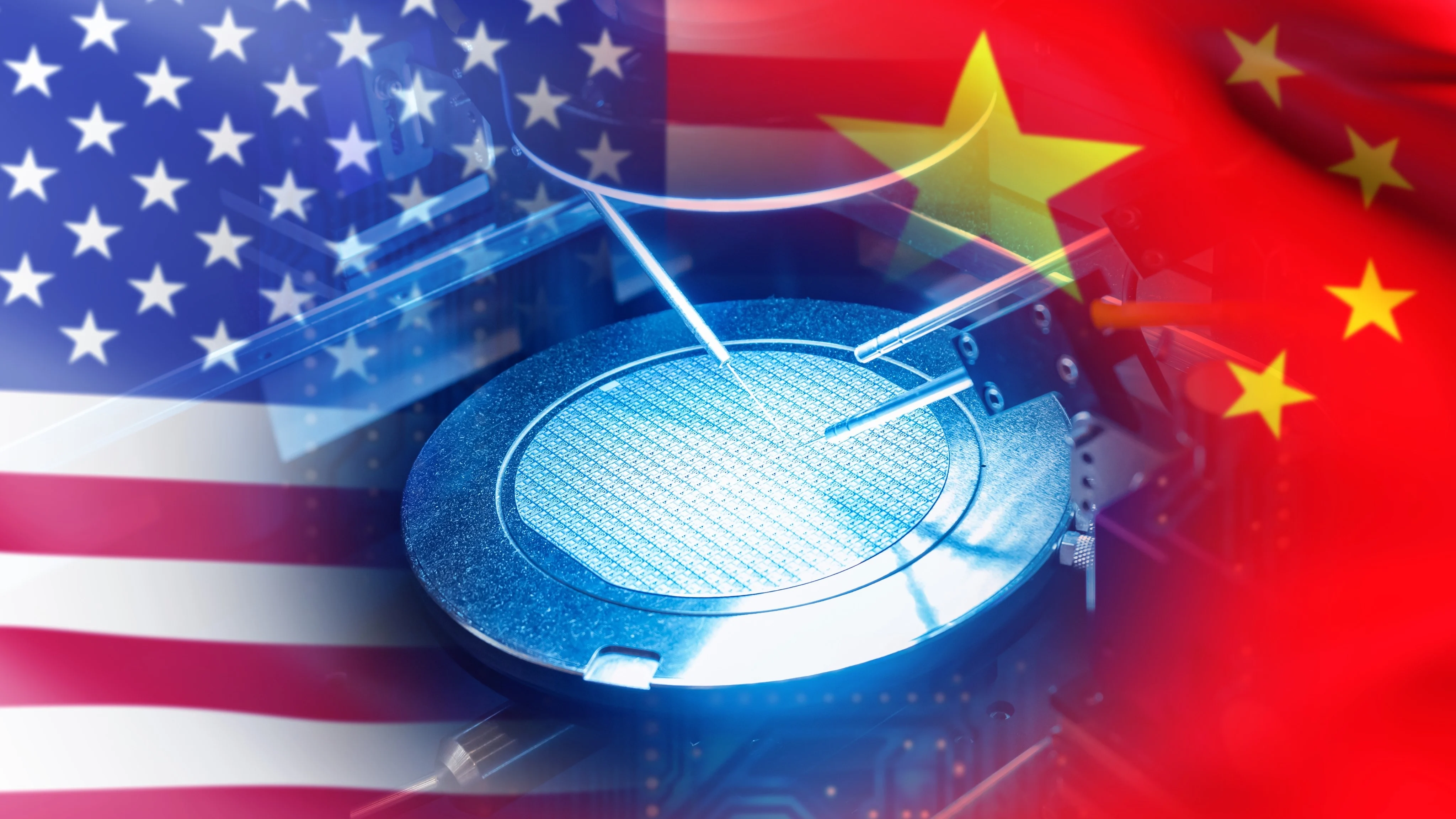
On October 9, 2025, China’s Ministry of Commerce issued Announcements No. 61 and 62, imposing stringent export controls on rare earth elements (REEs), related technologies, and products. These measures expand restrictions to include five additional REEs—holmium, erbium, thulium, europium, and ytterbium—while introducing extraterritorial jurisdiction, requiring foreign entities to obtain Chinese approval for re-exporting products containing even trace amounts (0.1% or more by value) of Chinese-origin rare earths. This comes amid escalating U.S.-China trade tensions, including U.S. chip export bans, and grants China significant leverage over global supply chains.

China dominates the rare earth market, controlling approximately 70% of global mining, 90% of refining, and 93% of permanent magnet production. These controls explicitly target advanced semiconductors (14nm and below nodes) and military applications, with case-by-case approvals for semiconductor uses and automatic denials for defense-related exports. The semiconductor industry, reliant on REEs for critical processes, faces potential disruptions, cost increases, and innovation delays. Industry experts estimate a six-month buffer from existing inventories, providing a window for diversification but highlighting vulnerabilities in AI, EVs, and high-tech manufacturing.
This report draws on insights from Professor Ye Guoguang’s analysis in the “Crow Laughs” video episode, enriched with recent data from global sources, to assess the implications for the chip sector.
Background on Rare Earth Elements and China’s Controls
Rare earth elements comprise 17 metals essential for high-tech applications due to their unique magnetic, luminescent, and catalytic properties. China has long held a near-monopoly, processing over 90% of the world’s supply despite not being the sole miner. The new controls, effective largely from December 1, 2025 (with some starting November 8), cover raw materials, refining technologies, magnet manufacturing, and even recycling equipment. They introduce a “50% rule” for dual-use items and extraterritorial reach, mirroring U.S. semiconductor restrictions but applied to minerals.

Announcement No. 61 focuses on export licensing for REEs and products, while No. 62 targets technologies across the rare earth industry chain. These moves are seen as retaliation to U.S. actions, such as chip bans, and aim to protect national security while exerting influence over global tech supply chains. Analysts note this gives China “dominion over precious resources,” potentially stalling the AI chip boom.
Key Applications of Rare Earths in Semiconductor Manufacturing
REEs are indispensable in advanced chip production, particularly for nodes at 14nm and below. Professor Ye’s analysis highlights four critical areas, supplemented here with industry data.
High-K Dielectric Materials in Advanced Processes
In high-k metal gate (HKMG) technology, used in 14nm-and-below nodes (e.g., N7 to N2), high-k materials mitigate quantum tunneling and gate leakage. Lanthanum oxide (La₂O₃) is a key alternative material, with lanthanum being a restricted REE. Disruptions could affect fabs like TSMC and Intel, where such materials ensure transistor efficiency in AI and high-performance computing chips.
Chemical Mechanical Polishing (CMP) Slurries
CMP ensures ultra-flat wafer surfaces in multi-layered, sub-7nm processes. Cerium oxide (CeO₂) dominates CMP slurries for its low-scratch performance, making it hard to replace. Experts deem this the “most fatal” impact, as alternatives like silica-based slurries underperform in precision, potentially raising defect rates and costs for global foundries.
Protective Coatings for Equipment Components
In etching and thin-film deposition chambers, corrosive environments necessitate REE-based coatings like yttrium oxide (Y₂O₃) or fluorinated yttrium to extend equipment life. Yttrium shortages could shorten tool lifespans, increasing downtime and maintenance costs for suppliers like Applied Materials and Lam Research.
Permanent Magnets in Lithography Machines and Motors
Extreme ultraviolet (EUV) lithography machines, such as ASML’s, rely on precise stage control via permanent magnets doped with REEs like neodymium, dysprosium, and terbium for high-temperature stability. These magnets are vital for sub-5nm nodes. Controls could delay shipments, with ASML facing weeks-long licensing hurdles. Broader impacts extend to EVs and military hardware, where neodymium-iron-boron magnets require REE doping.

| Application | Key REE Involved | Impact on Semiconductor Process | Potential Disruption Level |
|---|---|---|---|
| High-K Dielectrics | Lanthanum | Gate leakage control in advanced nodes | High (affects transistor performance) |
| CMP Slurries | Cerium | Wafer planarization | Critical (hard-to-replace, defect risks) |
| Protective Coatings | Yttrium | Equipment durability in etching/deposition | Medium (increased maintenance costs) |
| Permanent Magnets | Neodymium, Dysprosium, Terbium | Precision control in lithography | High (delays in tool manufacturing) |
Broader Impacts on Global Supply Chains and Affected Entities
The controls primarily target the U.S. and allies, given REEs’ role in military assets like F-35 jets (requiring 417kg of REEs per unit) and automotive sectors. U.S. firms like Nvidia, Intel, and defense contractors face automatic denials for military uses, while semiconductor exports require approval. Taiwan’s TSMC, reliant on non-Chinese sources from Europe/Japan/America, reports minimal direct impact but acknowledges broader chain risks.
Europe, Japan, and South Korea, heavily dependent on Chinese processing, could see production pauses and price volatility. Companies like Foxconn may encounter cost hikes and traceability challenges. Global AI and EV sectors are vulnerable, with potential bottlenecks in data centers and vehicle motors.
Inventories for materials like cerium oxide may last six months, offering a negotiation buffer but risking chaos if unresolved. U.S. responses include 100% tariffs on Chinese imports and software controls, escalating the trade war.
Predictions and Strategic Recommendations
Short-term: Supply disruptions and 20-30% price hikes for REE-dependent components, stalling AI chip production. Long-term: Accelerated diversification, with U.S., EU, and allies investing in mining (e.g., Australia, U.S. projects) and recycling R&D. However, scaling alternatives could take 5-10 years, leaving China with ongoing leverage.
Recommendations:
-
Diversify Suppliers: Shift to non-Chinese sources where feasible.
-
Stockpile Strategically: Build buffers beyond six months.
-
Innovate Alternatives: Invest in REE-free technologies or substitutes.
-
Diplomatic Engagement: Push for multilateral talks to ease controls.
Conclusion
China’s 2025 rare earth controls represent a pivotal shift in geopolitical leverage, directly challenging U.S. dominance in semiconductors. While providing a buffer period, they underscore the fragility of global chip supply chains and the need for resilient strategies. As Professor Ye notes, the “fatal” risks in CMP and other areas could redefine the industry, favoring those who adapt swiftly.