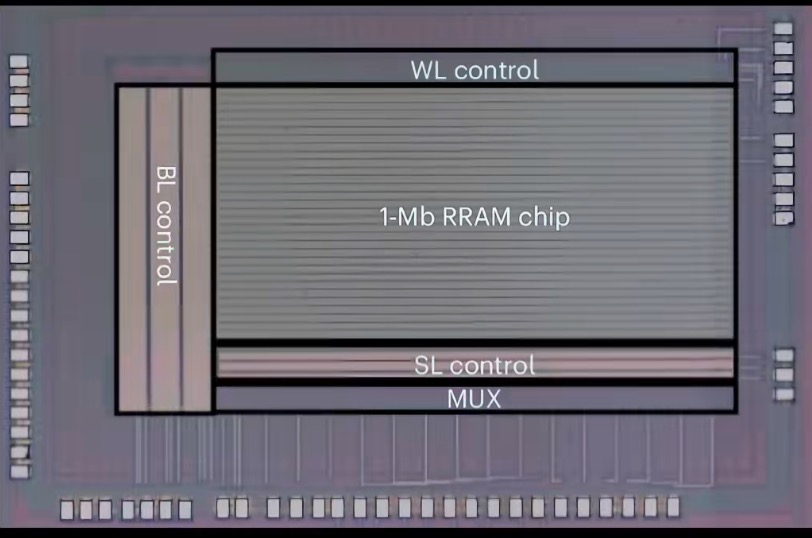
Led by the Sun Zhong team from the Peking University Institute for Artificial Intelligence, in collaboration with the research team from the School of Integrated Circuits, they have developed a high-precision, scalable analog matrix computing chip based on resistive random-access memory, marking the first time analog computing precision has been elevated to 24-bit fixed-point accuracy. For viewers who do not understand chip expertise, there is no need to focus on its technical principles. I will simply explain its value to everyone: it means that the inherent chronic issue of the now-popular von Neumann architecture, the memory wall problem, has been well resolved, allowing computers to achieve integrated storage and computation. The current research achievements from Peking University can start from storage chips, increasing the computational efficiency of China’s AI large models by hundreds or even thousands of times, thereby achieving a surpassing of the US and Western countries. Analog computing has long been difficult to practicalize due to precision issues; this work has greatly improved the precision of analog computing, reaching the level of digital computing and solving a key challenge in the analog computing field. Please note that this is not a technology that can be easily broken through; it has long been a difficult technical node to conquer. This achievement opens up a brand-new, efficient computing paradigm to address the growing enormous computational power demands in fields such as artificial intelligence and 6G communications. It represents a major breakthrough in the transformation of computing architectures in the post-Moore era.
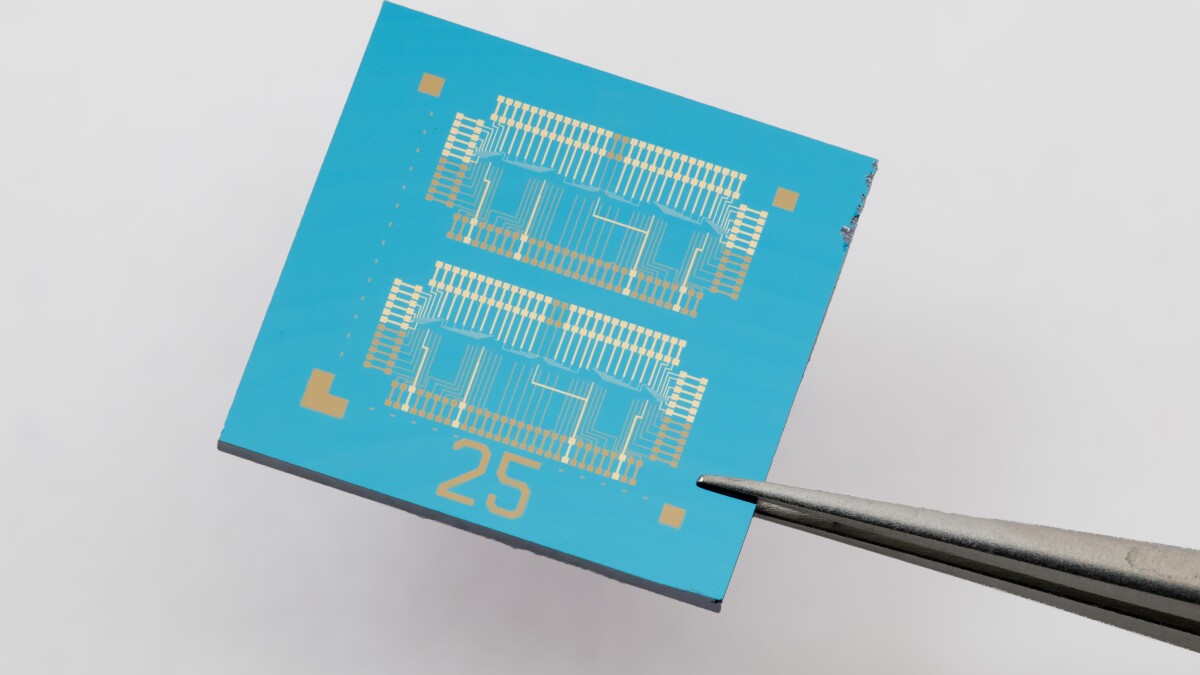
At the same time, the teams of Zhou Peng and Liu Chunsen from Fudan University have made major breakthroughs in the field of two-dimensional material chips. The poleless chip and Changying architecture released by the two teams will also have a disruptive impact on the existing storage systems. Combined with chip equipment companies such as UEA and SiCarrier continuously releasing lithography machines, oscilloscopes, EDA, and other chip industry equipment, China is rapidly catching up in the traditional Western-dominated process revolution while also solving the increasingly massive computational power demands in other ways through breakthroughs in basic scientific research. The leads China has achieved in certain fields are very exciting, and these projects are fully industrializable, not like distant future projects such as quantum computing or nuclear fusion. Even in future technology projects, China’s progress remains world-leading.
In videos from a long time ago, I pointed out that for the US to launch a tech war against China, there is only one way to win: in 2018, taking advantage of China’s complete lack of preparedness, launching a sudden full-scale attack with the strictest controls on China, causing China’s tech industry to go into shock, thereby forcing it to admit defeat and self-castrate like Japan did by signing agreements such as the Plaza Accord and the US-Japan Semiconductor Agreement. But Trump is a complete madman who understands neither technology nor economics; without any preparation, he launched a trade war and tech war against China, then due to a lack of basic understanding of China’s strength, suffered failures one after another, and was even voted out of the White House by voters. By the time he wins again in 2024, China has already spent several years carefully preparing various traps, waiting for him to attack. If Trump and his administration team still have normal brains, they should call a truce, unite allies, fix America’s internal problems, reshape supply chains, and prepare for long-term competition with China. However, Trump’s second term is not about making America great again but first settling scores and hunting down his political enemies, using presidential power to make money for his family. To create some political achievements, he imposes taxes on all countries worldwide including allies, leaving the US unprecedentedly isolated. Subsequently, he launches a Don Quixote-style attack on China, becoming a laughingstock of the world.
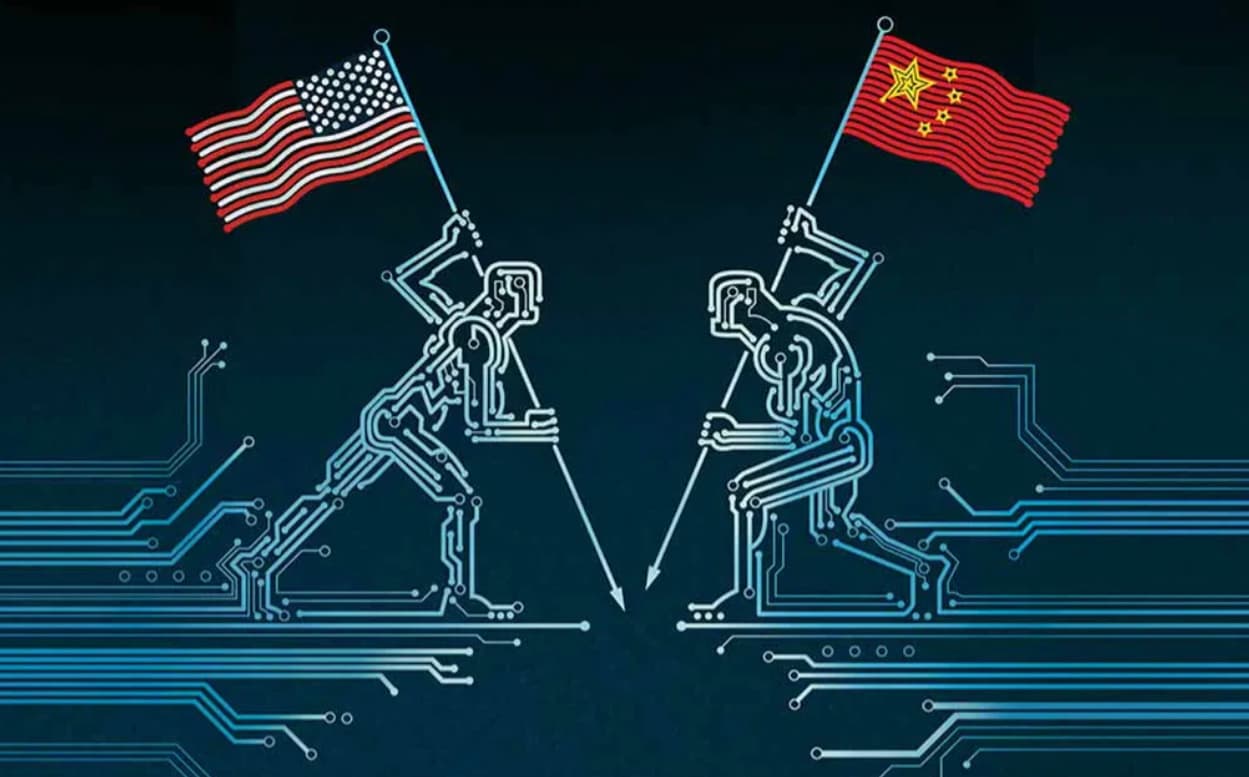
The current issue is not that the US wants to fight a trade war or tech war with China, but that China is unwilling to cease fire with the US. China greatly enjoys the legitimate self-defense reasons that US hegemonic attacks provide to China; China can completely strike back at the US through controls on rare earths, sensitive materials, components, and other key resources, making the US pay a heavy price. In the chip and AI fields where the US excels, China will continuously catch up with the US through various technological innovations while providing cheap, high-performance AI services to other countries worldwide, turning the AI industry that US companies have built with huge investments into a massive bubble. Now this bubble is getting bigger and bigger, but US companies cannot convert it into actual profits. Because Chinese companies are providing services with performance that is not much worse at unbelievably low prices, they can only stare at huge valuations and continue inflating the AI bubble. Sooner or later, this bubble will burst. Americans must establish absolute technological leadership over Chinese AI companies before the bubble bursts; otherwise, when the bubble bursts, the entire Silicon Valley and Wall Street will have to bury this bubble with it.
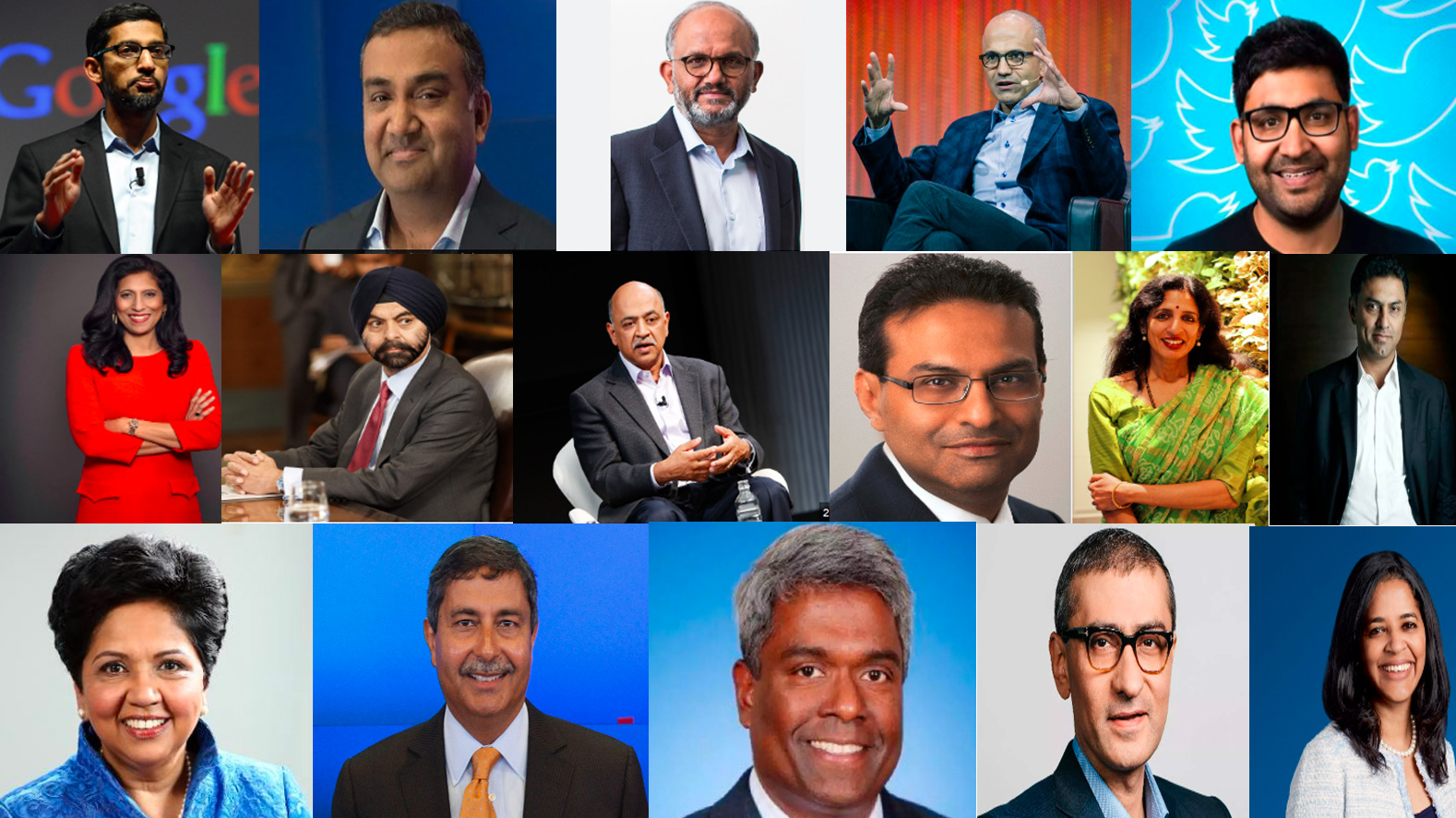
I have mentioned multiple times in my videos that Indian CEOs and Indian engineers are good at making big profits within existing technical systems and forming attractive corporate reports, but they really lack innovation ability. Handing Silicon Valley over to Indians is a major, irreparable strategic mistake for the US. Because the Indians’ own motherland is a thoroughly terrible, technologically backward country with no industrial strength at all; they could not even build their own country well, so how could they maintain tech hegemony for Americans? Of course, I do not have racial discrimination against Indians; I admit that CEOs like Sundar Pichai and Nadella are very excellent. But if you review their careers, they massively outsource products and services to India, hire Indian engineers on a large scale; Google recently even plans to build a huge AI cloud service center in India, not only investing huge capital but also providing a large number of job opportunities for local talents. I do not know if Americans’ brains are broken; you are competing with China, not with Afghanistan. China has the world’s largest engineer team; they can engage in high-intensity labor, possess the world’s highest IQ levels, and China also has the world’s most complete industrial system. How can you pin the country’s hopes on Indians? What major achievements have they made in India to gain the right to rule Silicon Valley? Please tell me, among the AI and chip companies where the US is currently leading China, is there any one created or led by Indians? What exactly are you thinking? As Chinese people, defeating Indian engineers brings no fun and lacks challenge; we hope that the US and Western countries will recall your top talents and hackers from high-quality open-source communities at high prices for a evenly matched tech showdown with China; our generation will greatly enjoy this process and be willing to bear the risk of failure. We hope to defeat the strongest enemies, not Indians.
I want to tell Americans that in the future, every month or even every day, you may see China’s technological breakthroughs; if you call DeepSeek, BYD, Huawei, DJI a tech tsunami, tsunamis will become your normal. It is time to show your true strength; do not wait until you lose the game to cry and regret in dark corners; you still have a good opportunity to let Indian engineers step aside and let top talents come compete with the Chinese.