Recently, Jensen Huang stated in an interview that China has a large number of excellent science and engineering talents, and it is wrong to think China cannot produce high-end AI chips. He believes the US only leads China by a few nanoseconds and must compete with China at full strength. His words reflect part of the truth: China’s AI chips have reached a usable level, but it is still too early to challenge NVIDIA’s chips. NVIDIA significantly leads Huawei’s Ascend series in single-chip computing power. Jensen Huang said this to urge the US government to pay enough attention and inject more funds or policy support into AI companies, so NVIDIA can also benefit. If NVIDIA is concerned about any of Huawei’s technologies, it is Huawei’s AI super-node clusters, which have surpassed NVIDIA’s single clusters in computing power. Huawei has significant advantages in photonic quantum chips and optical communication technology, as it started as a communication equipment company. China’s accumulation in power technology is stronger than that of the US, and its construction speed and power generation far exceed those of the US. Therefore, China is not afraid to compete with the US in absolute computing power.
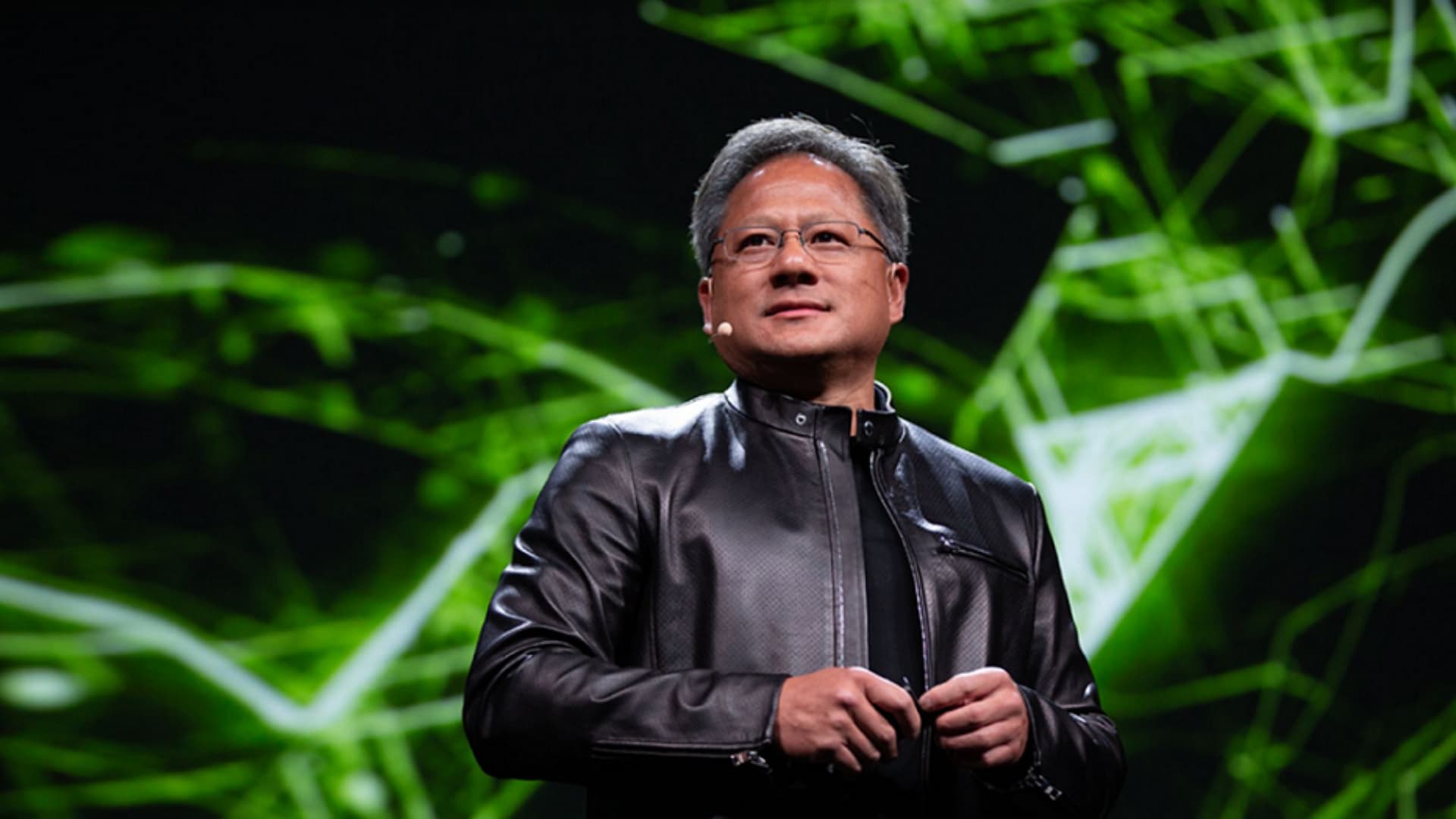
US AI companies face a huge crisis: how to convert AI into productivity and corporate profits. This is a very real and urgent challenge. Currently, the AI industry is overly optimistic about AGI. After multiple iterations of large models, everyone finds that AGI remains out of reach. It is hard to support the huge valuations of NVIDIA, OpenAI, xAI, Google AI, and Meta AI. NVIDIA’s market value alone exceeds 4 trillion dollars, surpassing the GDP of all major economies except China, the US, and Europe. So, how can it deliver investment returns? Can netizens displaying Ghibli-style avatars on social media or creative teams posting cobbled-together AI short films on YouTube justify such a huge market value?

Clearly, if large AI models rely solely on the fantasy of AGI, they cannot deliver such huge valuations. They need to be applied to industry and integrated with hardware ecosystems. However, the US has a problem: its industrial sector is not on the same level as China’s. Its deindustrialization is severe, and it lags far behind China in major hardware innovation fields. In innovative industries best suited for large AI models, such as electric vehicles, drones, robotics, unmanned factories, unmanned logistics centers, telemedicine, and smart homes, US companies cannot compete with China. China has built an AI innovation ecosystem centered in Shenzhen, Hangzhou, and Shanghai, covering nearly all AI-related fields. Shenzhen alone hosts heavyweight players like Huawei, BYD, DJI, and Tencent, while Hangzhou has innovative companies like DeepSeek, Unitree, and Alibaba. Shenzhen and Shanghai also have China’s independent chip industry clusters, capable of producing 7nm chips. Domestic immersion DUV has entered trial production, and EUV is being rapidly developed, with breakthroughs possible at any time.
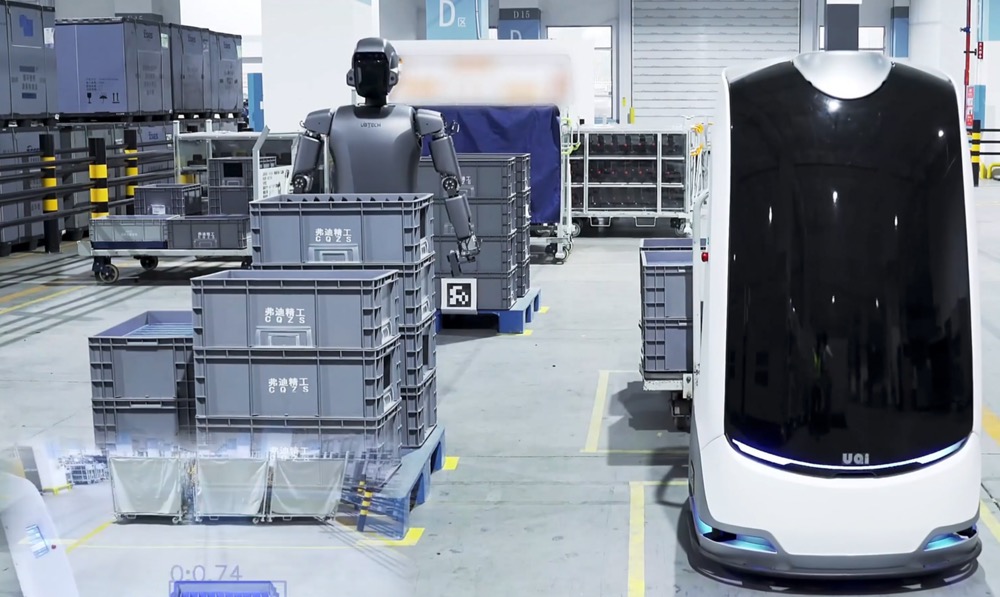
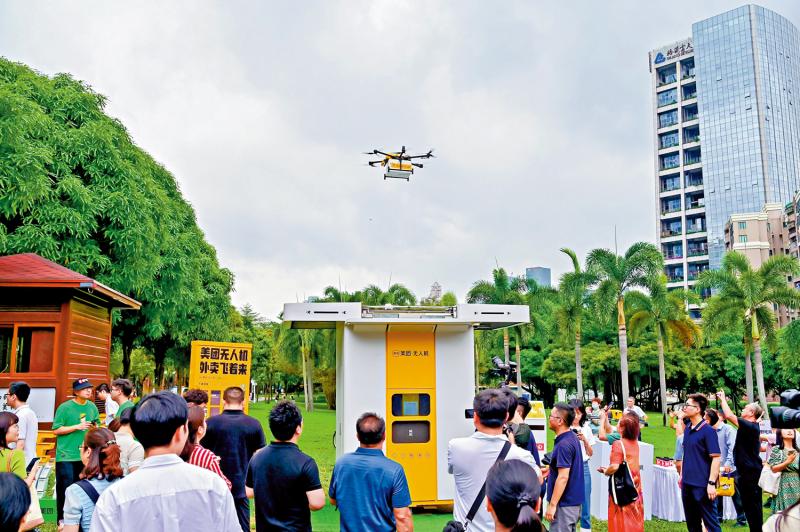
I mentioned in previous videos that China’s drones, unmanned delivery vehicles, unmanned buses, and unmanned taxis have been widely commercialized in many places. Unmanned logistics centers became widespread a decade ago, and even the world’s largest Shanghai Yangshan Port operates unmanned. The car factories of BYD, Xiaomi, and other companies have mostly achieved lights-out operation. Companies like BYD and Geely have introduced humanoid robots to production lines for loading and unloading, perfectly coordinating with unmanned vehicles. These robots can even charge or swap batteries themselves and will keep working unless they break down.
Unitree’s technical team once stated that current large models are highly usable in general domains, but integrating with robots requires major surgery and extensive customized training. Non-robotics companies, including OpenAI and DeepSeek, struggle to obtain such training data. So, their strategy is to customize their own models based on open-source large models. These models may not match the latest GPT or Grok in general scenarios but can come very close and achieve breakthrough leadership in robotics-related professional scenarios.
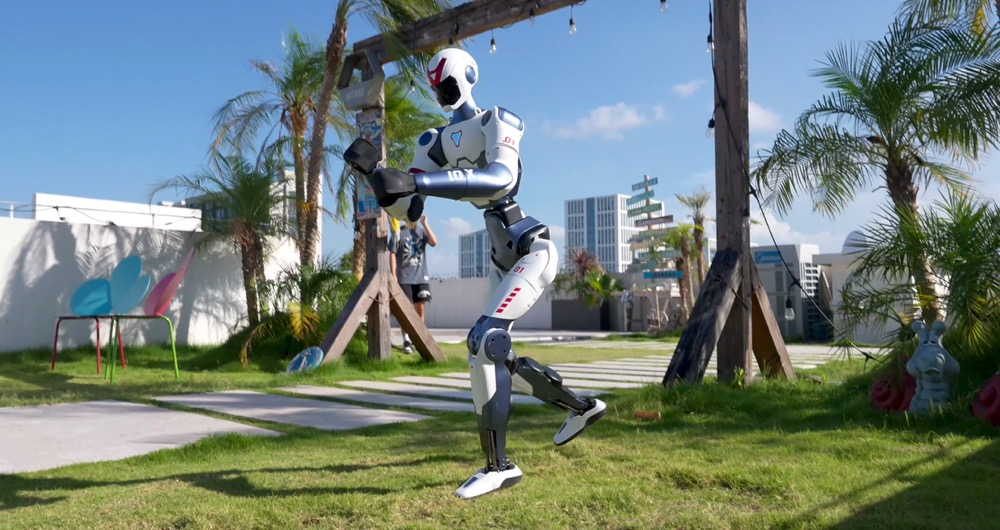
Similarly, in areas where Chinese companies excel, such as drones, smart cars, smart homes, and telemedicine, they can use domestic large models like DeepSeek and Qwen for customized AI training, retaining the intelligence level of general large models while mastering the specifics of professional scenarios. The low price of DeepSeek’s API allows many small companies to focus on customized training tasks without building their own AI services. Since these services are provided by Chinese domestic companies, they do not worry about technology cutoffs. Chinese government and banking sectors have widely adopted DeepSeek, and DeepSeek has lived up to expectations, continuously updating and maintaining advanced levels.

Currently, DeepSeek is working with Huawei to build a national ecosystem from chip customization to operating systems to large AI models. DeepSeek has disclosed in its released V3.1 version that many instructions were added specifically for compatibility with domestic chips. Its released V3.2 version also performs excellently in various benchmark tests, and more importantly, it has significantly reduced API call costs.
I believe the current reality is that US AI models do lead China in many areas, but the lead is small. The multimodal performance that the US focuses on, mainly for AGI, is also matched by many excellent Chinese products. However, Chinese companies, especially DeepSeek, have an unmatched depth in the hardware industry ecosystem. This is a difference of zero versus one, having versus not having. We will soon see DJI drones, BYD electric vehicles, and Unitree robots, empowered by DeepSeek, entering households and factory production lines. These are tangible, value-creating application scenarios. The US should be more concerned about its absence in these scenarios rather than simply competing with China on whose single chip has stronger computing power or whose AI company has a higher valuation. If it cannot create value, no matter how high the valuation, it is just a bubble that could burst at any time.