Since ChatGPT became popular, the crisis of AI replacing humans has been repeatedly exaggerated, as if many people’s jobs have been taken by AI. Honestly, except for some entry-level or highly repetitive positions, AI cannot truly replace humans. AI replacing humans in repetitive labor jobs is a major trend, but currently, this process is overly optimistic. If you are in your 50s and nearing retirement, just do your job well and don’t worry too much. But if you are middle-aged or a young person just entering society, fully engaging with AI, seriously learning AI, and deeply integrating AI into your workflow is indeed very necessary. As a YouTuber and tech enthusiast, I am a heavy AI user. I not only deeply use mainstream large models like ChatGPT, Grok, DeepSeek, and Gemini but also set up various AI models or tools locally, using Trae and GitHub Copilot as AI programming tools. Of course, I have also explored some of the currently popular AI Agents.
Currently, AI accounts for more than half of my YouTube channel workflow. I only need to handle creativity and editing, while AI can complete all other tasks, including assisting with writing, translation, summarizing titles, AI voice generation, creating some material images, and AI subtitles. In my website workflow, AI helps me solve various technical issues in building and customizing website functions, assists in generating code to meet specific needs, and summarizes content according to my requirements. This deep involvement greatly reduces my update pressure.
In the past year, my main income has come from YouTube and website ad revenue, as well as providing IT services for others. YouTube income is relatively stable, and since my living expenses in China are low, it can comfortably support me. For the website, the more I update, the more ad revenue share I get; the less I update, the website’s revenue fluctuates downward, but overall, the website’s income is steadily increasing. Based on my living expenses in China, it can also support me. As for providing IT services, I mainly help former clients configure network services, develop network plugins, or handle simple cryptocurrency-related needs. This income is unstable but the highest. Ideally, a single project might consume a lot of my energy in the short term, but once completed, I can immediately earn significant income, enough to live without working for six months or even a year.
However, as I age and am now middle-aged, I no longer want to earn money through freelance projects, as they are physically draining. Although I don’t have the occupational diseases of other programmers, I can no longer work at high intensity like young people. In the past two years, I have barely left my home, mainly due to debt issues. Now, only a small portion remains, and it’s not urgent, so my future plan is to use AI to manage my YouTube channel and website well.
Over the past two years, I have run six YouTube channels, two of which succeeded and passed the YouTube Partner Program, achieving monetization conditions in about a month. But after experimenting, I chose to abandon the other channels and keep my personal passion, the English channel MrHunzi. My Chinese channel was flagged by national security for being risky, and they advised me not to show my face, so I lost interest in it. My second Chinese channel was faceless, but it didn’t perform well, and I didn’t want to continue, as even without showing my face, Chinese national security could find me. Whenever I encounter sensitive topics, I can’t help but comment, which doesn’t meet safety standards. So my current plan is to maintain the MrHunzi English commentary channel for the long term, while managing Poorc.com and the VoidHunzi English channel. If the website or VoidHunzi channel takes off, I will stop taking external orders and discontinue other websites maintained by AI updates.
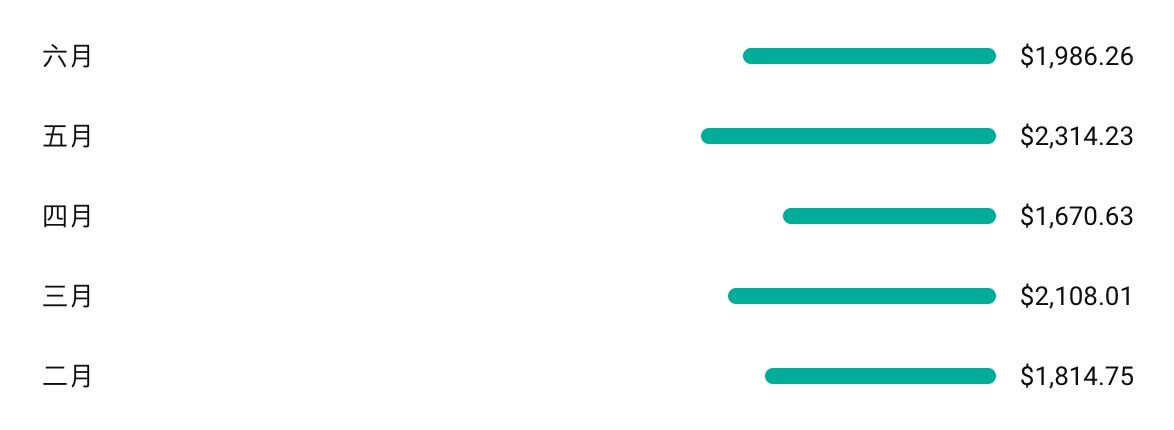
Since videos on making money online require authentic, verifiable material, I use the same channel name and share real backend data. In other words, I’m not talking about my success after making enough money but documenting my transformation process in real time. In my plan, I will keep two YouTube channels and one website as my core business. I won’t hire others, relying mainly on AI to assist my work, but if online friends want to collaborate, I will consider it under the right circumstances. Currently, my MrHunzi channel earns between 1500 and 2500 dollars a month, averaging around 2000 dollars a month, very stable. I reached this level from the second month and haven’t made a big breakthrough since. Perhaps this is the channel’s value, or maybe I need to persist longer to reach the next level. My plan for this channel is to reach 3000 dollars a month by New Year’s Day 2027. Yes, my expectations for the future are always modest; I’m not a greedy person.
I bought the Poorc.com domain long ago but didn’t update it. Since mid-August, I started updating, and now it gets sporadic organic traffic daily. Based on my experience, the website’s topics are too broad and lack explosive potential, but I plan to use it as a data warehouse for my content creation. Once I have enough content and organic traffic, I will develop highly customized navigation pages to provide real value to users. So I have no profit expectations for the website; 500 dollars a month by New Year’s Day 2027 would be enough.
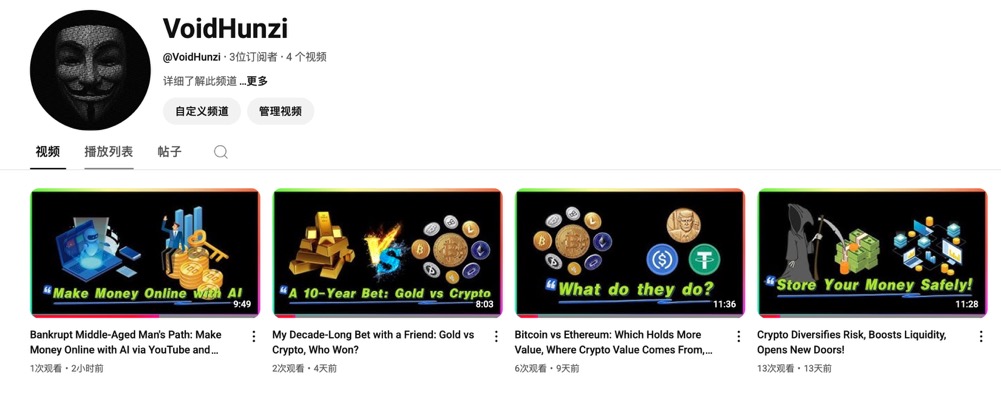
The VoidHunzi channel shares my experiences and insights on making money online, while also discussing topics like blockchain, cryptocurrency, taxes, and digital nomadism. I expect this channel to pass the YouTube Partner Program in about six months and reach 2000 dollars a month by New Year’s Day 2027.
If these plans succeed, I won’t take IT service orders anymore, but if I have very compatible online friends, I will help them with some free services in exchange for friendship. As a long-term solitary online worker, occasional orders help me stay connected to society, maintaining limited social interaction, which is good for mental and physical health. But this can be replaced by playing online games like World of Warcraft.
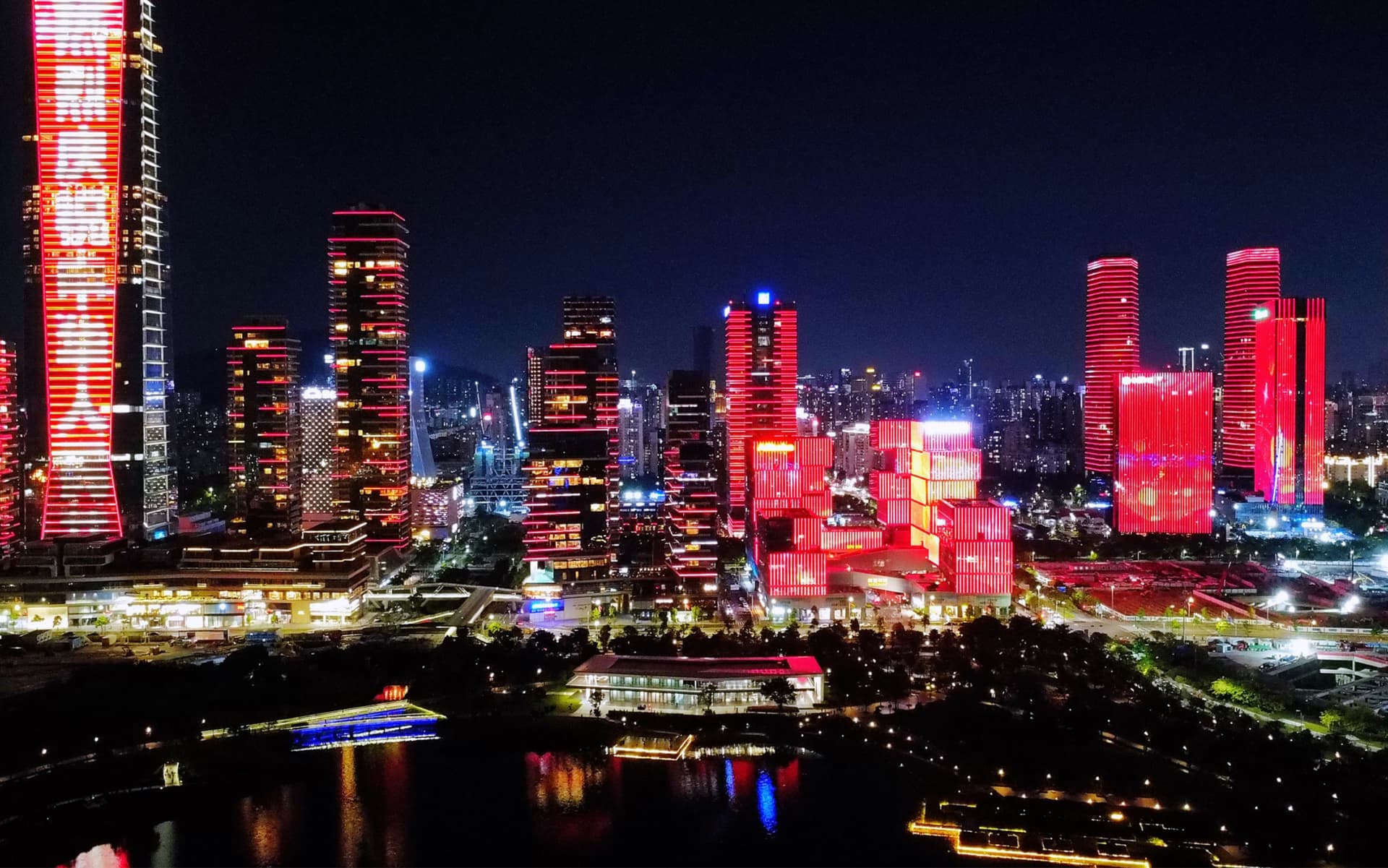
In China, 1500 dollars a month is enough to live comfortably in most cities, provided you plan well. For example, if I worked in Shenzhen at an IT company, a senior programmer could easily earn 5000 dollars a month, but by age 35, you typically need to switch to management or risk being phased out. Living in the suburbs means wasting time on the subway, which is exhausting. Living downtown means high rent or monthly mortgage payments that drastically reduce income, and children’s education costs would empty my wallet. But if I choose to live in Huizhou or my hometown, a fifth-tier city in Jiangsu Province, my quality of life would greatly improve, though I would lose Shenzhen’s prestigious high-income job opportunities. In those places, 1500 dollars a month can provide a decent life; it depends on your trade-offs. My family owns multiple properties in Jiangsu, and the local education level is good. I can leave my kids there while enjoying complete freedom myself. I can stay in Jiangsu for months without leaving, focusing on online income, or live as a digital nomad in cities like Huizhou or Kunming, with great freedom. In China, car ownership costs are low, road infrastructure is advanced, and high-speed trains and airports are plentiful, so I have traveled across China, lived long-term in many cities, and even bought property in some. In the future, I will share the conveniences of being a digital nomad in China, enjoying world-class infrastructure, rich cuisine, and abundant scenery at a low cost.
Regarding investment, I rarely invest because I caught every wave of China’s real estate boom, buying properties in Shenzhen, my Jiangsu hometown, and Kunming at low points and selling at high points. My family has enough homes for personal use, so I have no motivation to invest. Before my bankruptcy and debts, the only financial product I bought was gold. My bankruptcy was simple: during the pandemic, my many physical stores struggled, and I faced a major personal setback, mishandled it, fell into a vicious cycle, and suffered huge losses. Fortunately, with family help, I got through the darkest times. Now, I focus on earning money to return to normal. My remaining debt is small and manageable. I chose to be a digital nomad because my perspective on life changed after the ordeal. I don’t want to maintain unnecessary social connections; I want to start a new life online instead of wasting time drinking and dining with real-world friends.
To be honest, my English is only good enough for daily communication with foreigners, not sufficient for YouTube creation. My channel relies heavily on AI translation. If you have similar life experiences, interests, or plans to be a digital nomad or live in China, you can follow my channel, and we can learn and exchange ideas together.