Many newcomers to cryptocurrency are intimidated by its complex concepts and hesitate to enter the market. The sheer variety of cryptocurrencies is overwhelming, such as Bitcoin, Ethereum, Dogecoin, Trumpcoin, USDT, USDC, and more. There are also numerous blockchain networks like Ethereum, BNB Chain, Solana, Polygon, Arbitrum, and Optimism. Additionally, there are various exchanges, including Binance, Coinbase, Kraken, Bybit, OKX, BitGet, Uniswap, and Pancakeswap. Ordinary people don’t need to grasp all these concepts at once. In this video, we’ll discuss some basic crypto knowledge from a beginner’s perspective.

Let’s start with Bitcoin. You don’t need to understand the complex technology of blockchain. You just need to know that Bitcoin is the first cryptocurrency, running on its own blockchain with a fixed supply of 21 million coins. The further we go, the harder it is to mine. Bitcoin is often called digital gold and is a key option for high-net-worth individuals to store and allocate assets. Its high price comes from its scarcity, as the total supply is fixed and won’t increase. However, scarcity isn’t the only driver of value, nor even the most important. Bitcoin’s value mainly stems from the global crypto community’s belief in it, known as consensus. Still, Bitcoin is primarily a store of value. It lacks the key traits of a currency: stability and liquidity.
Stability means a stable price relative to fiat currencies, especially the US dollar, or even compared to a universal equivalent like gold. Bitcoin’s price fluctuates too much, making it unsuitable as a traditional transactional currency. Even though El Salvador has granted it legal tender status, it’s hard to use for everyday purchases like buying a Coke due to its volatility. El Salvador is also susceptible to influence from Bitcoin stakeholders, and its actual usage remains low, not reflecting widespread adoption for daily transactions. Liquidity is another issue. As the first cryptocurrency, Bitcoin’s blockchain has significant limitations, with less-than-ideal transaction speed and cost, although its Layer 2 solution, the Lightning Network, has significantly improved speed and reduced costs. So, no matter how much Bitcoin fans hype it, it struggles to become a widely used currency in most cases.
Early Bitcoin adopters hold large amounts of Bitcoin and are the main force behind its hype. In other words, Bitcoin’s value consensus is heavily driven by speculation. The famous case of using Bitcoin to buy a cup of coffee had minimal transaction value, just a coffee. But making the world aware of this news and sustaining the hype required significant costs.
To attract more people and funds, these Bitcoin holders with large stakes must continuously invest resources to fuel the hype and build value consensus. In reality, Bitcoin isn’t digital gold; it’s digital diamond. A diamond’s value consensus comes more from marketing than any inherent meaning. This consensus can last for years, enough for Bitcoin’s stakeholders to profit, but whether this myth will collapse and when is hard to predict. Just like today, everyone knows diamonds have little intrinsic value, and natural diamonds’ scarcity is meaningless, yet they remain expensive.

The fundamental difference between diamonds and gold is that in a war-torn society where fiat currency fails, diamonds may not buy anything or would be heavily discounted. Gold, however, is a true hard currency with a far stronger value consensus than diamonds. If we link the US dollar to gold, Bitcoin is better linked to diamonds. Of course, the credibility of the US dollar is declining and nowhere near its value when it was tied to gold.
The emergence of Ethereum marks the true beginning of the so-called Web3 era. Ethereum isn’t just about its own token. More importantly, it has built a robust blockchain ecosystem. Its network can not only issue tokens but also enable various decentralized services, such as decentralized exchanges, games, and chat apps. Using Ethereum’s network for communication requires paying gas fees, as someone must provide the computing power to broadcast records to other users. Initially, like Bitcoin, Ethereum could be obtained through mining to attract users. Since September 2022, after the Merge, Ethereum fully transitioned to a Proof of Stake mechanism, and new tokens are now obtained through staking validation contracts.
Because of this, the fundamental difference between Ethereum and Bitcoin is that Ethereum is a payment tool for infrastructure, and its utility ensures its value. The more vibrant the Ethereum ecosystem, the higher the value of its token. Beyond Ether, many Layer 2 networks built on Ethereum have issued tokens like WBTC, UNI, USDC, and USDT. These tokens have significant industry influence and rely on Ethereum’s underlying network. Combined with other decentralized applications, Ethereum’s future looks promising.
So, Ether is valuable. It’s the payment tool for the most thriving blockchain infrastructure, backed by real utility. Although Ethereum’s network has flaws, it’s unlikely to be challenged in the short term. The biggest difference from Bitcoin is that Bitcoin’s consensus, like diamonds, comes from promotion, while Ethereum’s value, like gold, comes from actual demand. It’s hard to say whether gold or diamonds are more valuable, as both must be converted to fiat currencies like the US dollar, Chinese yuan, or euro for convenient circulation. But this analogy helps beginners understand these two cryptocurrencies.
We mentioned two important cryptocurrencies earlier: USDT and USDC. Both are stablecoins, claiming to be pegged to US dollar assets, such as US Treasury bonds, issued at a 1:1 ratio and generally exchanged 1:1 with the dollar in circulation. These cryptocurrencies have high transactional value because they are backed by an anchor asset and don’t rely on promotional consensus. USDT is not fully transparent, issued on networks like Tron, Ethereum, and Solana, and subject to some US government regulation. It has the largest circulation and is the most widely used stablecoin, almost equivalent to the US dollar in the crypto world. USDC, launched later, is characterized by robust regulation and transparent assets, making it a digital dollar for storing value. Stablecoins do fluctuate, but the amplitude is small, and no major crises have occurred so far.
Stablecoins address the biggest issue with cryptocurrencies: value endowment. US dollar stablecoins are backed by dollar assets. If Hong Kong issues a Hong Kong dollar stablecoin or China issues a yuan stablecoin, they would be pegged to their respective currencies. US dollar stablecoins are backed by the credibility of the US and its Treasury bonds, while yuan or Hong Kong dollar stablecoins would be tied to China’s credibility.
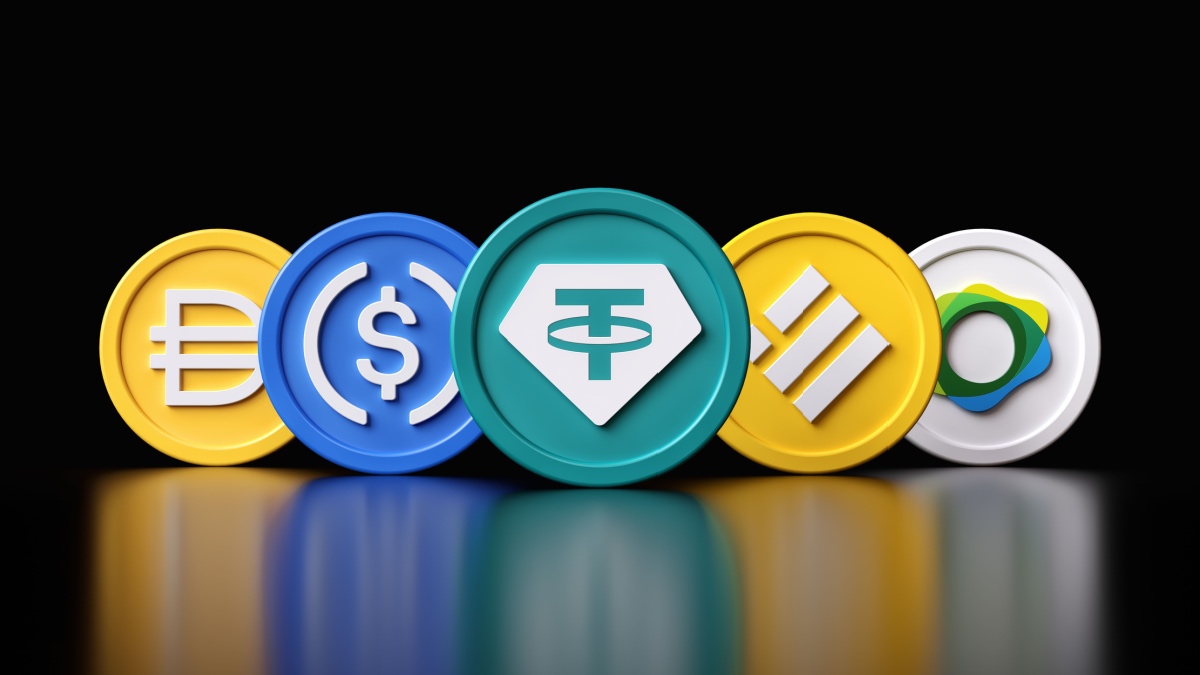
We may see euro or pound stablecoins in the future. Stablecoins connect the convenience of the crypto market with the value assurance of currencies, combining the benefits of blockchain and traditional currency credibility. Of course, such hybrid products have trade-offs. For instance, USDT and USDC may briefly dip below one dollar, requiring their issuers to inject more dollar assets as collateral. Overall, stablecoins are a highly promising application in the crypto market, worth everyone’s attention, especially for those looking to transfer wealth or allocate assets.
At the start of the video, we mentioned Trumpcoin, a personal meme coin issued on the Solana network, which is separate from Bitcoin and Ethereum. Solana is known for fast transactions and low costs, making it an ideal platform for individuals or institutions with influence to issue faith-based currencies and profit from speculation. Solana can be seen as an infrastructure network like Ethereum. Ether is the native currency of the Ethereum network, while USDC or USDT issued on Ethereum are tokens. Trumpcoin, issued on Solana, lacks its own network, so it’s also a token. Trump’s former close associate, Musk, heavily hyped another meme coin: Dogecoin. Unlike Trumpcoin, Dogecoin has its own network and is a native currency, similar to Bitcoin. However, Dogecoin and Solana’s networks lack sufficient decentralization, making them prone to black swan events.
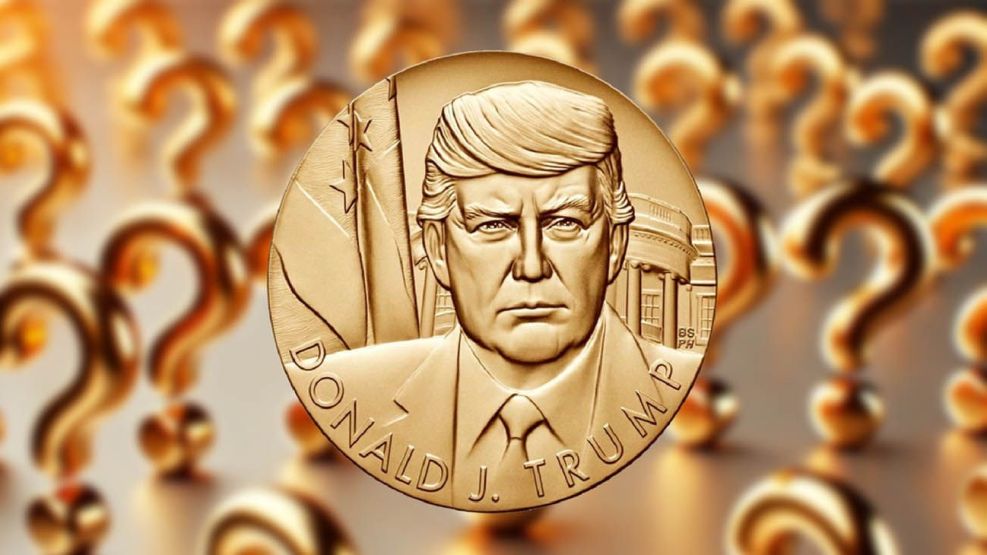
These cryptocurrencies are easily manipulated by a few institutions and have strong speculative qualities. Believe me, some people make money in the casino, but the house always wins because more people lose everything. Musk used his influence to hype Dogecoin and profited significantly. Trump’s issuance of Trumpcoin is largely about collecting a “faith tax” from his MAGA supporters, essentially selling belief. If he becomes president, wealthy individuals may also curry favor with him, essentially paying protection money. Ordinary people can join and make small profits, but they must realize they’re the ones being harvested, while others wield the sickle.
As a beginner, don’t rush to learn about every network. Just understand your needs, find the corresponding coin and network, and achieve your goals. For example, if you want a virtual card to buy a ChatGPT subscription, register with an exchange offering Mastercard or Visa virtual cards, open an account, buy USDT or USDC, and spend.

If you want to store assets on a blockchain, set up a cold wallet or a reliable hot wallet, or choose a few reputable top exchanges, open accounts, convert assets to USDC, and deposit them. Everyone’s needs differ, and most are simple. Cryptocurrencies can solve a specific pain point without requiring you to understand their technical structure. Like banks, crypto networks are now very convenient. The only hurdle is overcoming usage habits. Stepping out of your comfort zone and learning new things is necessary, but don’t speculate in cryptocurrencies without professional knowledge. Trust me, you’ll lose badly.
This episode didn’t cover exchanges in detail. I’ll make a video later discussing well-known exchanges and their unique products and services. That’s all for this video. This channel updates irregularly, covering topics like after-tax income, online earning, and digital nomadism. If you share these interests, please subscribe and leave comments for discussion. See you next time.