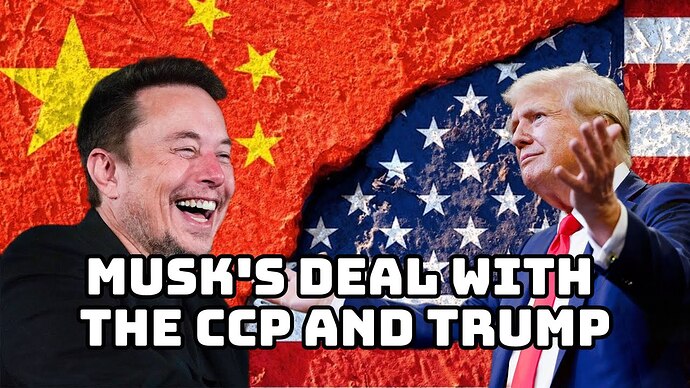
A decade ago, Tesla faced a crisis due to production capacity issues. With the decline of U.S. manufacturing making it impossible to resolve the problems, Elon Musk turned to China. The Chinese government provided land, recruited workers, and solved funding issues to help Tesla get through the difficult time. The Shanghai Gigafactory is of great significance to Musk; without China’s support, Tesla might have gone bankrupt, which would have further affected Musk’s other achievements. Moreover, China did not need Tesla’s technology, as BYD had already been producing and selling electric vehicles, and China had a comprehensive layout in the electric vehicle industry. Supporting Musk was a result of recognizing his potential and willingness to build a good relationship with him, similar to the past interactions with Hong Kong businessman Li Ka-shing. Musk has been friendly to China, praising the efficiency of the Chinese government, and has a clear stance on the Taiwan issue.
Musk Abandoning the India Investment Plan
Earlier this year, Musk planned to invest in India, which excited the Indian side. However, after the Chinese Premier met with Musk, he canceled the plan to build a factory in India. At that time, companies like Apple intended to shift production capacity from China to India. Considering India’s hostility towards China, the Chinese government hoped to stop this trend. Subsequently, not only did Musk cancel his plan, but companies that had already entered India, including Foxconn, also reduced their production capacity in India and increased investment in China.
The Chinese Government’s Expectations for Trump and Musk’s Role
During the Biden administration, Sino-U.S. relations deteriorated with escalating confrontation, and the Chinese government has expectations for Trump, a businessman. Trump is currently in a difficult situation, in lawsuits. If he loses the election, he may face imprisonment and his family business may be implicated. The Chinese government likes to lend a hand when others are at a low ebb. Musk followed this approach, fully helping Trump’s election campaign, and the two sides have had multiple contacts and reached agreements. Trump’s defeat in the previous election was related to the left-wing media’s monopoly on social networks; at that time, platforms like Twitter were unfavorable to him. Now, Musk has acquired Twitter and renamed it X, explicitly supporting Trump. China’s Douyin has also become a channel for Trump to voice his opinions due to its wide audience and great influence. Since the Chinese government cannot directly contact U.S. presidential candidates, Musk has acted as a messenger. Musk’s courage to support Trump may be based on his knowledge of Douyin’s attitude.
Sino-U.S. Compromise and Benefits for All Parties
Although campaign promises are not necessarily consistent with policies after taking office, the Chinese government hopes to improve Sino-U.S. relations. If Musk can influence senior U.S. policymakers, this investment is reasonable. As a businessman, Trump may reach an agreement with China for the sake of interests, including the Taiwan issue. For him, Taiwan is not important, but it is a core interest for China. After taking office, Trump may require China to fulfill its procurement commitments, and China is likely to comply and show him respect. It may also cooperate with Musk and others to protect the interests of Trump’s family after he steps down. Compared with the current all-round confrontation, a Sino-U.S. compromise is better. Musk took risks for this, so he deserves to profit, and both the Trump administration and the Chinese government will give him corresponding rewards.