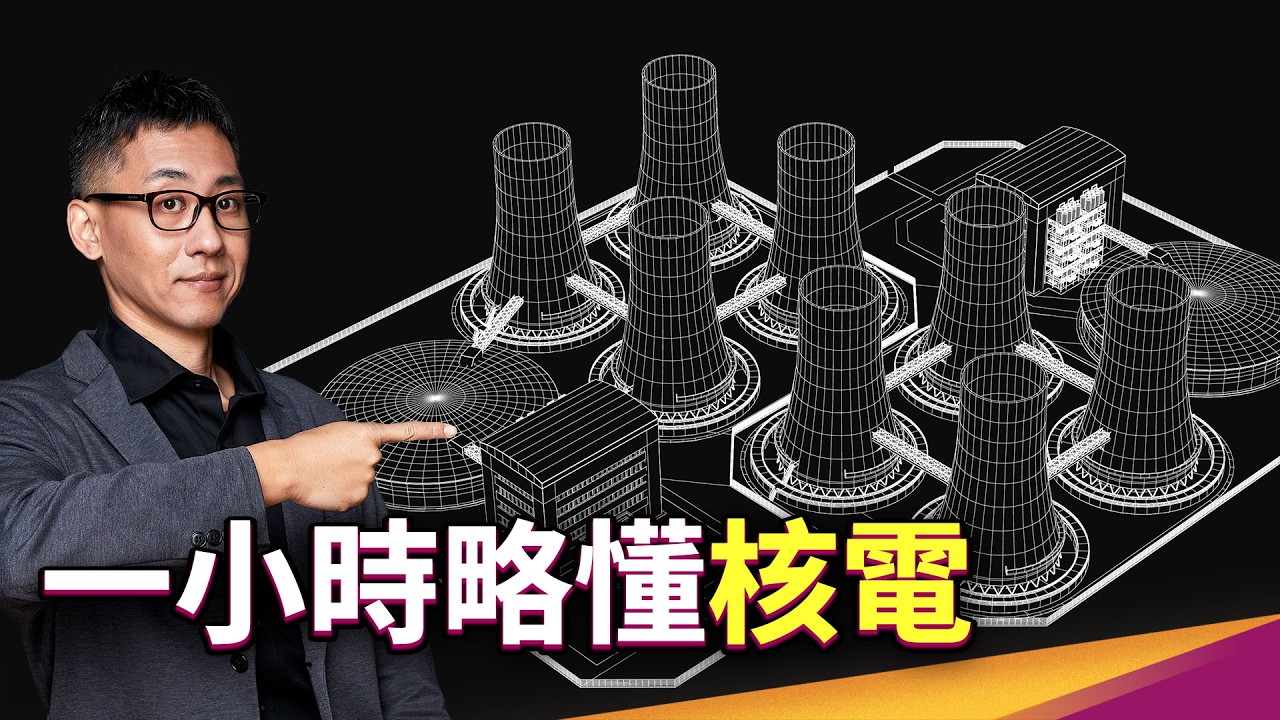
Here is a detailed outline of the video’s content:
Part 1: Introduction to Small Modular Reactors (SMRs) and the Current State of Nuclear Energy
-
What are SMRs? The video introduces SMRs, or Small Modular Reactors, which typically have a power output of 20 to 30 megawatts. It also mentions an even smaller type called MMRs, with a power output of 1 to 20 megawatts.
-
Advantages of SMRs: The key advantages of SMRs are their small size, safety, low cost, and ease of assembly.
-
Challenges of Traditional Nuclear Power: The video explains why traditional nuclear energy, despite its 60-year history, accounts for only about 10% of global electricity generation. The main issues are:
-
High cost and long construction time: The cost of nuclear energy has increased by 36% while renewables like solar and wind have seen their costs drop by 90% and 72% respectively between 2009 and 2021.
-
Safety concerns: The public still harbors fears due to accidents like the Fukushima disaster.
-
-
The Rise of Nuclear Power: The video notes that due to increasing global electricity demand and the need to achieve net-zero emissions, some countries are reconsidering nuclear power. Nuclear energy’s main advantage is its stable and continuous power output, which complements intermittent renewables like solar and wind.
Part 2: SMR Technology and Real-World Examples
-
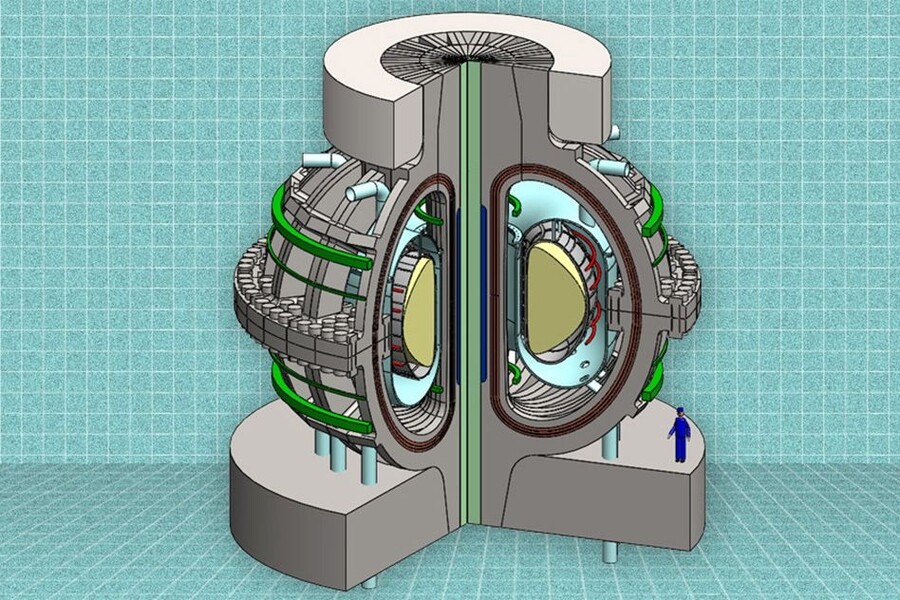
SMR Safety Features: SMRs are designed to be safer by reducing power output, which prevents excessive heat and and can eliminate the need for external cooling systems. The video cites the Fukushima accident as an example of what happens when a cooling system fails.
-
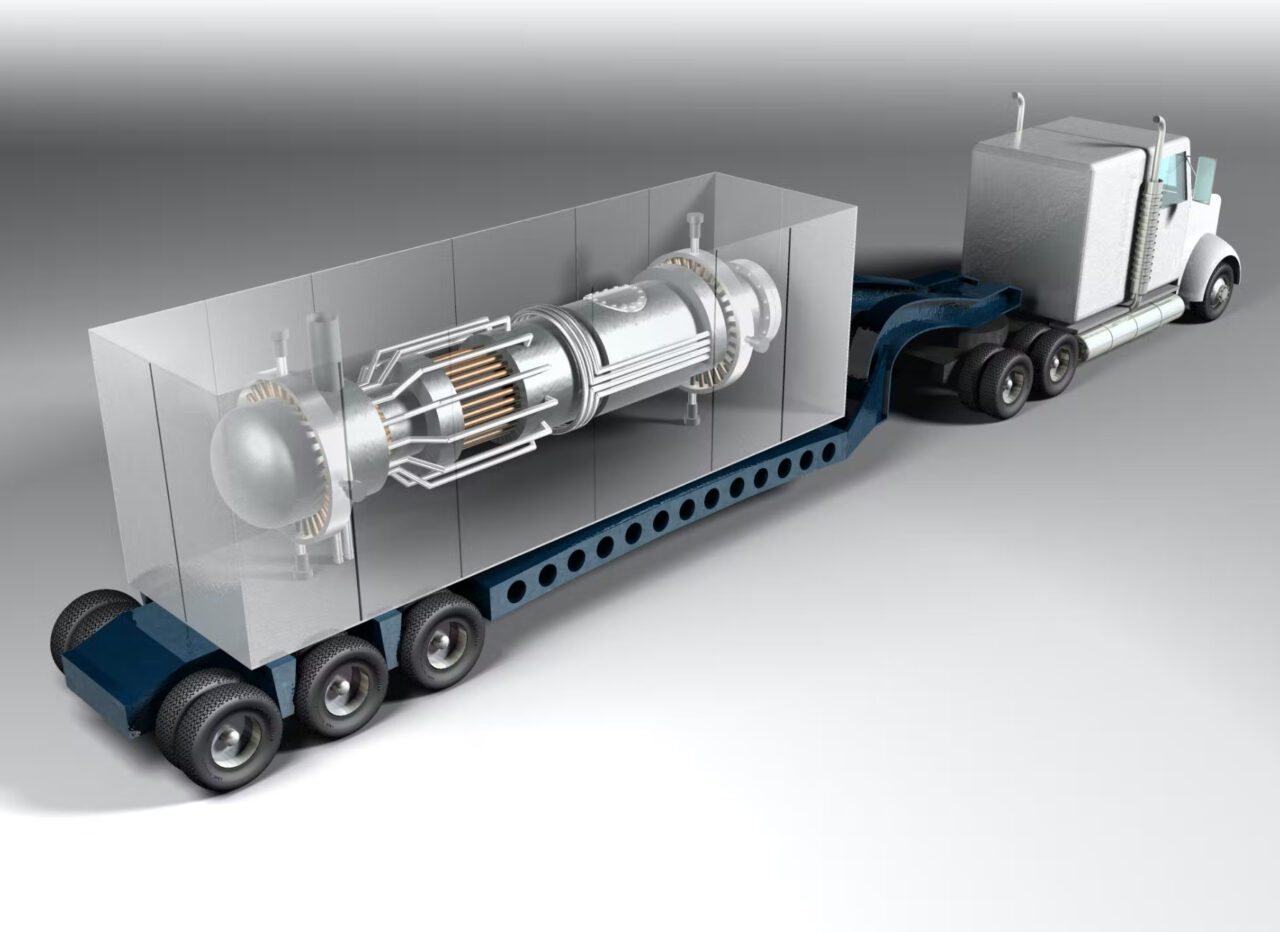
NuScale Power’s SMR: The video uses the NuScale Power company as a prime example of SMR development. Their reactor design is small enough to be transported by truck or train and can be mass-produced in a factory, reducing costs. The system uses natural convection for cooling, removing the need for pumps.
-
China’s High-Temperature Gas-Cooled Reactor (HTGR): The video highlights China as a country that has successfully deployed an SMR. The Shidao Bay Nuclear Power Plant in Shandong province, which began power generation at the end of 2021, is the first land-based SMR.
-
Technology: This plant uses a High-Temperature Gas-Cooled Reactor (HTGR), which uses gas (like helium) as a coolant instead of water, eliminating the risk of a steam explosion. The HTGR can also operate at higher temperatures, improving efficiency.
-
Unique Design: The reactor uses spherical fuel pellets, allowing for continuous refueling and offering enhanced safety features, such as the ability to shut down automatically in a runaway reaction by absorbing excess neutrons at high temperatures.
-
Part 3: The Fourth Generation Nuclear Reactors
-
What are Fourth Generation Reactors? The video defines fourth-generation nuclear reactors as an advancement from previous generations, aiming for higher safety, better economic viability, and improved sustainability, including reducing nuclear waste.
-
Natrium (Sodium-Cooled) Reactors: This section discusses Bill Gates’s investment in Natrium reactors through TerraPower.
-
Sodium as a Coolant: Natrium reactors use liquid sodium metal as a coolant instead of water. Sodium has a high boiling point (883°C), allowing the reactor to operate at higher temperatures (up to 550°C) without pressurization, and its thermal conductivity is 50 times that of water.
-
Fast Neutron Reactors: Sodium-cooled reactors are also a type of fast neutron reactor. Unlike traditional reactors that slow down neutrons, these reactors use fast neutrons to fission uranium-238 and other heavy elements in nuclear waste, a process known as “breeding” new fissile material.
-
Energy Storage: A unique feature of the Natrium design is its ability to store thermal energy using molten salt, which can be used to generate electricity on demand, complementing intermittent renewable energy sources.
-
Challenges: The video points out the high reactivity of sodium, which can react violently with water, and the potential for nuclear proliferation due to the high enrichment of fuel and the production of plutonium.
-
-
Molten Salt Reactors (MSRs): The video describes another promising technology: Molten Salt Reactors (MSRs).
-
Liquid Fuel: MSRs use a liquid fuel, where the nuclear material is dissolved in a molten salt. This eliminates the need for solid fuel rods and the high-pressure conditions of traditional reactors, making them safer.
-
Safety Features: MSRs have a self-regulating negative temperature coefficient, which automatically slows down the reaction as temperature increases. They also have a “freeze plug” that melts in an emergency, allowing the liquid fuel to drain into a safe storage tank and stop the reaction without external power.
-
Thorium Fuel: MSRs have the potential to use thorium as a fuel source, which is three to four times more abundant than uranium and produces less long-lived nuclear waste.
-
Challenges: The video mentions the corrosive nature of molten salts on reactor materials and the complexity of chemical separation to process the liquid fuel.
-
Part 4: Nuclear Waste Management
-
Types of Nuclear Waste: The video clarifies the difference between high-level radioactive waste (spent fuel rods) and low-level radioactive waste (contaminated clothing, tools, etc.).
-
Cherenkov Radiation: The video explains the blue glow seen in spent fuel pools as Cherenkov radiation, which occurs when charged particles travel through water faster than the speed of light in that medium.
-
Current Storage in Taiwan: Spent fuel rods in Taiwan are currently stored in water-filled pools at nuclear power plants due to delays in building dry storage facilities.
-
Final Disposal Solutions:
-
Geological Disposal: This is the most widely accepted solution globally, involving burying nuclear waste deep underground in stable geological formations. The video mentions Finland’s Onkalo spent nuclear fuel repository as a leading example.
-
Transmutation: This is a theoretical process where scientists would use high-energy neutrons or protons to convert long-lived radioactive elements into shorter-lived or stable ones. The video mentions that this technology is still in the research phase.
-
Other Proposed Methods: The video briefly discusses and dismisses other methods like deep-sea disposal and space disposal due to safety and monitoring concerns. It cites a real-world example of a failed Soviet satellite carrying a nuclear reactor as a reason why space disposal is not a viable option.
-
Conclusion
-
The video concludes by reiterating that while new nuclear technologies like SMRs and fourth-generation reactors offer promising solutions for safety and sustainability, the issue of nuclear waste remains a global challenge that requires continued research and public discussion.
-
It also touches on the increasing demand for electricity driven by AI and data centers, suggesting that nuclear energy may be a crucial part of the future energy mix.