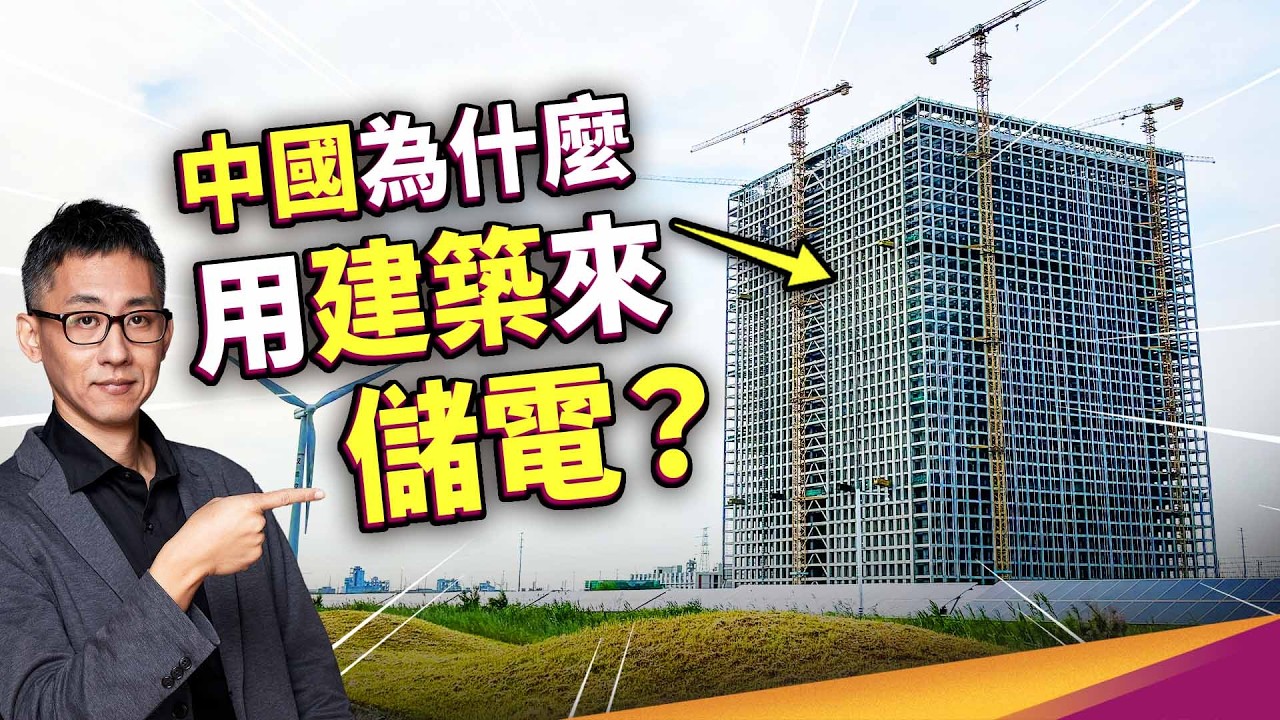
here is a detailed outline of the video:
I. Introduction to Energy Storage
-
The video opens by asking if China is a leader in energy technology and immediately identifies energy storage as the most advanced area.
-
It mentions that in addition to lithium battery containers, there are many other innovative methods for energy storage.
-
The video highlights that a commercial gravity energy storage power station in Jiangsu, China, is nearing completion, and other countries like the U.S., Switzerland, Finland, and the U.K. are also joining the new energy storage race.
-
The video introduces the concept of Long-Duration Energy Storage (LDES), which focuses on long-term and low-cost storage, unlike expensive but fast-charging lithium batteries.
II. Types of Energy Storage Technologies
-
Pumped-Storage Hydropower (Taiwan’s Largest “Battery”)
-
The video explains that Taiwan’s largest battery is not a power plant or a factory but is located in Sun Moon Lake.
-
It details how the lake uses a 300-meter height difference with the downstream Mingtan Reservoir to operate like a giant battery, releasing water to generate power during the day and pumping it back up at night.
-
The video notes that with the increase in solar power, the system’s role has changed to pumping water with cheap solar energy during the day and releasing it for power at night to solve the intermittency of solar power.
-
-
Gravity Energy Storage
-
This method’s principle is based on potential energy (mass × gravity × height).
-
The video introduces a Swiss company, Energy Vault, that builds a 148-meter-tall structure using a crane to stack 12,000 composite blocks, each weighing 25 tons.
-
It explains that when power is abundant, the blocks are lifted, storing electrical energy as potential energy. When power is needed, the blocks are lowered, and the released energy powers a generator.
-
The round-trip efficiency is stated to be over 80%, comparable to lithium-ion batteries.
-
It highlights that the blocks can be made from waste materials, and a large-scale version is being tested in Jiangsu, China.
-
Other variations mentioned include a U.K. company, Gravitricity, which uses abandoned mine shafts to raise and lower weights, and another company, Gravity Power, which plans to use a piston in a water-filled shaft.
-
-
Compressed Air Energy Storage (CAES)
-
The video explains that this method uses air, which is cheaper than concrete and other materials.
-
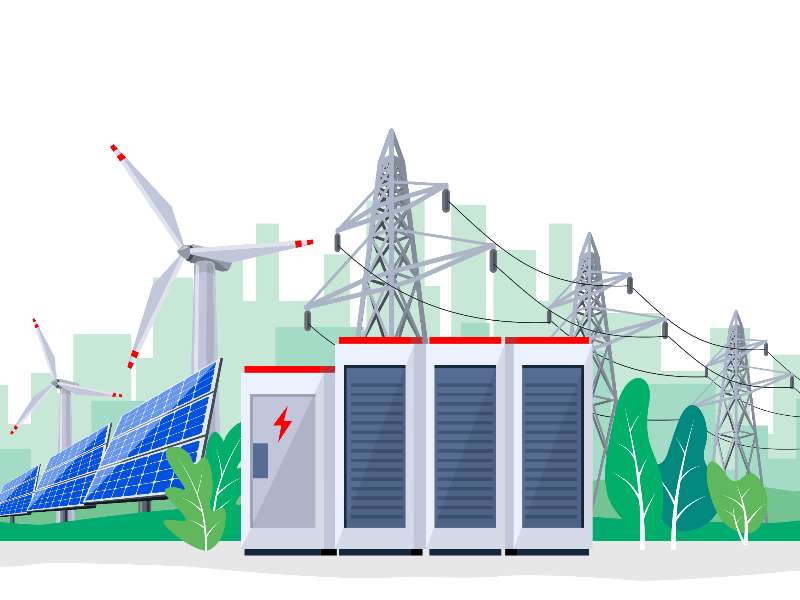
It describes how surplus electricity is used to power a compressor, forcing a large amount of air into a sealed underground space like a mine or salt cavern.
-
When power is needed, the high-pressure air is released, turning a turbine to generate electricity.
-
A major CAES project in Jintan, China, is highlighted for its large capacity and efficiency.
-
The video explains a major challenge with this technology: energy loss due to heat. Compressing air releases heat, and expanding it rapidly cools it down, which can even cause ice to form in the pipes.
-
-
Thermal Energy Storage (TES)
-
To solve the heat loss problem of CAES, the video suggests combining it with thermal energy storage.
-
It mentions a previous video about molten salt and how it can be used to store heat from nuclear reactors and concentrating solar power plants to allow for 24/7 power generation.
-
It then introduces a more low-cost alternative from a Finnish company, Polar Night Energy, which created the world’s first commercial sand battery in 2022.
-
The system heats sand to 500-600°C and stores it in a silo, providing heat for local towns for days or even weeks.
-
The video notes that while the round-trip efficiency for heat storage can be as high as 99%, converting the heat back to electricity can drop the efficiency to 20-40%.
-
III. Conclusion: The Future of Energy Storage
-
The video concludes by stating that no single energy storage technology is perfect. Gravity storage needs specific terrain, CAES requires specific geological structures, and sand batteries are more suitable for cold regions.
-
The future of energy will likely be a mix of different technologies adapted to different geographical locations.
-
It poses questions about which technologies would be best suited for Taiwan, which has mountains and frequent geological activity.
-
The video closes by stating that the energy storage competition is about technology, cost, efficiency, and safety and will determine future energy independence and industry standards.