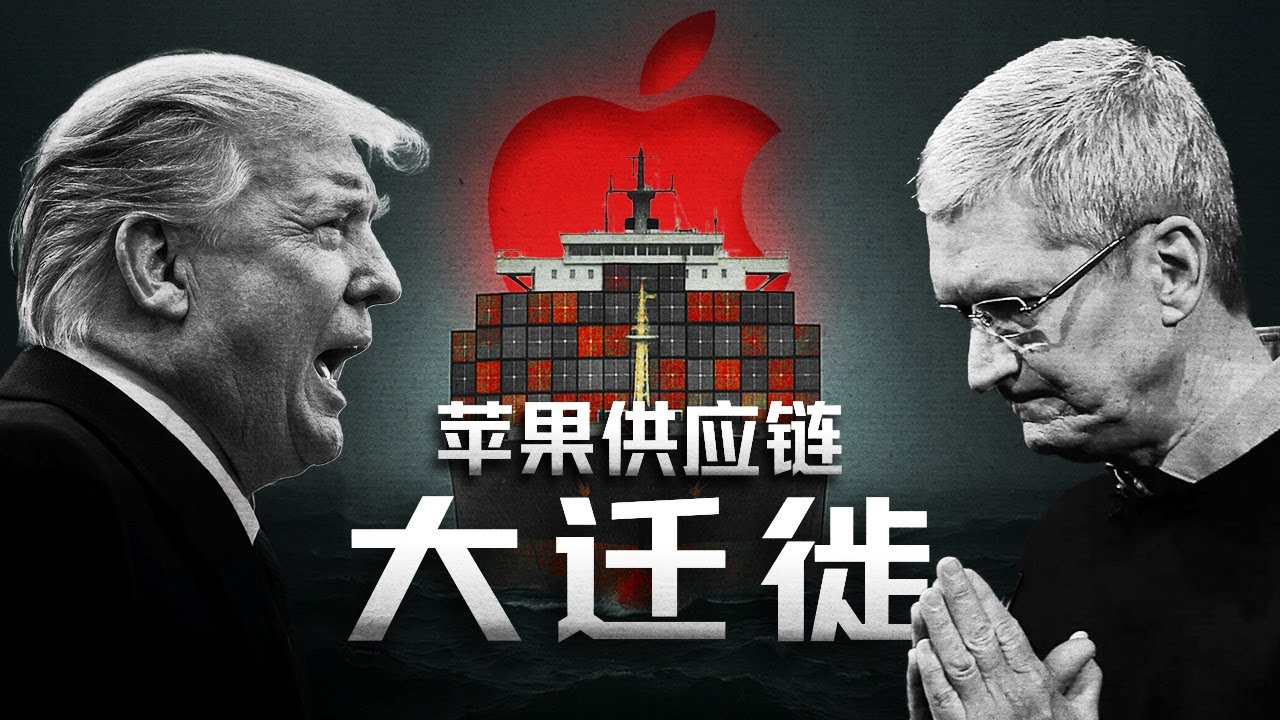
This video discusses how Apple’s global supply chain is being challenged by shifts in international relations, particularly the trade tensions between the U.S. and China.
The Past and Present of Apple’s Supply Chain
-
Historically, Apple’s products have been designed in California and manufactured in China. The company’s supply chain strategy, shaped largely by Tim Cook, involves a massive network of suppliers globally, with a heavy concentration in China. Over 80% of Apple’s 200 main suppliers have production facilities in China.
-
Key Chinese suppliers mentioned include Luxshare Precision, Lens Technology, Goertek, Crystal-Optech, and Sunwoda.
-
Cook’s strategy involved streamlining the supply chain by reducing the number of suppliers and implementing a “just-in-time” inventory model to boost efficiency and profit margins.
Apple’s Response to Tariffs and Geopolitical Risks
-
During Donald Trump’s first presidency in 2018, Apple faced the threat of tariffs on goods imported from China. In response, Tim Cook adopted a two-pronged strategy:
-
Lobbying the White House: Cook frequently met with U.S. government officials to explain how tariffs would impact the cost of iPhones. Apple also committed to significant investments in U.S. manufacturing and job creation.
-
Supply Chain Diversification: Apple began shifting some production outside of China. This strategy, known as “China Plus One,” aims to reduce over-reliance on a single country.
-

The “China Plus One” Strategy
-
Since 2017, Apple has been intentionally relocating parts of its production and supply chain to other countries, with a particular focus on India and Vietnam.
-
India: India is a key destination due to its large, young population and low labor costs. The Indian government also offers manufacturing subsidies. However, challenges remain, including lower production efficiency and quality control issues compared to China. The video notes that it takes two to three Indian workers to match the efficiency of one Chinese worker.
-
Vietnam: Vietnam is a preferred alternative due to its proximity and a well-established industrial infrastructure. The country has become a significant production base for AirPods and Apple Watches. However, Vietnam also faces hurdles, such as a weak local engineering talent pool, rising costs, and different labor laws and cultural norms.
-
Brazil: Brazil is also mentioned as a potential production hub for iPhones and iPads, offering close proximity to the U.S. market and lower tariffs.
Why China’s Role is Hard to Replace
-
The video argues that despite the diversification efforts, China’s role as the world’s factory remains difficult to replace in the short term. The reasons include:
-
Deep Manufacturing Experience: Decades of experience have created a highly specialized and efficient production ecosystem.
-
Comprehensive Supply Chain: China has a unique, localized supply chain where all necessary components, from chips to packaging, can be sourced within the same region.
-
Skilled Labor: The workforce includes many highly-educated individuals capable of handling complex engineering and management tasks.
-
Work Culture: The flexible and fast-paced work culture in China is well-suited for the demands of electronics manufacturing.
-
In conclusion, the video explains that while Apple is actively restructuring its supply chain to navigate geopolitical risks, the complete relocation of its manufacturing from China is a complex and long-term challenge. The ongoing trade disputes not only affect large corporations and governments but also impact consumers and workers worldwide.