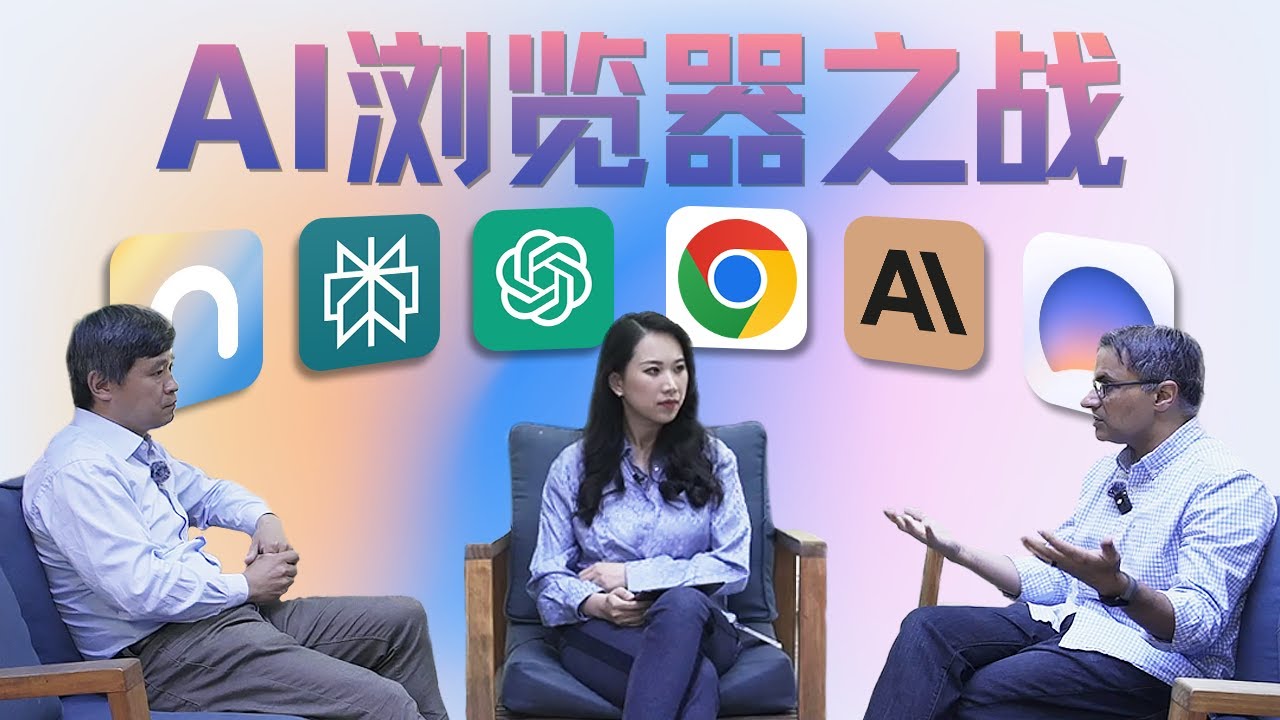
This video discusses the new “AI browser war” and how AI is changing the landscape of web browsing and search. The discussion features Guru and Howie, who share their insights on the topic, including the recent news of Perplexity’s offer to acquire Google Chrome.
AI’s Impact on Browsers
-
From Operating System to Browser: Guru explains that over the last 25 years, the primary system for human-computer interaction has shifted from the operating system to the browser. This shift means that functions like security, data gathering, and running applications now happen within the browser.
-
AI and the Browser: The panelists believe that the browser will be the primary mechanism for AI to interact with human-designed tools. The browser acts as a “choke point” for collecting data, automating tasks, and securing AI-to-system interactions.
-
Renewed Interest in Browsers: The panelists agree that AI has created a renewed interest in browsers. Guru states that Google created Chrome to own search, but with the advent of AI, browsers have become “several orders of magnitude more important.” The AI browser can passively and continuously gather data and take action, either as a co-pilot or an autonomous agent.
The Browser War
-
Google’s Innovator’s Dilemma: The speakers argue that Google is in a difficult position due to its dependence on search advertising revenue, which is heavily tied to Chrome’s user interface. A significant change to the browser could negatively impact Google’s revenue, which makes it hard for them to innovate and adapt to an AI-native browser.
-
The Future is Not Chrome: Howie predicts that in 10 years, Chrome will not be the dominant browser, as a “different browser” will emerge. The hosts discuss how the opportunity for innovation is wide open because the underlying engine, Chromium, is open-source. This allows startups to use it as a building block to create new browsers focused on security, automation, or AI.

-
New AI Browsers: The speakers mention several AI browsers, including:
-
Perplexity: The hosts discuss Perplexity’s offer to buy Chrome, noting it as a “very clever, very smart” move to generate attention.
-
Norton Neo: Howie talks about his own project, the Norton Neo AI browser, which aims to be a proactive, personalized assistant rather than a tool that just reacts to user commands.
-
The Future of Search and Advertising
-
Search is Changing: Guru argues that the traditional search model of typing a query and getting 10 blue links is outdated and will be completely disrupted. Instead, AI will handle the search and discovery process, and the browser will become the primary mechanism for interaction and automation.
-
New Business Models: The panelists agree that the old business model of advertising, which relies on banner ads and clicks, is not suited for the new AI-native world. Howie states that the future business model is unclear, but new products will be created first, with a business model to serve them, instead of the other way around.
Technological Advancements and Challenges
-
Evolution of AI Browsers: Howie outlines three phases for AI-native browsers:
-
Phase 1: Merging chat and search into a single, unified experience.
-
Phase 2: Making browsers more proactive and personalized, with a “superman” or AI assistant sitting next to the user.
-
Phase 3: Creating “agentic” browsers that can perform complex, multi-step tasks on behalf of the user, such as planning a trip or buying a product.
-
-
Privacy and Trust: The speakers acknowledge that AI browsers raise significant privacy concerns. Howie stresses the importance of giving users control over their data, citing his Norton Neo browser, which offers a “signal” experience where data is stored locally on the user’s device. However, Guru notes that the average consumer often prioritizes convenience over privacy, as seen with Google’s login prompts.
-
Voice and Visuals: The discussion also touches on the potential of voice and visual interfaces. Howie shares that his team has integrated voice into the Neo browser, but user adoption has been low so far. They believe that while the technology is ready, users may not be accustomed to talking to their desktops yet. Both speakers are excited about the future of multi-modality, where users can consume information in various formats (text, audio, video) based on their personal preferences in real time.