
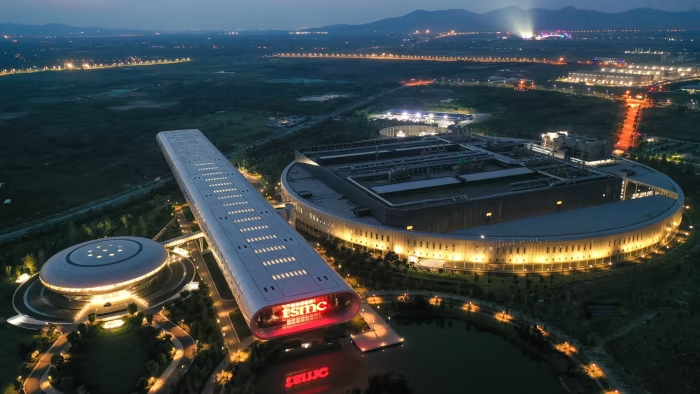
The video discusses a data leak incident at TSMC and its connection to Japan’s semiconductor ambitions.
Here is a summary of the main points discussed:
-
The TSMC Leak and Rapidus: The video begins by discussing a data leak at TSMC involving their 2nm manufacturing technology. The leak was tied to employees of TEL, a Japanese company that is a key shareholder and supplier for Rapidus, a new Japanese semiconductor foundry. This suggests the leaked information was intended to support Rapidus’s efforts to revive Japan’s semiconductor industry.
-
Introduction to Rapidus: Rapidus was established in August 2022 with significant government support to help Japan regain its dominance in the semiconductor industry. The project is seen as a critical part of Japan’s national security strategy.
-
Challenges Faced by Rapidus: The speaker outlines three key reasons why the venture is likely to fail:
-
Talent and Experience Gap: Japan’s semiconductor industry has declined, and its most advanced technology is about 20 years behind global leaders. Rapidus has a small team of engineers with experience in older technologies, a gap that is difficult to bridge.
-
Lack of a Domestic Ecosystem and Market: The companies that are primary shareholders and customers of Rapidus, such as Sony and Toyota, do not require cutting-edge 2nm chips for their products. Without demand from major design companies like Nvidia and AMD, Rapidus will have no customers for its 2nm chips.
-
U.S. Semiconductor Tariffs: The video suggests that U.S. tariffs on semiconductors would not significantly affect TSMC or Samsung, which are already building factories in the U.S. However, Rapidus would be the biggest indirect victim, as losing access to the U.S. consumer market would severely limit its growth prospects.
-