This video discusses several topics related to China’s semiconductor industry, specifically focusing on the companies Yuliangsheng and Xinkailai (SiCarrier).
The key points covered include:
-
Correction about Yuliangsheng and Xinkailai: The host corrects a previous error, clarifying that Yuliangsheng and Xinkailai are two separate, independent companies funded by state-owned assets from Shanghai and Shenzhen, respectively. Yuliangsheng focuses on DUV lithography, while Xinkailai specializes in other semiconductor manufacturing equipment.
-
China’s Semiconductor Strategy: The video explains how the investment in these two companies reflects a broader, macro-level strategy in China to develop a domestic semiconductor industry by leveraging clusters in the Jing-Jin-Ji, Yangtze River Delta, and Pearl River Delta regions.
-
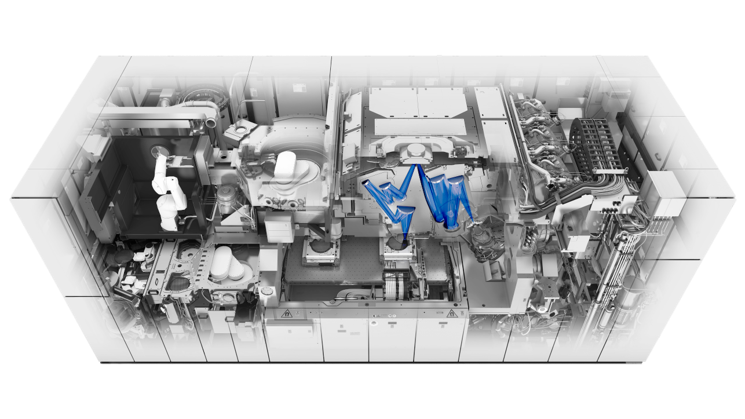
Comparison of DUV and EUV: The host uses information from ASML’s official website to explain the main differences between DUV and EUV lithography equipment. A key difference highlighted is the light source, with EUV using an extreme ultraviolet light source that requires a vacuum environment and reflective mirrors instead of lenses, making it a much more complex technology.
-
The Semiconductor Manufacturing Process: The video provides a simplified overview of the semiconductor manufacturing process, explaining that lithography (or exposure) is just one step. It details how a single chip can have dozens of layers, each requiring multiple steps like film deposition, photoresist coating, exposure, development, and etching, which must be repeated over and over.
-
Progress of Chinese Companies: The host mentions that Xinkailai’s etching products, named the Wushan series, have reportedly achieved control over 5nm-level lines and performed well in process verification. Yuliangsheng’s DUV machine is believed to be undergoing testing at a customer’s fab in Shanghai.
-
Host’s Perspective: The host concludes by stating his belief that China will eventually produce its own EUV machines, but emphasizes that the real measure of success is not just creating a prototype but achieving successful mass production.