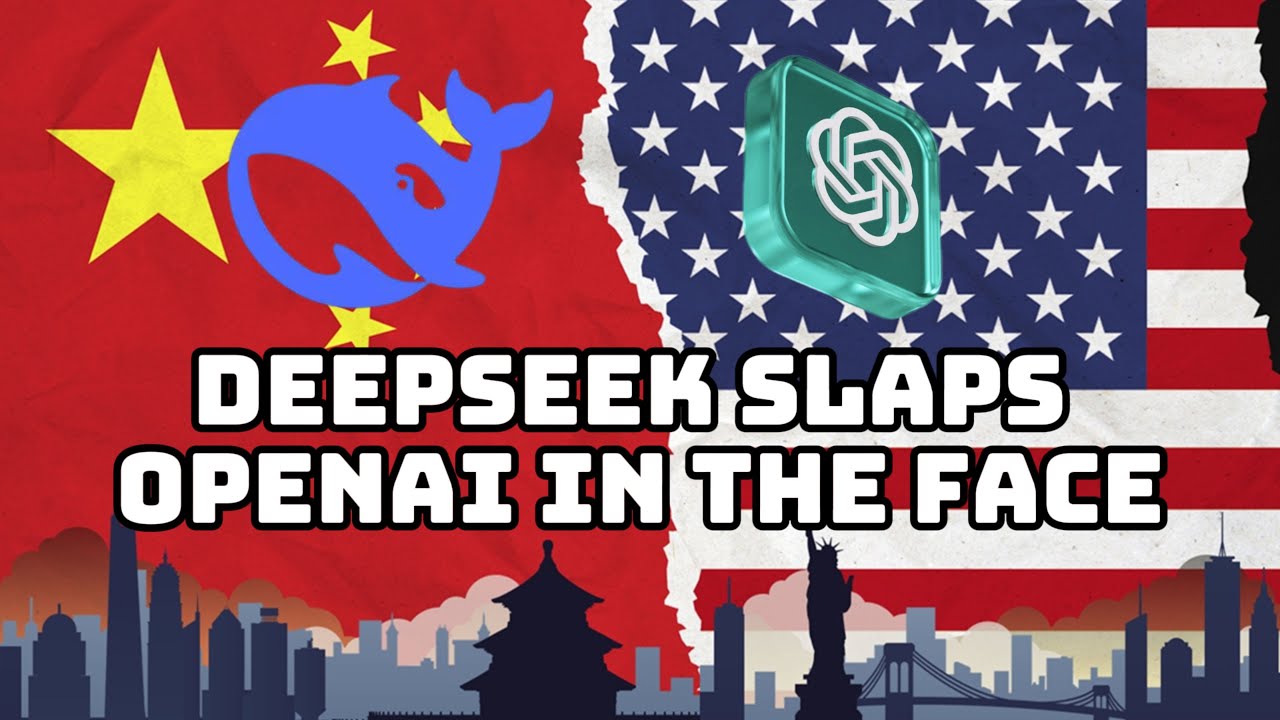
Video Summary: Debunking AI Hype and Predicting the Future of the Industry
This video offers a critical perspective on the current state of the AI industry, the valuations of major players like NVIDIA, and the future of AI development. The speaker addresses personal criticisms by highlighting their past accurate predictions and technical insights.
Key Arguments & Predictions:
-
NVIDIA’s Valuation & US AI Strategy: The speaker posits that NVIDIA’s market value is severely overestimated. They argue that the US’s focus on generative AI is a strategic misstep due to an imbalance between investment and output. NVIDIA’s AI chips, though prominent, are deemed replaceable, with true AI model optimization requiring a blend of software and hardware advancements.
-
US vs. China in AI Competition: The video asserts that the US’s advantage in AI software is not as significant as perceived, and in hardware, the US is not competitive with China, which offers more cost-effective and functionally superior products. The speaker believes that US technological blockades against China will backfire, accelerating China’s progress (e.g., China’s low-cost 28-nanometer lithography machines are cited as an example that will pressure the lifting of export restrictions).
-
Future of AI Development:
-
Large-scale AI video generation models are predicted to fail because the Transformer architecture cannot resolve issues of image stability and consistency.
-
A truly viable approach for generative AI involves AI controlling computers like a human engineer, for instance, by leveraging game engines for image and video generation.
-
The Transformer architecture is not seen as the ultimate solution for AI. The industry is expected to face cost compression and intense price competition once training resources are exhausted, leading to bankruptcies.
-
Quantum computing combined with new AI algorithm architectures is identified as the next major competitive frontier, potentially ushering in the true AI era.
-
-
DeepSeek’s Open-Source Strategy: The video explains DeepSeek’s decision to go open-source as a way for a small team to build reputation quickly. While professional teams can replicate it, most companies will still use its affordable API. The open-source model also encourages community improvements and is a strategic response to intense competition in the Chinese market, especially from giants like ByteDance.
-
Critique of OpenAI: The speaker contrasts DeepSeek with leading AI models like OpenAI and Claude, questioning their high valuations given their lack of profitability. The video criticizes OpenAI for shifting from a non-profit open-source organization to a closed, for-profit entity, alleging that its actions violate open-source principles and are protected by the US government to maintain technological hegemony. The speaker concludes by questioning American societal values that seemingly praise success regardless of the means, suggesting that basic legal and moral dignity are being compromised in the effort to defeat China.