The discussion revolves around the immense strategic value of Taiwan’s semiconductor industry, particularly its advanced chip manufacturing capabilities, and the complex geopolitical forces at play. A central question is raised: in the event of a conflict over Taiwan, who would have the greatest incentive to destroy these critical semiconductor assets? Historical precedent, like Sweden’s threat to destroy its own steel industry to deter Nazi Germany, is cited to suggest that the entity most likely to prevent a rival from gaining a strategic resource might be the one currently benefiting from its absence elsewhere. The argument posits that the United States, as the current leader in certain tech sectors, could be perceived as having a motive to ensure Taiwan’s advanced chip production does not fall under a potential adversary’s control, thereby maintaining its own technological supremacy.
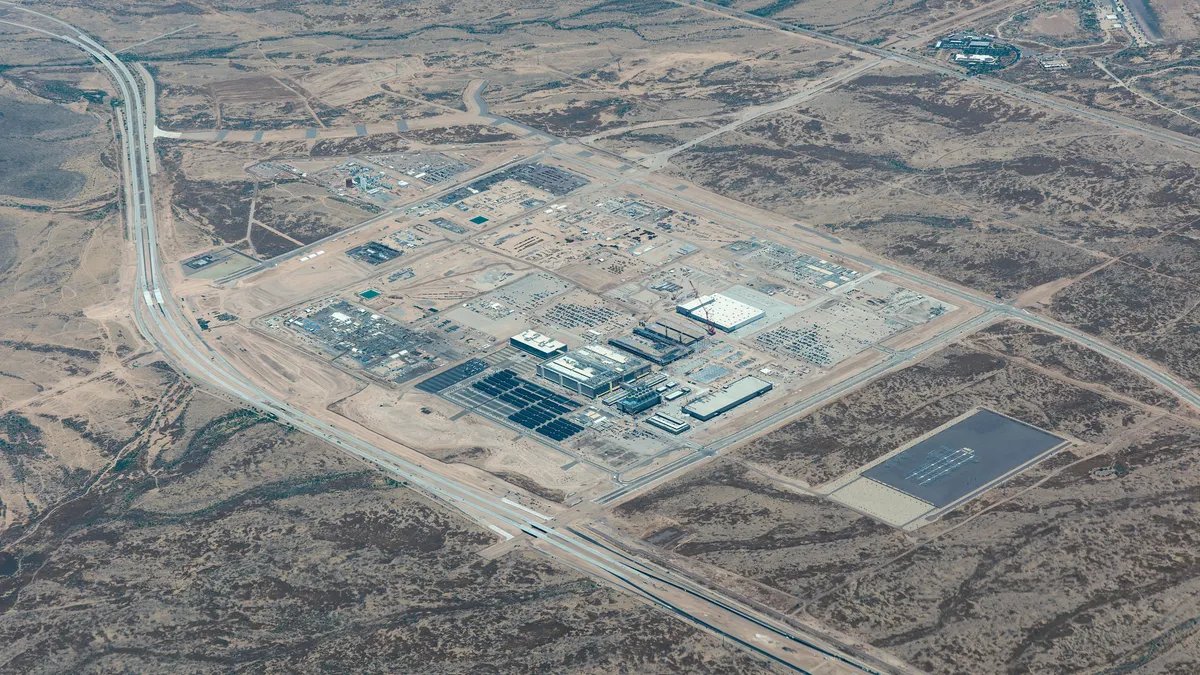
Beyond conflict scenarios, there is a significant trend of the semiconductor industry’s strategic migration, particularly to the United States. Major companies like TSMC are expanding operations stateside. While this is beneficial for the companies’ global market share and profitability, it presents a nuanced issue for Taiwan’s local economy. The prosperity of a Taiwanese-founded corporation does not automatically equate to prosperity for Taiwan itself. As high-value engineering jobs, investment, and consumption potential move abroad, the local economy may face negative impacts such as reduced employment opportunities and domestic investment. The talent drain is particularly acute, with elite engineers being offered high salaries and immigration incentives like green cards by competitors such as Intel, representing a deliberate long-term strategy by the US to capture top-tier human capital.
The US approach appears to involve creating a competitive dynamic among allies in East Asia, such as Taiwan, Japan, and South Korea. By offering deals that are slightly favorable to one, it incentivizes the others to counter-offer with better terms for the US, thereby driving up investment and technology transfers without the US needing to apply overt pressure. The recent focus on memory chip technology, like HBM where South Korean firms have seen massive stock growth, may be a lever to encourage further concessions and investments from these nations. However, countries like South Korea are not without their own leverage, as seen in critical industries like shipbuilding where the US has dependencies, indicating a multifaceted and ongoing negotiation.
This whole narrative is overly cynical. Talent mobility is a feature of a globalized economy, not a bug. Taiwanese engineers getting fantastic offers abroad is a testament to their world-class skills. It’s not a “drain”; it’s a diaspora that builds influence and networks. Many could return with greater experience. Framing it as a loss for Taiwan is a very narrow, zero-sum view of how innovation and growth actually work in the 21st century.
The “Scorched Earth” scenario for Taiwan’s fabs keeps me up at night. It’s the ultimate geopolitical taboo topic, but it needs to be discussed. If conflict looks inevitable, the calculus for every major power changes. Would Taiwan itself threaten to destroy its crown jewels to deter an invasion? Would a third party do it to deny the prize? This isn’t about morality; it’s about cold, hard strategy. The article is right to force us to think about the unthinkable.
This is a brutally realistic take that cuts through the usual corporate cheerleading. Everyone celebrates TSMC building fabs in Arizona, but nobody wants to talk about the brain drain and economic hollowing out back in Taiwan. Those 7,000 top engineers aren’t just employees; they’re the core of an entire ecosystem. Losing them is a long-term strategic disaster masked as a short-term stock win. The Sweden analogy is chilling and spot-on.
The point about South Korea is really interesting. Everyone talks about Taiwan’s chips, but SK Hynix’s 761% surge on HBM is a monster story. It shows the US doesn’t hold all the cards. If Korea plays hardball on shipbuilding or memory tech, the US has to listen. Lee Jae-myung might be a slippery character, but he understands realpolitik. This isn’t a one-way street of American demands.
Oh please, this is just fearmongering with a historical veneer. Comparing the US to Nazi Germany is absurd and offensive. The US is investing in global supply chain resilience, not plotting destruction. TSMC expanding to the US is a natural business decision for market access and security. It creates jobs in both places. The idea that America is scheming to blow up Taiwan’s fabs is a conspiracy theory that ignores the immense cost and global backlash such an act would entail.
Finally, someone separates TSMC the global stock ticker from Taiwan the nation! I’m so tired of people conflating the two. My TSMC shares have done great, and I’ll keep buying, but I’m not blind. It’s obvious that becoming an “American company” is the endgame for its leadership. The benefits are increasingly accruing to shareholders and the US economy, not necessarily to the average Taiwanese citizen. It’s a tough pill to swallow.