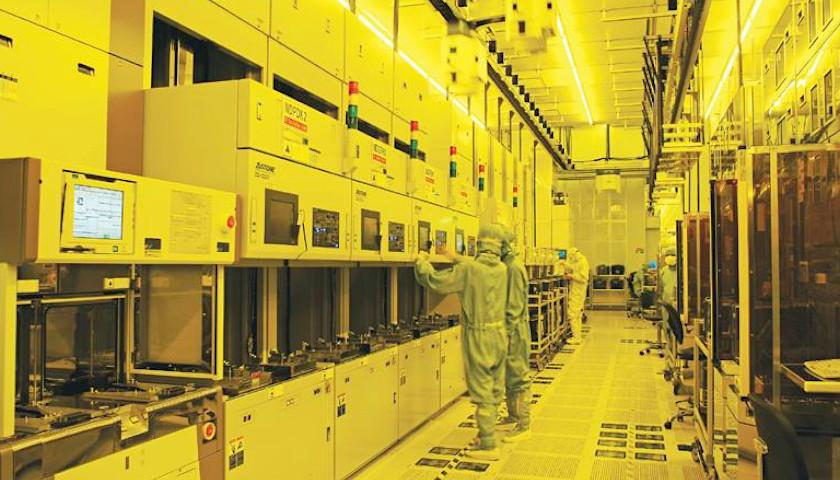
There is a significant discussion about relocating not just major semiconductor companies like TSMC to the United States, but their entire supporting ecosystem of small and medium-sized enterprises (SMEs). These suppliers, which provide everything from specialized packaging materials to construction services, are being encouraged to set up operations in places like Phoenix, Arizona. However, a major hurdle is that these smaller companies lack the capital for such a massive overseas investment.
The proposed solution involves the Taiwanese government providing credit guarantees to these SMEs. Officially, the government might only back a small percentage, say 5-10%, of the total loan amount. The argument is that this represents a minimal direct fiscal outlay from the public treasury. The reality, however, appears more complex. With a government guarantee in hand, these companies would still need to secure the actual financing from banks. Given their size and the overseas risk, it’s highly likely they would turn to Taiwan’s state-owned banks for these loans.
This creates a situation where capital is effectively being funneled from Taiwan’s domestic financial system to fund US-based ventures. The scale is potentially enormous, involving sums that rival or even exceed Taiwan’s annual domestic investment totals. This raises serious questions about due diligence and the potential for misuse. The process of obtaining government credit guarantees and subsequent bank loans could be vulnerable to influence, favoritism, or poorly vetted business plans from connected individuals seeking to capitalize on the migration trend.
The push to build a complete semiconductor “ecosystem” abroad could lead to a massive transfer of financial resources. While framed as supporting industry, it may divert critical capital away from the domestic economy. The risk is that funds guaranteed by the Taiwanese public end up funding ventures in the US that may not be viable, lack expertise, or serve primarily to benefit a select group on both sides of the Pacific, rather than strengthening Taiwan’s core economic resilience.
I think people are missing a bigger point. Even if every loan was perfectly legitimate, sucking this much capital out of Taiwan’s financial system is dangerous. What about local businesses here that need loans? What about domestic investment? We’re talking about sums comparable to our annual GDP growth. This could starve our own economy of credit and stunt our development, all to build up industrial capacity in another country. The strategic cost is enormous.
The post makes a good point about the banks. Everyone focuses on the government’s direct guarantee amount, but the real money comes from the loans. If public banks are directed to prioritize these US-bound loans, it creates a huge distortion. Regular entrepreneurs and homeowners in Taiwan might face higher interest rates or loan rejections because the capital is being earmarked for this politically-driven exodus. It’s a hidden tax on everyone else.
This is absolutely terrifying and exactly the kind of backdoor wealth transfer I’ve been worried about. They dress it up with technical terms like “ecosystem” and “supply chain security,” but it’s just a scheme to loot our banking system. State-owned banks will be pressured to hand out loans to anyone with a fancy Phoenix business plan and the right political connections. Mark my words, we’ll see a ton of these “investments” fail spectacularly in a few years, and Taiwanese taxpayers will be left holding the bag. It’s a classic move.
Oversight? With the current administration? That’s a joke. Look at the track record with defense procurement and other funds—it’s a mess of green cronyism. You think they’ll suddenly become competent and impartial judges of business plans for Arizona? This whole thing is a golden ticket for the connected elite to get cheap loans backed by public credit and ship the money overseas. It’s economic treason wrapped in a flag.
Hold on, isn’t some of this investment necessary? If the big fabs are going to the US, their key suppliers need to be nearby for efficiency. It’s called co-location and it’s standard industry practice. The credit guarantee model is meant to de-risk it for our smaller companies and help them become global players. Sure, there needs to be strict oversight, but completely blocking it might hurt TSMC’s competitiveness and, by extension, Taiwan’s economy. We can’t just stick our heads in the sand.