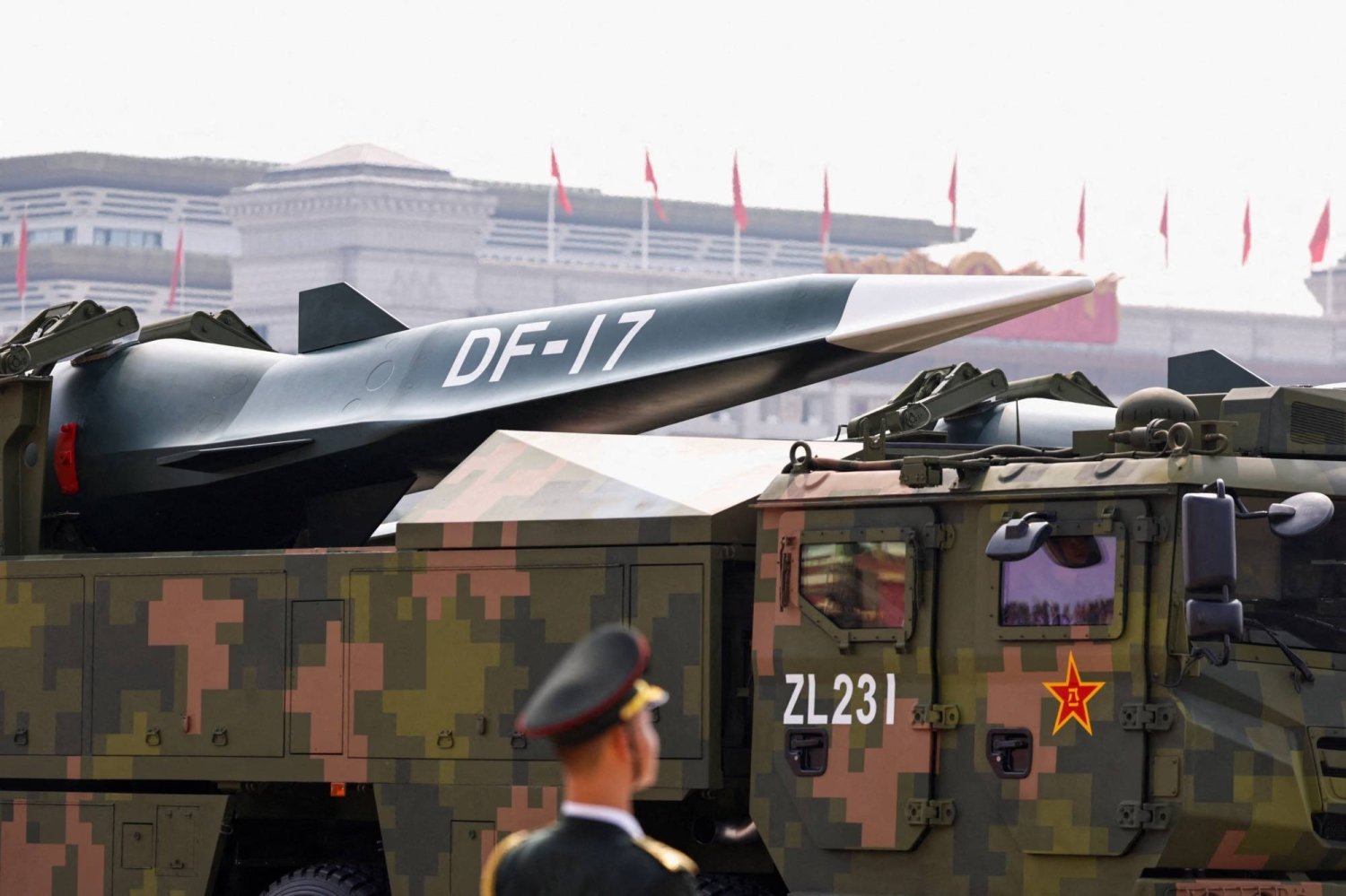
A recent analysis from a prominent American think tank has sparked considerable discussion regarding the People’s Liberation Army’s (PLA) actual warfighting capabilities. The core argument presented suggests that the PLA is fundamentally a “political army,” primarily structured to ensure domestic stability and regime security for the Chinese Communist Party, rather than being optimized for large-scale conventional warfare against a peer adversary like the United States.
The report argues that while China has invested heavily in advanced weapon systems, particularly in areas like anti-access/area-denial (A2/AD) missiles, the possession of such hardware does not automatically translate to superior combat effectiveness. It draws parallels with other nations where well-equipped armies, focused on internal political control, have underperformed in interstate conflicts. The analysis posits that a military’s effectiveness is determined not just by equipment, but by intangible factors: professional military ethos, realistic training, decentralized command allowing initiative, and a culture prioritizing battlefield success over political loyalty.
The think tank contends that the PLA’s significant investment of time in political education and its command structure, which emphasizes Party control through political commissars, may come at the expense of honing the complex joint-warfare skills needed to defeat a professional “warfighting army.” In a conflict scenario outside the immediate protective umbrella of China’s land-based missile systems, the PLA would have to rely on these very skills where it is perceived to be at a disadvantage.
However, the report acknowledges China’s formidable advantages in a specific scenario: a conflict in the Taiwan Strait. Here, geography and the concentration of A2/AD assets could pose a severe challenge to any intervening force. Yet, it suggests that a prolonged, global conflict would play to the strengths of the US military’s experience and global basing network. Ultimately, the analysis concludes that China’s most reliable deterrent may not be a conventional military meant to defeat the US in a head-to-head fight, but rather its rapidly expanding nuclear arsenal and the potential to engage in asymmetric, irregular warfare strategies. The debate ultimately centers on whether a military can excel at both ensuring political control at home and achieving dominance in high-intensity interstate war.
Finally, a dose of realism! Everyone gets hypnotized by missile counts and fancy parades. The report is spot-on about the difference between a parade-ground army and a battle-hardened one. Look at Russia in Ukraine – tons of old Soviet gear, but their actual performance has been a mess due to corruption and poor training. If the PLA’s command is bogged down by political committees needing to approve every move, how can they react quickly in a modern war? It’s a valid critique.
The most interesting part is the nuclear conclusion. It’s admitting, in a roundabout way, that direct conventional war between the US and China is mutually unacceptable. So the competition shifts to everything around war: economics, influence, proxy support, and cyber. The PLA’s role in securing the homeland for that long-term competition might be exactly what’s needed, rather than preparing for some global tank battle.
This analysis feels incredibly arrogant. It assumes the US definition of a “professional, warfighting army” is the only valid model. Different civilizations have different ways of organizing defense. The PLA’s integration with the state and society is a source of strength, not weakness. To suggest they need to abandon their political structure to be effective is not just wrong, it’s a fundamental misunderstanding of China.
Oh please, this is just fear-mongering wrapped in analysis. The entire premise is to downplay the PLA so that the US public and allies don’t get too worried. “Don’t fear their army, fear their nukes and their money.” It’s a classic move. They did the same thing to the Soviet Union. The PLA has evolved dramatically, and their training is far more advanced and realistic than this report gives credit for. This think tank has an agenda.
This is such a typical Western perspective, completely missing the point. They study our parades and equipment but fail to understand the spirit and discipline of the PLA. A soldier’s belief in what he fights for is a force multiplier they can’t quantify. Their own history in Vietnam and Afghanistan shows that “warfighting armies” with all the tech can still lose to determined, politically motivated forces. To say the PLA isn’t a fighting force is just ignorant.
Let’s be honest, no one really knows until it happens. All these war games and reports are educated guesses. The Gulf War predictions were wrong, the Ukraine war predictions were wrong. The PLA is an unknown quantity. That uncertainty itself is a deterrent. Maybe that’s the whole point – keeping everyone guessing is a strategy in itself.