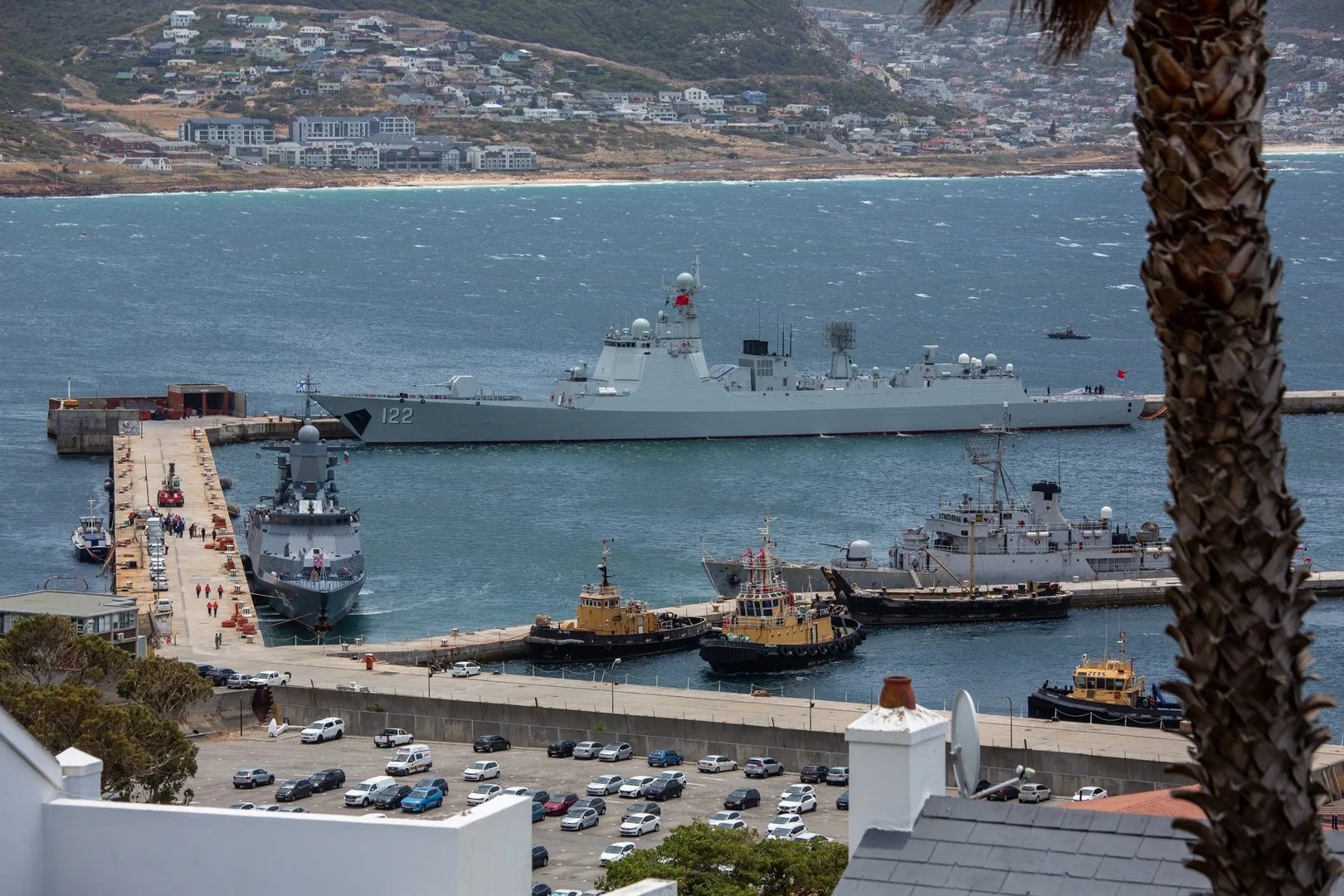
Recent international developments highlight complex strategic calculations beyond simple headlines. A multinational military exercise conducted off South Africa, involving nations like China and Russia, has drawn attention. Framing it as a “BRICS joint military exercise” is somewhat misleading, as key members like India and Brazil did not participate. The exercise’s stated focus was on counter-terrorism and maritime search and rescue operations. Choosing a location like South Africa, perceived as less geopolitically sensitive compared to areas like the South China Sea, suggests an intent to avoid unnecessary escalation while practicing cooperative security protocols. The participation of Indonesia, a major Southeast Asian nation with vast maritime interests, underscores the practical need for such drills. The core takeaway is the gradual expansion of cooperation among certain nations into security domains, moving beyond purely economic forums, which carries its own significance for future multilateral relations.
Separately, the adjustment in U.S. policy regarding drones from a specific manufacturer is noteworthy. This isn’t a full reversal of a ban but a managed approach for non-military, civilian applications like agricultural spraying, disaster response, and infrastructure inspection. The driving factor appears to be practical necessity. The alternatives developed domestically or elsewhere are reportedly more expensive and, in some operational aspects like flight stability in diverse conditions or mass production scalability, lag behind. This creates a dependency for certain public sector functions where budget and performance are key. While this situation involves strategic technology, its direct political impact differs from issues like agricultural trade, as it primarily affects government procurement rather than a broad voter base.
Looking ahead, questions about the future of transatlantic security are pressing. A potential shift in U.S. commitment to NATO, possibly involving reduced financial burden-sharing and troop levels in Europe, seems increasingly plausible. In response, Germany is proactively increasing its defense budget, aiming to meet and exceed the 2% of GDP target. This move towards greater strategic autonomy and military self-reliance is a significant development for Europe’s largest economy. Domestically, Germany faces economic pressures from global industrial competition, particularly in sectors like automotive, and ongoing social challenges related to migration. These issues fuel political debates, potentially increasing support for parties advocating national sovereignty. However, a complete political upheaval seems unlikely, as mainstream parties are also adopting more independent stances, leading to a convergence on certain policy directions rather than a radical takeover.
Honestly, this whole analysis feels a bit naive. Dismissing the South Africa drill as just “search and rescue” is ignoring the obvious elephant in the room. When China and Russia conduct military exercises together, regardless of the label, it’s a strategic signal. The location choice is just PR to make it palatable. Calling it a step beyond economics is a massive understatement; it’s laying the groundwork for a security bloc that operates outside Western-led systems. The future implications are far more serious than this post suggests.
The part about Germany and NATO is spot-on. The writing has been on the wall for years. The U.S. is tired of footing the bill, and Europe needs to wake up. Germany boosting its defense spending is the first real, tangible step we’ve seen from a major EU power that isn’t just empty talk. France has been promising a European army for decades. It’s about time someone with actual industrial might and a (mostly) stable economy took the lead. This could finally force the EU to get serious about its own defense.
Finally, a sensible take on the drone issue! Everyone was screaming about a “ban lift,” but it was never that simple. Local governments and agencies have real jobs to do—fighting wildfires, inspecting bridges—and they need tools that work reliably without blowing their budgets. If the homegrown options cost three times as much and can’t handle a cold morning, what are they supposed to do? This is about pragmatism, not politics. The U.S. needs to get its own tech act together instead of just restricting access.
I’m not convinced by the economic argument here. Sure, Germany is raising its military budget, but where does that money come from? It’s going to strain an economy already getting hammered by competition, especially from China’s electric vehicle sector. You can’t just pour billions into the military without consequences for social spending or public investment elsewhere. This might secure borders but destabilize the economy from within, creating a whole new set of problems.
This post makes a good point about the difference between strategic dependence on drones versus something like soybeans. The drone issue affects a relatively narrow sector—government procurement—and doesn’t have the same direct, visceral impact on millions of voters in key electoral states. It’s a security and bureaucratic headache, not a pocketbook issue for a large demographic. That explains the different policy approaches, even if both involve reliance on Chinese technology.
The political analysis for Germany seems too optimistic. You’re downplaying the rise of alternative parties. When mainstream parties start co-opting the rhetoric of parties like the AfD on migration and sovereignty, it doesn’t just lead to “convergence.” It normalizes those ideas and can lead to a much sharper rightward shift across the entire political spectrum. To say a radical change is unlikely ignores how quickly political landscapes can transform under pressure from economic anxiety and social issues.