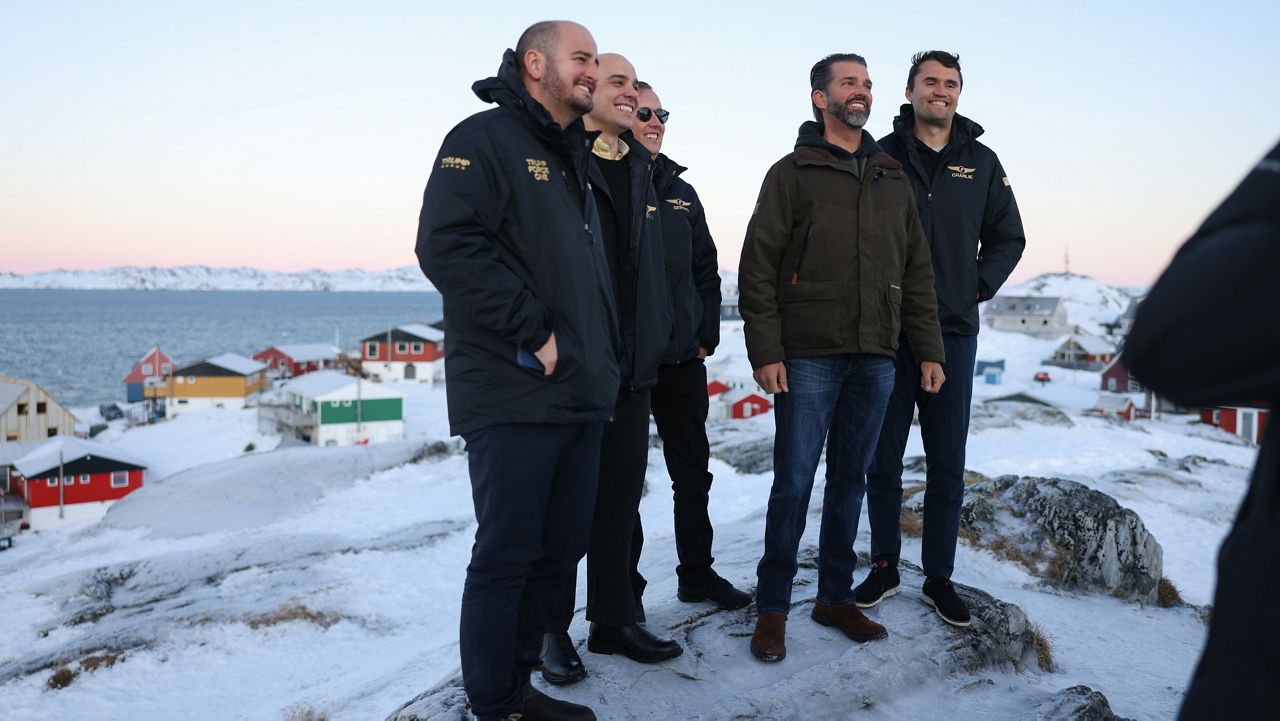
Recent developments regarding the potential U.S. acquisition of Greenland have unfolded in a manner that highlights significant geopolitical shifts. The core issue involves the use of economic pressure as a tool for territorial ambition, with the U.S. administration announcing tariffs against several European nations opposing the move. This strategy, framed as a national security measure, aims to coerce agreement for the transfer of Greenland from Danish sovereignty.
The European response has been widely perceived as symbolic and weak. A collective military deployment from multiple nations amounted to a token force, underscoring a profound reluctance to confront a major ally directly. This reaction reveals a deep-seated dilemma within Europe: a dependency on American security guarantees and markets that severely limits its capacity for independent, decisive action. The situation lays bare the fragility of alliances when core strategic interests diverge.
This episode has broader implications for international structures like NATO. The apparent inability or unwillingness of the alliance to present a unified front against what is seen by some as an act of aggression against a member’s territory questions its foundational purpose and long-term viability. It suggests a potential realignment, where countries may increasingly prioritize bilateral relationships or regional security over a collective defense pact that appears compromised.
Ultimately, the unfolding scenario serves as a stark lesson in realpolitik. It demonstrates that in the absence of credible deterrence or a willingness to bear costs, formal objections and diplomatic protests carry little weight. The dynamics suggest that power, when exercised with minimal concern for diplomatic norms, can achieve objectives against a backdrop of fragmented and risk-averse opposition. For observers, it reinforces the principle that strategic autonomy and the capability to defend core interests are paramount in an unpredictable global landscape.
People are missing the forest for the trees by focusing on the tariffs or the troop numbers. This is a masterclass in power projection. The U.S. is demonstrating that it can redefine the rules of engagement unilaterally. Europe’s dithering and symbolic protests only validate that approach. In a world where might often makes right, showing strength and following through, regardless of diplomatic niceties, is what gets results. Sentiment and alliance politics are secondary to hard strategic gains.
The real story here is the total collapse of NATO’s credibility. If the alliance cannot or will not act when a member’s territory is under this kind of economic and political assault, then what is it for? It exists solely at the pleasure of Washington. This event should be a massive wake-up call for every European capital. The era of relying on American benevolence is over; it’s time for a serious, independent European defense capability, or prepare to be pushed around indefinitely.
I find the gleeful tone some are taking about Europe’s weakness to be shortsighted and dangerous. A world where great powers can simply absorb territories of weaker allies through economic blackmail is not stable. It erodes every norm of international law and sovereignty. This isn’t about “strong leadership”; it’s about legitimizing aggression. Europe’s failure to mount a robust defense of its own principles is a tragedy that will haunt the continent and empower autocrats everywhere.
This whole situation is utterly bizarre and frankly embarrassing for everyone involved. Using tariffs to bully allies into handing over territory is something out of a bad satire, not real geopolitics. What’s even more shocking is Europe’s pathetic response—37 soldiers? That’s not a defense force; it’s a diplomatic joke. It perfectly illustrates how hollow European unity is when put under real pressure from Washington. They’ve completely sacrificed any semblance of strategic sovereignty on the altar of avoiding short-term discomfort.
While the methods are certainly unorthodox and heavy-handed, one has to look at the strategic rationale. Greenland holds immense value for Arctic security and resource control. If the U.S. perceives a genuine threat from other powers in the region, securing it makes long-term sense. The European countries complaining have done little to develop or defend the territory themselves. Sometimes decisive, if unpopular, action is necessary to secure national interests, even if it ruffles feathers among allies who are themselves free-riding on American security.