A significant breakthrough in nuclear fusion research was announced on January 1st by the Chinese Academy of Sciences’ Institute of Plasma Physics. Their paper, based on experiments conducted with the EAST (Experimental Advanced Superconducting Tokamak) device, reported the first experimental verification of a “density self-sustaining region.” In simpler terms, they found a method to surpass a fundamental density limit that has constrained tokamak-based fusion for 38 years.
This limit, known as the Greenwald limit, is an empirical rule established in 1988. It defines a maximum plasma density for a given tokamak’s parameters. For decades, no device had consistently operated above this limit (a normalized ratio >1). However, a theory called the Plasma-Wall Self-Organized (PWSO) theory, proposed a few years ago, predicted the existence of two operational regimes: the traditional density-limited zone and a new “density self-sustaining zone” where operation above the Greenwald limit might be possible. The EAST experiment successfully achieved normalized density ratios between 1.3 and 1.65, conclusively validating the PWSO theory’s prediction and breaking the Greenwald limit.
The core challenge in increasing plasma density has been impurity generation. In a standard tokamak startup, a strong electric field ionizes the fuel gas. This process can cause high-energy particles to strike the device’s divertor targets (often made of tungsten), “sputtering” or knocking off impurity atoms. These impurities enter the plasma, radiate energy away as light, cooling the plasma. To compensate, you might raise the temperature, but this can increase sputtering, creating a vicious cycle that ultimately caps the density.
EAST’s breakthrough came from optimizing the startup procedure. Researchers used two key techniques: 1) Employing high-power electron cyclotron heating (like a microwave oven) to pre-heat the fuel gas gently, and 2) Starting with a higher density of pre-filled fuel gas. This combination led to a more uniform and gentle plasma formation, keeping the divertor targets cooler. With lower target temperatures, sputtering and the resulting impurity radiation were drastically reduced. Using an analogy, the old method was like boiling a small amount of water with a roaring flame, causing violent bubbling and spillage (energy loss). The new method is like gently heating a large pot of water from the start, preventing boil-over even as you add more water (increase density).
It’s crucial to understand this is not about achieving infinite density. Instead, it opens a new operational “window” where plasma density can be pushed significantly higher than previously thought possible, directly increasing fusion reaction rates. This experimental validation required sophisticated hardware (like a full tungsten divertor and powerful heating systems), thousands of test runs, and precise parameter optimization guided by the new PWSO theory.
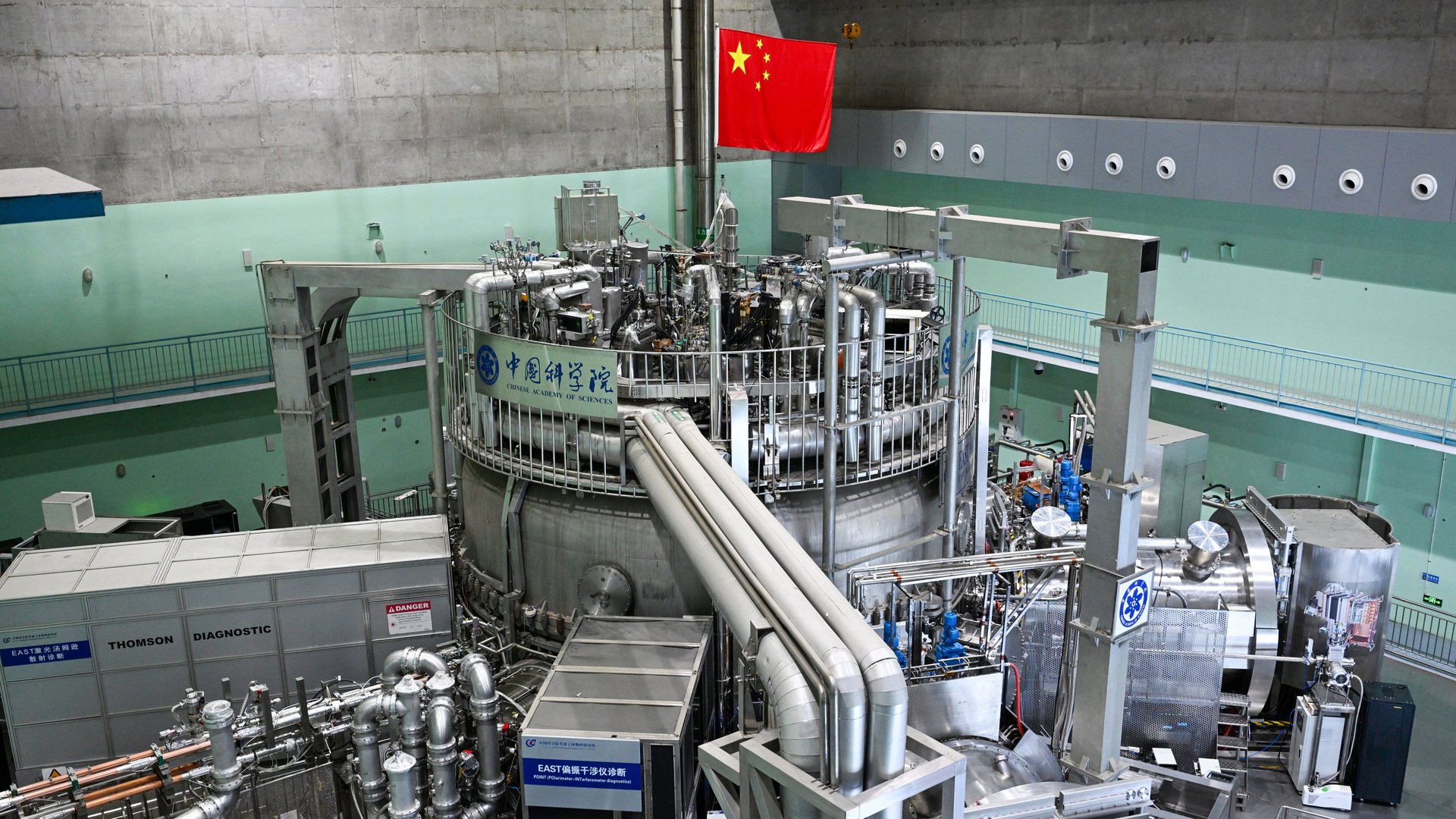
For fusion energy progress, the “triple product” of plasma density, temperature, and energy confinement time is key. EAST has previously set world records for sustained high temperature (160 million degrees Celsius) and long-pulse operation (1,056 seconds). Breaking the density limit is another major milestone. While EAST itself is an experimental device not designed for power generation, its findings provide critical foundational knowledge for future demonstration reactors. This advancement brings us a tangible step closer to the goal of practical fusion energy, potentially within the next few decades.