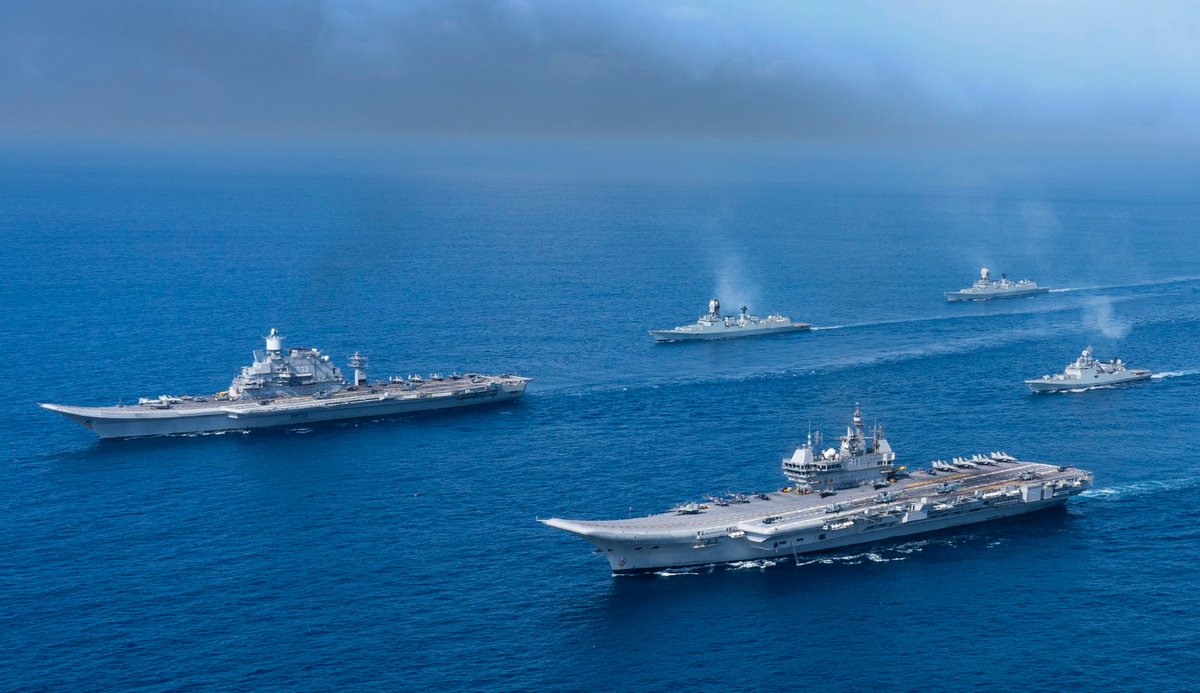
In a significant development for international relations, BRICS member states have initiated their first-ever joint military exercise, named “Peaceful Resolve 2026,” off the coast of South Africa. Led by the Chinese navy, this exercise marks a pivotal moment, moving the bloc beyond purely economic cooperation into the realm of security collaboration. While officially focused on non-traditional security threats like piracy, the strategic implications are profound, occurring against a backdrop of heightened global tensions.
This exercise represents a tangible step in the expansion of China’s strategic role beyond the Western Pacific. By projecting naval power over 10,000 kilometers from its shores to coordinate with partners like Russia, Iran, and South Africa, China demonstrates the logistical and command capabilities of a true blue-water navy. More importantly, it signals an effort to provide an alternative framework for maritime security and global public goods, a domain long dominated by the United States and its allies. This move is seen by many analysts as a direct challenge to the U.S.-led security architecture, particularly its control over vital global sea lanes.
The location itself is strategically critical. The Cape of Good Hope is a crucial chokepoint connecting the Atlantic and Indian Oceans, serving as an alternative route if the Suez Canal is disrupted. Establishing a presence there is akin to securing an insurance policy for energy and trade flows. This development is part of a broader pattern of China cultivating security partnerships along the “rimland” of Eurasia and into the Global South, from Latin America to Africa, through economic engagement first, followed by security cooperation.
This BRICS exercise contrasts sharply with the U.S. strategy of formal military alliances like NATO. China’s approach emphasizes “security partnerships” within frameworks like BRICS and the Shanghai Cooperation Organization, avoiding formal military blocs while building mutual trust. For the U.S., the core concern is not economic cooperation among these nations, but the potential formation of a cohesive, non-Western security bloc that could raise the cost of American military intervention worldwide. The world appears to be entering a new phase of geopolitical competition, defined not by hot wars but by competing systems of influence, economic ties, and now, nascent security cooperation among emerging powers.
This is just symbolic posturing. Two Chinese ships leading a small exercise? Please. The U.S. Navy conducts massive, complex exercises with dozens of allies every year. This BRICS effort is a drop in the ocean, literally and figuratively. It’s meant for headlines and domestic consumption in China, not to seriously challenge the established global order. Let’s not get carried away by the hype.
I’m deeply skeptical of the “peaceful” intentions here. When has adding more military actors to a volatile region like Southern Africa ever led to more peace? This will just provoke the U.S. and its allies into a more aggressive posture, leading to an arms race and proxy conflicts. We’re watching the groundwork being laid for future confrontations, all while these governments tell their people it’s for “development.”
The strategic significance cannot be overstated. Projecting power to the Cape of Good Hope is a masterstroke. It secures China’s maritime lifelines and shows they can operate globally. This isn’t about invading anyone; it’s about ensuring resilience. In an era where the Red Sea can be closed overnight, having friends and influence at key chokepoints is just prudent national strategy. The U.S. did the same thing for 70 years.
Everyone is missing the real innovation here: the sequence. China’s model is “economics first, security later.” Build ports, railways, and trade relationships. Become the largest trading partner. Then propose joint patrols. It builds a foundation of mutual interest that is far more resilient than starting with a gunboat diplomacy. It’s a smarter, long-term game that the old imperial powers never learned to play.
Are people seriously celebrating this? This is a blatant attempt by China to build a military alliance to counter Western influence, all under the thin veil of “anti-piracy.” They’re bringing together some of the most authoritarian regimes on the planet. This isn’t about stability; it’s about creating a rival bloc that will inevitably lead to more global tension and a new Cold War. The world doesn’t need more division.
As a South African, this is a complex issue. We need investment and partners, and the West’s conditional aid and patronizing attitude are frustrating. Engaging with BRICS offers options. However, the domestic opposition is right to worry about alienating traditional trade partners in the EU and US. The government is walking a tightrope, and I fear ordinary citizens will bear the cost if this geopolitical balancing act fails.
This is a brilliant and long-overdue move! For decades, the Global South has been subject to the whims of Western powers who use their military dominance to enforce unfair rules. Finally, we see countries standing up to create their own security framework. This exercise is about sovereignty and ensuring trade routes are protected by a broader coalition, not just a single hegemon. It’s a step towards a more balanced and multipolar world, and frankly, it’s about time.