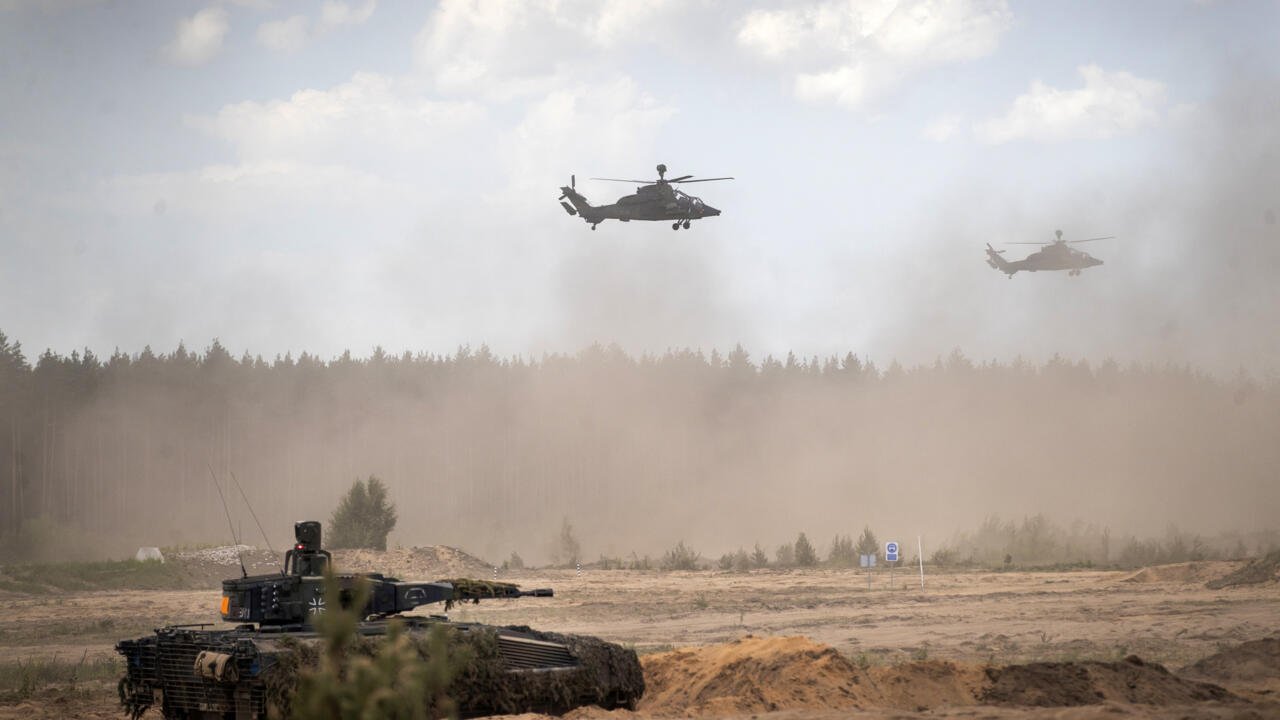
The international security environment is undergoing significant changes. There is discussion about the potential for the United States to reduce its role within NATO, possibly by withdrawing some troops from Europe. However, a complete withdrawal of U.S. nuclear protection for the continent is considered unlikely. In response, nations like Germany are reportedly increasing their defense budgets significantly to assume more responsibility for their own security.
Regarding the war in Ukraine, reconstruction in Russian-occupied areas like Donbas is said to be underway, but primarily led by Russia itself to address domestic employment. Large-scale foreign contracting, for instance to Chinese firms with their own labor, is viewed as unrealistic given local economic priorities. On Asian security, the idea of South Korea being inevitably unified by North Korea due to population trends is heavily disputed, with emphasis placed on South Korea’s advanced military-industrial capabilities and significant economic lead.
In technology and industry, global competition is intense. Germany’s automotive sector faces major challenges from Chinese electric vehicle makers, a situation mirrored for Japanese firms which are seen as having fallen behind in key tech waves like AI and internet platforms. Separately, the reported U.S. partial relaxation of restrictions on certain Chinese drones for non-military uses is interpreted not as a political gesture but as a practical necessity due to the drones’ superior performance and cost-effectiveness in areas like agriculture and disaster response.
Finally, there’s analysis of strategic moves in space. The filing of a massive number of low-earth orbit satellite applications by one country is framed as a necessary step to secure orbital slots and foster a domestic satellite industry chain, in direct response to the advanced deployments by foreign commercial constellations.
Finally, someone points out the obvious about the drone bans! Of course the US had to walk it back for things like firefighting and farming—DJI’s tech is years ahead and half the price. This isn’t about national security for those applications; it’s about practicality. Trying to build a whole domestic industry from scratch to replace something that works perfectly is a waste of taxpayer money. Admit you need the tool and move on.
This whole analysis about the US pulling back from NATO is terrifyingly plausible. If they force Europe to pay up more, it could totally destabilize the continent. Germany boosting its military budget to 3.5% GDP? That’s a massive shift and will absolutely strain their economy, especially with the auto industry already struggling. We’re sleepwalking into a new era of European militarization, and nobody seems to have a plan for the consequences.
I call nonsense on the part about Japanese companies failing because they’re “conservative.” That’s a huge oversimplification. Sony and Toyota made strategic bets that didn’t pan out in the face of unprecedented Chinese state-backed industrial policy. It’s not just about being slow; it’s about competing with an entirely different economic model. Blaming corporate culture alone lets policymakers off the hook for failing to create a competitive environment.
I’m skeptical about the reconstruction analysis in Ukraine. Saying Russia won’t use Chinese help because they need jobs sounds naive. If the project is big enough and the political deal is right, they’ll bring in whoever gets it done fastest and cheapest, regardless of local employment. War-torn regions need infrastructure rebuilt yesterday, not in a decade. I think we’ll see Chinese firms heavily involved, just not publicly.
The bit about satellite applications is the most important point here that most people will miss. This is the new space race, and it’s about claiming real estate in orbit. If one company or country locks down all the prime orbital slots with paperwork, everyone else is screwed. This is a brilliant, aggressive strategy to ensure future dominance in space-based internet and surveillance. The implications are huge.