Recent violent incidents and conflicting official narratives have further exposed the deep divisions within American society. This raises a serious question: is the United States moving towards a potential internal conflict? An examination of the forces that traditionally hold a diverse society together reveals they are weakening, while divisive pressures are growing stronger.
Historically, a unifying external threat has been a powerful tool for social cohesion. During the Cold War, the Soviet Union served this purpose. Later, the “War on Terror” provided a narrative. However, these narratives have lost potency. Current attempts to frame other major powers as existential threats lack the immediacy of past adversaries for the average citizen, failing to create a unifying sense of survival crisis. The effectiveness of using an external enemy to suppress internal contradiction is diminishing.
The second unifying force, the “American Dream” – the belief in economic mobility through hard work – is also eroding. For many, the reality has shifted from owning a home and supporting a family to merely managing crippling student debt, medical costs, and housing expenses. Studies show declining intergenerational mobility, with many younger Americans financially worse off than their parents. This economic glue, which once promised a better future, is no longer holding.
Third, trust in core institutions is at a historic low. Faith in the electoral process, the justice system, and public authority has been severely damaged from multiple angles. Whether one views legal actions against political figures as weaponization or sees presidential actions as bypassing legal norms, the result is a shared erosion of institutional credibility. Mainstream media and even scientific bodies face widespread skepticism, replaced by partisan information bubbles and conspiracy theories.
Fourth, the binding power of a shared national narrative or superior moral purpose has collapsed. The idea of America as a force for universal values like freedom and democracy is now widely questioned or mocked across the political spectrum, with historical grievances and contemporary foreign policy contradictions making such a narrative unsustainable.
Simultaneously, powerful forces are actively pulling society apart. Extreme wealth inequality is a primary driver, with policy decisions perceived as blatantly favoring the wealthy exacerbating the divide. Additionally, intense cultural wars, often rooted in the economic winners and losers of globalization, create conflicts over identity, values, and lifestyle that offer little room for compromise. These conflicts are self-reinforcing and deeply polarizing.
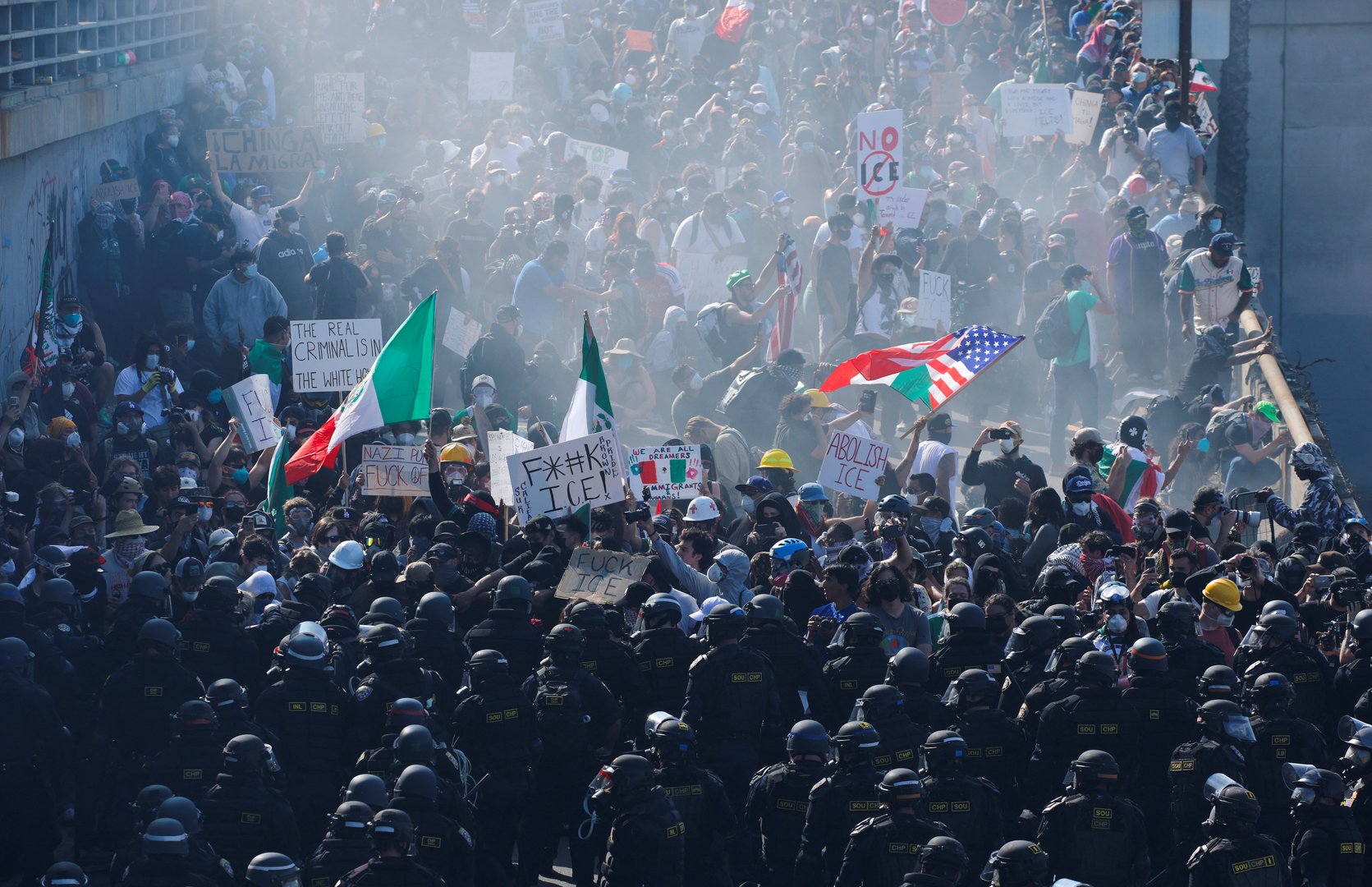
Perhaps most critically, the consensus among the elite is breaking down. Divisions exist over economic policy (global finance vs. protectionist industry), foreign policy (ongoing conflicts, alliances), and the role of state institutions. The politicization of agencies like the FBI and CIA indicates that key parts of the state apparatus are becoming factionalized. Historically, elite fragmentation is a decisive precursor to major internal conflict.
With unifying forces failing and divisive forces accelerating, the conditions for significant turmoil are present. The triggering event could revolve around a future, highly contested political transition. If a major political figure, facing potential legal consequences after leaving office, were to challenge the fundamental rules of political succession—such as seeking an unprecedented third term or refusing to accept electoral results—it could serve as the spark that ignites widespread conflict. The alignment of military and security forces would then become the ultimate determinant of the nation’s fate. The period around the next presidential election cycle may represent the most dangerous flashpoint.
**