Core Perspectives on China-U.S. AI Competition
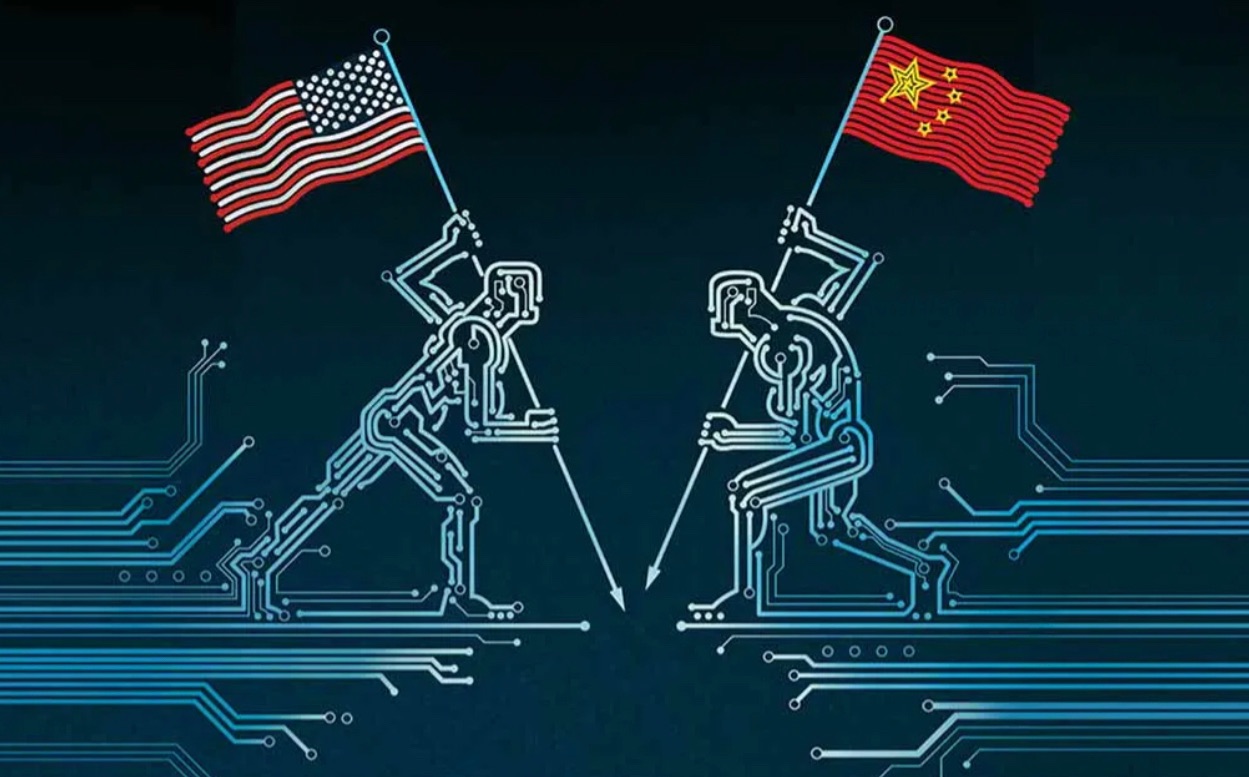
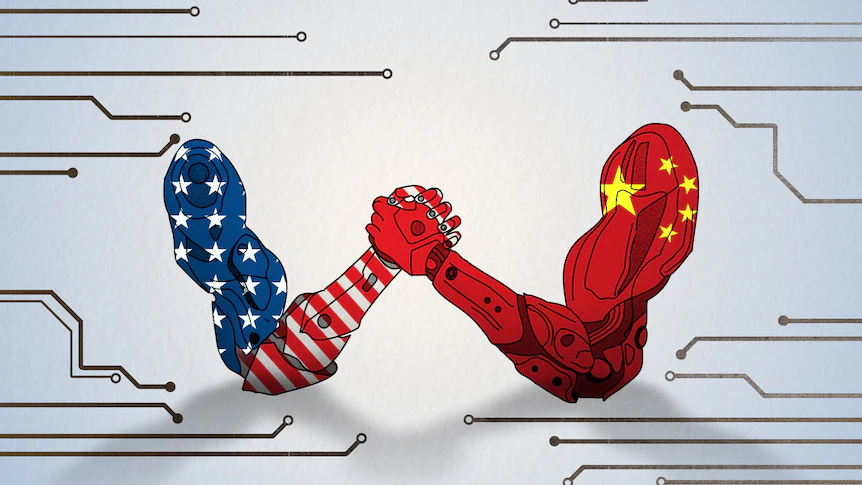
The core of the China-U.S. AI competition lies not in a single-dimensional contest of technology or hardware, but in a comprehensive rivalry encompassing software ecosystems, application scenarios, data flywheels, and the scale of developers. The United States seeks to curb China’s AI development by leveraging its advantages in chip hardware, yet this strategy is highly challenging to implement and cannot fundamentally lock down the R&D capabilities of Chinese software enterprises. The key to the competition between the two sides is gradually shifting to a contest of ecological strength and implementation capabilities.
The gap in the field of China-U.S. AI software is not a generational technological gap, but a disparity in iterative versions. In the field of AI development IDEs, the U.S.-based Cursor leads in complex project refactoring and multi-model integration due to its first-mover advantage, but it is deficient in Chinese adaptation and localized experience. Chinese tools such as ByteDance’s Trae and Alibaba’s Tongyi Lingma have rapidly narrowed the iterative gap by drawing on mature interaction models and focusing on micro-innovations such as Chinese instruction understanding and integration with domestic cloud ecosystems.
They have basically caught up in scenarios like single-file script generation and Chinese comment adaptation, and only lag by 1-2 iterative cycles in complex scenarios such as multi-million-line code refactoring. In terms of large model coding capabilities, China’s DeepSeek series models have achieved performance on par with or even surpassing Claude and GPT series, with training costs only a fraction of those of U.S. enterprises, and demonstrate greater advantages in the adaptation speed of vertical scenarios. In the field of image generation, Alibaba’s Qianwan Image and Tencent’s Hunyuan Image models have repeatedly topped global rankings; ByteDance’s image editing models account for 6 out of the world’s top 16, and Chinese models also hold 7 out of the top 16 in text-to-video generation, forming a partial lead in multi-modal generation capabilities. This iterative gap can be gradually bridged through rapid product optimization and localized adaptation, rather than being an insurmountable technological chasm.
The extremely fierce competition in China’s internet industry has forced enterprises to forge strong technological and engineering capabilities, with the development of the database field serving as a typical case. In the early days, China’s internet industry experienced high-intensity competitions such as the “Thousand Group War” and “E-commerce War.” The massive concurrent user access and complex business scenarios imposed extreme requirements on data storage and retrieval efficiency. Taking Alibaba Cloud’s OceanBase as an example, to cope with the peak traffic impact of Tmall’s Double 11 Shopping Festival, it independently developed a distributed database architecture, breaking through the bottlenecks of traditional centralized databases. It supports multi-million-level concurrent transaction processing, achieves world-leading levels of data consistency and availability, and can handle hundreds of thousands of orders per second, surpassing many overseas counterparts in core technical indicators. The technical capabilities honed in such fierce market competition have been migrated to the AI field, becoming the core confidence for the efficient iteration and ultimate optimization of Chinese AI software.

China possesses irreplicable advantages over the United States in hardware ecosystems and scenario implementation capabilities, and has achieved overtaking in some segmented fields, rather than being comprehensively backward. In the consumer drone sector, DJI Innovations holds nearly 80% of the global market share through its complete industrial chain integration capabilities and algorithm optimization. Its flight control system compensates for hardware cost gaps through software algorithms, outperforming U.S. counterparts in stability and portability, and building an unshakable ecological barrier. In the humanoid robot field, Unitree Technology’s G1 humanoid robot achieves a trotting speed of over 2 meters per second, a joint torque of 120N.m, and a joint count ranging from 23 to 43, boasting significant advantages in motion flexibility and mass production costs. While U.S. counterparts lead in computing power configuration, they lag in implementation speed and cost control. Chinese hardware enterprises have effectively offset part of the gaps in core components through “software algorithm optimization + supply chain integration.” In addition, China has the world’s most complete hardware industrial chain covering consumer electronics, IoT, and industrial internet, which can generate massive and diverse real-world data to fuel the iteration of AI models. This hardware ecological advantage is incomparable to the U.S. industrial structure dominated by a few hardware manufacturers.
The impact of computing power restrictions on China’s AI development is limited, as it only restricts the training speed and inference concurrency of large models, without posing a fatal constraint on application-layer software capabilities. Chinese software enterprises improve operational efficiency through model compression, inference optimization technologies, and tools such as TensorRT-LLM, enabling consumer-grade graphics cards or mid-range computing devices to achieve performance close to that of high-end chips. Meanwhile, they can make up for the computing power gap in self-developed model training by calling APIs of third-party open-source models such as DeepSeek and Qwen. Hardware gaps can be effectively offset through ultimate software optimization. Currently, Chinese open-source AI models account for nearly 30% of the global usage volume, with Alibaba Cloud’s Qwen series models adopted by U.S. enterprises such as Meta and Airbnb. The expansion of the open-source ecosystem further weakens the impact of computing power restrictions.
The United States’ only breakthrough opportunity lies in realizing Artificial General Intelligence (AGI) within 5 to 10 years. However, current large models are essentially advanced data retrieval tools, based on the Transformer architecture, which predicts the next word sequence through statistical laws. They lack true understanding capabilities, causal reasoning abilities, and a world model, and thus are not the correct path to AGI. The performance ceiling of the Transformer and its variants has become apparent: parameter volume and computing power consumption grow exponentially, while the marginal effect of model performance improvement decays sharply. The wave of AI productivity leap driven by GPT is likely to peak soon.
The ultimate direction of the China-U.S. AI competition depends on two key factors: first, whether the United States can achieve the dimensionality reduction strike of AGI; second, whether China can catch up with or approach the United States in chip hardware. If the United States fails to realize AGI as scheduled, with the attenuation of large model dividends, the competition will enter a protracted war focusing on ecological strength, data resources, application capabilities, and engineering capabilities, and China will gradually bridge the iterative gap relying on its existing advantages. If China narrows the chip gap, the disappearance of the U.S. hardware barrier will quickly undermine its competitive advantages due to its disadvantages in ecology and data. Currently, the practice of Chinese developers in toolizing, engineering, and automating AI is a key path to strengthening application-layer advantages and making up for hardware gaps, as well as the core support for China’s AI competitiveness.