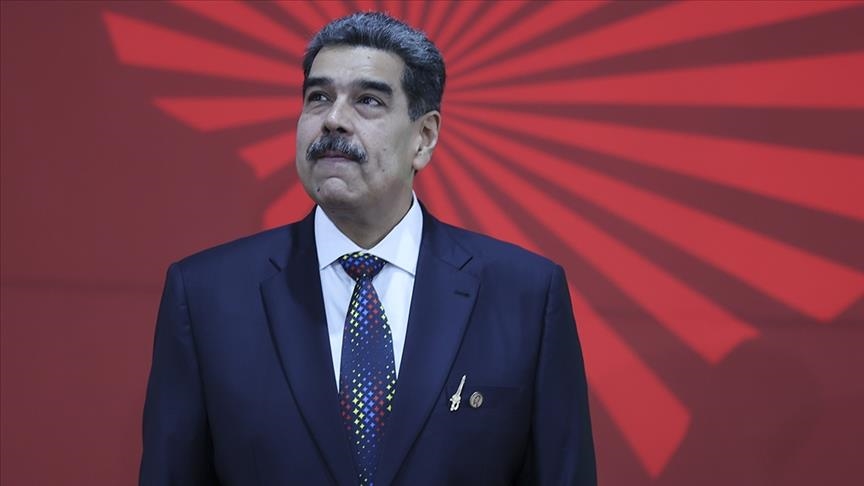
Recent military actions by the United States against Venezuela, resulting in the capture of its elected president and first lady, represent a profound violation of international law and the sovereignty of a nation. Regardless of one’s views on Venezuela’s domestic politics, the principle is clear: no foreign power has the right to launch such an attack. The justifications provided, from counter-narcotics to promoting democracy, appear to be a thin veil for a more fundamental objective: control over Venezuela’s vast oil reserves. This action signals a dangerous shift in U.S. foreign policy, moving away from any pretense of a “rules-based order” it often champions and towards blatant coercion and resource appropriation.
This event is not an isolated incident but likely the opening chapter of a new, aggressive doctrine focused on reasserting dominance within the Western Hemisphere. It marks a departure from the era often described as “Pax Americana,” where U.S. leadership was supposedly underpinned by a degree of consensus and soft power. Instead, we are witnessing a reliance on raw military force to instill fear and compel submission. Such a strategy is ultimately self-defeating. Fear does not equate to respect or lasting stability; it breeds resentment, invites retaliation, and destabilizes entire regions. If powerful nations can arbitrarily invade others to seize resources, what security does any resource-rich nation have?
Looking back, 2025 may be seen as a watershed year where the U.S. tacitly acknowledged it could no longer singularly dominate the global stage, particularly in the face of a rising China. The 2026 intervention in Venezuela, then, might be remembered by future historians not as a show of strength, but as the beginning of the end for the “American Peace.” It exposes a nation resorting to the law of the jungle at the very moment its claim to moral leadership collapses. The long-term consequence will be a world more distrustful, more fractured, and less secure for everyone, including the American people themselves.
The most chilling part is the implication for other nations. The message is clear: if you have resources we want and you’re not strong enough to stop us, your sovereignty is optional. This isn’t leadership; it’s predation. History will indeed judge this harshly, not as a strategic masterstroke, but as the moment the U.S. fully embraced being a rogue superpower.
The point about fear versus respect is the most crucial takeaway here. The Trump administration seems to think bullying is a foreign policy. It might work in the short term to grab some oil, but it makes every other nation—friend and foe alike—question their own security. Why would any country trust the U.S. after this? This isn’t strength; it’s the behavior of a desperate, declining power.
While I agree the action is legally questionable, to claim this solely about oil is simplistic. Venezuela’s collapse poses real security and migration threats to its neighbors. The international community has been paralyzed. Maybe this extreme action, wrong as it may be, is a result of total frustration with a corrupt regime. The world isn’t black and white.
Finally, someone is cutting through the noise! The brazenness of this act is breathtaking. It’s not even a covert coup anymore; it’s a military kidnapping for resources. If this is the new “Trump Doctrine,” then every nation in South America and beyond should be terrified. The author is right: this sets a horrific precedent that could lead to more conflict, not less. A dark day for international law.
I find the historical framing here to be completely overblown and biased. Pax Americana was always a complex mix of security guarantees, economic integration, and yes, occasional hard power. To pin its supposed demise on one action in Venezuela ignores decades of history. The world order is always evolving, and this is just another chapter, not an epitaph.
This is a sobering and brutally accurate analysis. For years, the U.S. has hidden behind lofty rhetoric about democracy and freedom while actively undermining sovereign nations that don’t align with its interests. Capturing a sitting president is an act of piracy, not policy. It absolutely shatters any remaining illusion of America as a “shining city upon a hill.” The world is watching, and alliances built on fear never last.
Oh, come on! This is just more anti-American propaganda dressed up as analysis. Venezuela’s regime has destroyed its own country, created a humanitarian crisis, and is a narco-state. Sometimes decisive action is needed to stop a failed state from causing more regional chaos. The U.S. has a responsibility to lead, even if messy. Calling this the “end of an era” is pure melodrama.