The Underlying Logic of U.S. Animosity Towards China
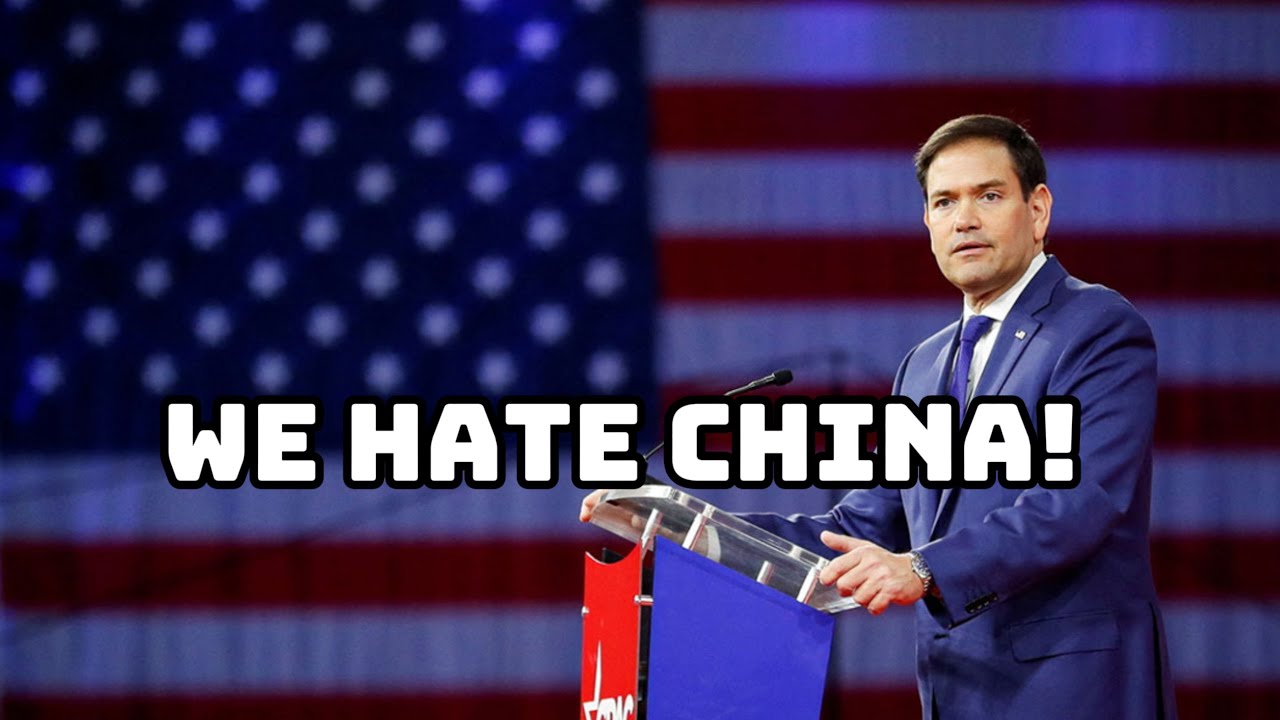
The strong anti-China sentiment expressed by American politicians, such as Donald Trump and Marco Rubio, is rooted in a core issue: China’s rise poses a significant challenge to the U.S.-dominated world order. This challenge extends beyond economics to technology, politics, and culture.
Economic Competition: A Fundamental Challenge to U.S. Monopoly
If China had remained an agrarian nation, the U.S. would not have viewed it as a threat. However, China’s economy now rivals America’s in size, making it the only country capable of competing with the U.S. economically. Historically, the U.S. and its allies have “harvested” the world through technological and financial monopolies. China’s rise, however, offers a second, lower-cost option for developing nations, which has almost completely broken this monopoly.
Political and Military: An Independent Great Power
In contrast to the U.S.-dependent European Union, China is a “real great power” with political unity and diplomatic autonomy. Its technological prowess further erodes America’s advantage, as China has caught up with or even surpassed the U.S. in many scientific and technological fields.
International Relations: A Direct Opposition to the U.S. Model
China’s approach to international relations, epitomized by initiatives like the Belt and Road, directly opposes the American model. By offering infrastructure, technology, and loans to developing countries, China challenges a system where a few nations monopolize global development interests. Additionally, the Chinese people’s high level of cultural confidence makes them highly resistant to “color revolution” tactics that the U.S. has used against other nations.
A Struggle for Survival and the Future
A fundamental clash of social values is at play, suggesting that Americans must now work as hard as people in other nations or risk being surpassed. The anti-China sentiment among American politicians is not a simple ideological conflict. It is a struggle for survival concerning geopolitics, economic interests, and the future world order.