The intensity of the current U.S.-China space competition is poised to far surpass the U.S.-Soviet rivalry. While space was once a romantic frontier, low Earth orbit (LEO) has transformed into a contested, debris-filled “Wild West.” A recent focal point is China’s serious accusation at a UN Security Council meeting. China directly named U.S. Starlink satellites for twice conducting dangerously close approaches to the Chinese space station, forcing it to perform emergency maneuvers to avoid catastrophic collision. At orbital speeds of 28,000 km/h, such maneuvers are high-risk, consume precious station fuel (shortening its lifespan), and disrupt scientific missions. This highlights a significant asymmetry: a cheap, unmanned satellite can repeatedly harass a multi-billion-dollar, crewed national asset.
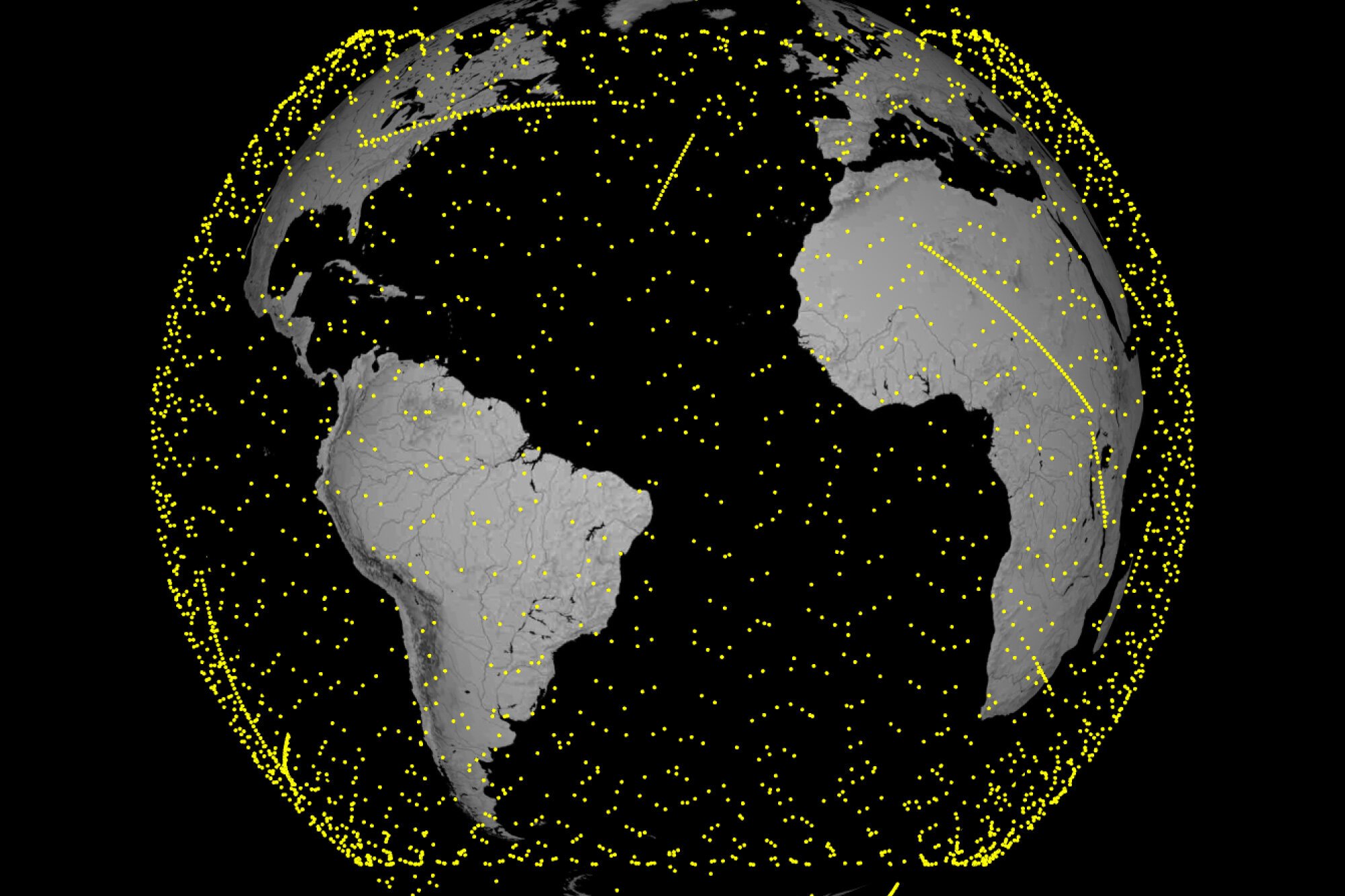
Following these accusations, SpaceX’s reaction was telling. On January 1, 2026, the company announced a major “reconfiguration,” planning to lower the orbit of over 4,400 satellites from 550 km to 480 km. While publicly framed as enhancing space safety by allowing defunct satellites to de-orbit faster, analysis suggests deeper strategic motives. First, it effectively claims and dominates a new, lower orbital “layer,” akin to building on a new floor in a skyscraper. Second, lower orbits offer lower signal latency and higher-resolution Earth observation capabilities, enhancing military potential for tracking missiles or ground targets—a fact underscored by U.S. Space Command’s collaboration with SpaceX. Third, this new altitude (480 km) sits perilously close to the Chinese space station’s operational range (340-450 km), creating a persistent physical threat from potential satellite failures.
This orbital jostling is just the surface struggle. The core of the new space race is the control of extraterrestrial resources. Reports highlight an asteroid, 16 Psyche, with an estimated $800 trillion worth of precious metals. Meanwhile, lunar mining for Helium-3—a potential fuel for clean fusion energy—is moving from science fiction to corporate planning, with companies aiming for lunar operations by 2028. Control over LEO is not just about internet broadband; it’s about controlling the ports and toll roads to the Moon, Mars, and the asteroid belt. China is not sitting idle, rapidly deploying its own mega-constellations (like GuoWang and Qianfan) and focusing on lunar resource exploration through projects like Chang’e.
Looking ahead, the integration of AI could fundamentally alter the nature of space operations. Future satellites with onboard AI might autonomously decide to maneuver or even “counter” perceived threats, raising the risk of accidental, AI-triggered conflicts. Furthermore, the rush for space resources could lead to a new “gold rush” with unregulated mining and potential clashes, as current treaties like the Outer Space Treaty are tested by frameworks like the U.S.-led Artemis Accords. The pretext of “space debris cleanup” could also be weaponized to discreetly remove rivals’ satellites.
We stand at a critical juncture. The dream of space exploration is now intertwined with terrestrial geopolitics, military strategy, and a scramble for unimaginable wealth. If humanity cannot learn peaceful coexistence on Earth, we risk exporting our conflicts, greed, and capacity for self-destruction to the final frontier. The choices made now will determine whether space becomes a new arena for war or a shared domain for sustainable advancement.