A significant advancement in solid-state battery technology has been reported, focusing on halide-based solid electrolytes. Key metrics include an ionic conductivity of 6 mS/cm (surpassing sulfide systems), over 2,000 cycles at -50°C, and excellent compatibility with high-voltage cathodes. While halide electrolytes have been in development, this innovation may reshape the competitive landscape.
The breakthrough comes from an international collaboration led by Academician Sun Xueliang, involving institutions from China, Canada, and the US. Sun’s team has a strong track record in solid-state battery research, and this work, published in a top journal, represents a major step forward.
Currently, solid-state electrolytes are divided into organic (polymer) and inorganic types. Polymers are mature but suffer from low conductivity and energy density, so they are rarely used alone. Inorganic electrolytes—oxides, sulfides, and halides—are the main focus. Oxides are the most mature and electrochemically stable but have low ionic conductivity and poor interfacial contact, often requiring polymers or liquid components for practicality. Sulfides are leading in commercialization due to their soft texture, excellent contact, and high ionic conductivity (sometimes exceeding liquid electrolytes). However, they are moisture-sensitive and have poor compatibility with high-voltage cathodes, complicating production.
Halides, long seen as promising but underdeveloped, offer good compatibility with high-voltage cathodes and better air/moisture tolerance. Their ionic conductivity is moderate, and their migration mechanisms are not fully understood, leaving academic gaps. The new research argues that single-anion systems (oxygen, sulfur, halogen) are nearing their limits. The team proposed a mixed-anion strategy, combining oxygen and chlorine to create a dual-anion electrolyte called LTOC.
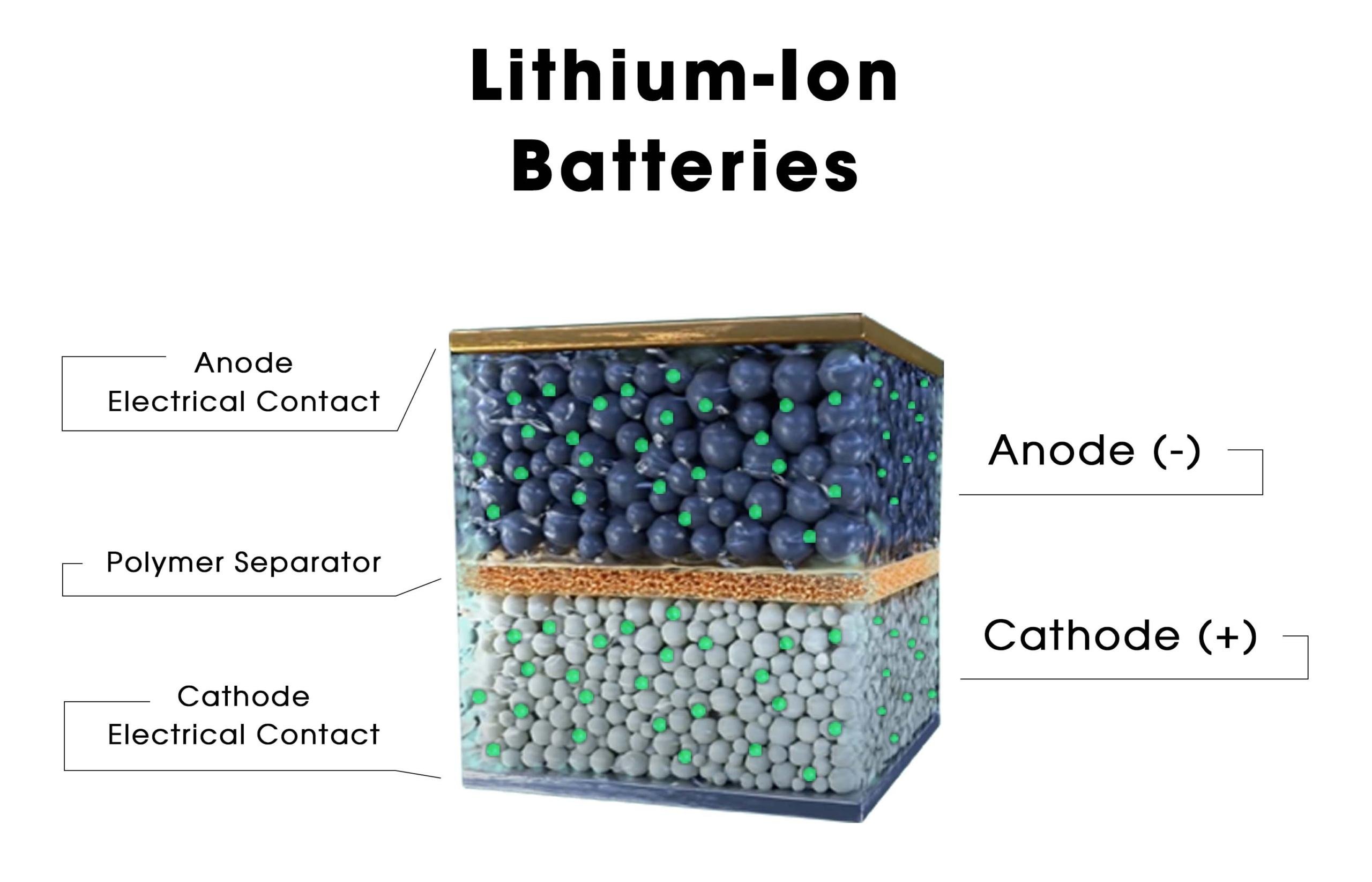
In halide electrolytes, ionic migration depends on coordination sites in the crystal lattice. Traditional designs often use octahedral (OCT-OCT) paths, where ions are tightly bound, limiting mobility. The LTOC design uses a tetrahedral (TET-TET) continuous channel, reducing migration resistance. This is similar to sulfides, which typically use TET paths for high conductivity. The inclusion of oxygen induces TET sites, enhancing performance.
LTOC achieves an ionic conductivity of 13.7 mS/cm at room temperature, surpassing traditional sulfide electrolytes and matching liquid electrolytes (e.g., 11.5 mS/cm for a typical liquid formulation). While sulfide electrolytes have reported up to 25 mS/cm, LTOC’s overall performance is impressive. It has an electrochemical window of 4.9V (potentially over 5V with optimization), ensuring high energy density. Compatibility with high-voltage cathodes like nickel-cobalt-manganese is excellent, and stability in air and moisture is better than pure sulfides or oxides.
Cycling performance is robust: 4,200 cycles at 3C with 75% capacity retention at room temperature, and over 2,000 cycles at -50°C with almost no capacity fade. These lab results show great potential, though industrialization may differ. Experiments used 80 MPa pressure, but the team suggests optimization could reduce this to 10 MPa or even 3–5 MPa for practicality.
A drawback is poor compatibility with lithium metal anodes, as halides can be reduced by lithium. Solutions include element doping or adding an interfacial protective layer (e.g., sulfide-halide buffers) to prevent direct reduction. This issue is manageable with engineering fixes.
Current solid-state battery designs all have trade-offs, like a “whack-a-mole” game—solving one problem often creates another. Commercialization depends on maximizing production benefits. Sulfides remain the most promising for now, but halides, including this dual-anion framework, could be competitive if performance, production-friendliness, and cost are optimized. This breakthrough highlights halides’ potential as a dark horse in the race.
We’ve slowed the pace and avoided jargon in this discussion. How is the listening experience? Feedback is welcome.