The upload frequency of videos has slowed down recently. Honestly, the quality has also declined somewhat. I want to apologize to everyone. Because most of my time has been spent on intense coding and debugging large models. Except for creativity and editing, my entire video workflow is powered by AI. AI is also the most important assistant in operating my website. I must keep up with the pace.
Elon Musk said in a recent interview that AI will cause more people to lose jobs, but at the same time it is creating tremendous prosperity. In this wave of AI, both countries and individuals must ensure they are not marginalized and do not become victims of the AI revolution.
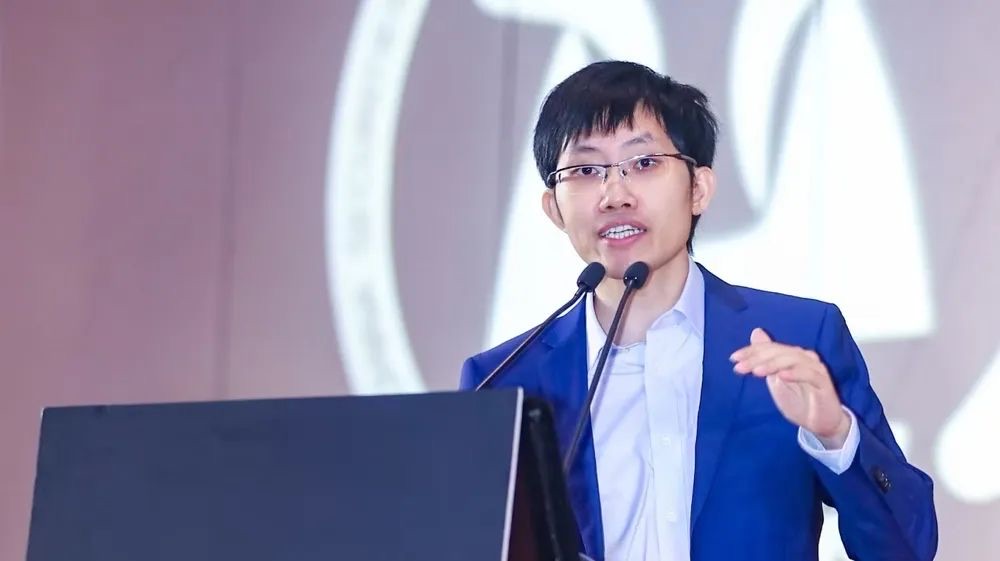
My channel mainly discusses politics, but I have also released a large number of videos on topics related to chips, AI, and electric vehicles. Looking back at my past predictions about AI, they have basically been accurate. For example, I predicted that the US would not be able to widen the gap with China in the AI revolution. When ChatGPT was at its peak, I clearly stated in a video that Google would use its ecosystem advantages to catch up with and even surpass OpenAI. Events in 2025 have proven my predictions, especially the huge technological shock caused by DeepSeek R1 during Chinese New Year, which completely confirmed my view on the AI competition between China and the US. All these videos can be found in my previous AI and Chips playlists. Everyone can go check the old videos to verify.
Of course, I am not trying to show off the accuracy of my predictions. Compared to technology, my prediction accuracy about the Bharat Empire and the clown king Modi is even higher.
The reason I am making this video is that DeepSeek has been very active recently. A paper signed by Liang Wenfeng was released, and the market is full of rumors that DeepSeek is about to launch version V4. The core selling point is extremely strong programming and code generation capabilities. Internal tests reportedly show that it has already surpassed the latest models from Claude and OpenAI in handling very long code context and complex engineering tasks. It may also be much cheaper, and DeepSeek will continue its open-source tradition, providing safe and reliable AI infrastructure for small and medium-sized countries, small and medium-sized enterprises, and individual users.
In my judgment, the credibility of these rumors is very high. February 17 is Chinese New Year, and DeepSeek should release a new product soon to show patriotic sentiment. This will greatly help it consolidate its infrastructure position in China.
Regarding model performance, I actually believe the performance gap between current top models is already extremely small. This is determined by technical principles. Spending crazy amounts of money will not create decisive advantages. Various companies keep refreshing benchmark scores, but in reality ordinary users feel almost nothing, and sometimes even find the AI has become dumber.
Many pieces of evidence are listed in the videos I shared on my tech channel. Whether it is Microsoft’s TTS service or Grok which I used to rely on most heavily, long-standing problems remain unfixed while new bugs are constantly introduced, seriously affecting my daily workflow. Recently I had to make up my mind to completely change my workflow, kicking Microsoft out entirely and marginalizing Grok.
From user feedback, after I switched TTS to the free Chinese open-source large model VoxCPM, the quality is better than both Microsoft and Google TTS. In my recent intense coding and high-intensity content production tests, I found that Google’s Gemini 3 indeed performs very well and Claude still maintains top-level code understanding, but that tiny performance improvement cannot free projects from the need for heavy human intervention.
On the contrary, thanks to its absolute price advantage, DeepSeek firmly remains my main AI assistant model. Every time I recharge DeepSeek, it feels very worthwhile. Sometimes I even worry that if this company goes bankrupt, where I would find a replacement, because it is simply too cheap.
It must be said that the only thing that can replace Chinese companies is other Chinese companies.
While experimenting with text-to-image workflows and conducting a large number of tests, I discovered that ByteDance’s Seedream is the model with the highest cost-performance ratio and the most suitable for production among all models. It is the first online AI model I can truly afford to use without worrying about cost and can use freely. Its semantic understanding and image quality are very worthwhile compared with expensive American AI services, and its response time is far ahead. Moreover, its pure text API has reached a level that can replace DeepSeek.

As a heavy AI user, after seeing American companies frantically release new models to refresh benchmark lists, the Stargate project buying up 40% of global memory causing shortages in the DIY market, and the valuations of tech giants like Nvidia continuously soaring, I am actually very curious about how this bubble will eventually end.
Take Musk’s xAI as an example. In the first 9 months of 2025 alone, this company burned 7.8 billion dollars. Because of its relatively loose content moderation, I included it in my workflow. However, after a whole year, it still hasn’t fixed the bug of residual Chinese characters in translations, nor can it correctly handle the conversion between basic English units like billion and million. Yet it has repeatedly refreshed benchmark scores and claimed to be the SOTA model. How will its valuation of 23 billion dollars ever be realized? I think for one-tenth of the price, hiring 20000 Indians to pretend to be AI in the backend would give better results. Or for one-tenth of the price, hire DeepSeek to release a special version for xAI and just slap the Grok label on it. That would be much more cost-effective.
Of course, the money it burned is still negligible compared with OpenAI and that massive Stargate project, along with the circular investment between it and Nvidia that mutually inflates performance figures. The bubble is even bigger. If it cannot maintain absolute leading advantage and produce an AI large model that completely crushes other companies, I believe it won’t be long before we see the collapse of its narrative logic.
I believe AI can indeed significantly improve social productivity, change many people’s life trajectories, and alter the international political landscape, but the winner will not necessarily be the US.
The recent surge in Google’s market value actually reflects the true nature of current AI very well. It has little to do with real artificial intelligence. The AGI that American companies have been hyping will not arrive in the short term, and the current technical path cannot achieve AGI either. Sam Altman, Elon Musk and others keep bragging simply to raise more funding.
The current essence of AI is still an advanced data retrieval and processing tool. In the end, it will come down to a competition of infrastructure, including electricity, networks, chips, and so on.
For Google, this is a historic victory. No one is hyping that OpenAI will defeat Google anymore. But for the US, this is simply catastrophic news.
If the essence of this AI revolution turns out to be the same as previous bubbles like blockchain and the metaverse, nothing more than concept hype, then when this bubble bursts, it will mark the end of American technological hegemony.
Returning to the topic of DeepSeek, if this company can still release top-tier large models without access to the latest Nvidia chips, and even surpass the US in certain key areas, it would mean the complete failure of America’s technology blockade against China.
From my daily usage perspective, my workflow has now become basically 100% domestic. Whether it is AI writing, translation, text-to-speech, text-to-image, or video editing, everything is Chinese products. DeepSeek, Qwen, VoxCPM, Seedream, CapCut—these products have won my workflow through market competition, making me willing to pay for them or spend time deploying and debugging them.

In just one year, my workflow went from mainly American products, to mixed usage, and now to completely domestic.
Of course, my current main working system is still macOS. However, if I completely switch to Huawei PCs and HarmonyOS, the experience is also excellent. The only issue is that Huawei has not released the mini host product I like. I don’t enjoy using laptops with external monitors, and I have suffered greatly from this on both Windows and macOS.
Now let’s talk about my prediction for DeepSeek V4. I believe it is related to Liang Wenfeng’s paper, solving some major difficulties in AI training. After being open-sourced, it will have a clear positive impact on the ecosystem and will receive praise. It will also make the US government unhappy because it heavily uses domestic chips, especially Huawei’s computing facilities. However, I remain conservative about whether it can recreate the shock of the DeepSeek Moment. I think this update from DeepSeek will be more significant for professionals, especially enterprises.
For individual users, if you are a programmer who frequently writes code, it will be very meaningful. If you just want a smarter AI assistant, I think you should not have very high expectations. The release of DeepSeek V4 this time will have more impact on the national competition level and industrial ecosystem level. Ordinary people only need to pay appropriate attention. It will not change your life.
At the end of the video, I want to tell the viewers of the channel that although AI has been overhyped and the bubble is huge, it is indeed a tool that can give ordinary people unimaginable productivity. It is still not very easy to use and can only create value in a few areas. But in the next 2 to 3 years, it will change the ecology of many industries and cause many people to lose jobs.
Perhaps the American AI bubble will burst or shrink, but adapting to the new production model, mastering and orchestrating AI skillfully to improve your workflow is still extremely necessary.
In 2026, I will highly automate parts of my work, such as website operations, with only light human intervention, and then share a real case with everyone. I will also try using AI to operate a YouTube channel. These experiences will be shared on the VoidHunzi channel. Viewers who are interested are welcome to follow.