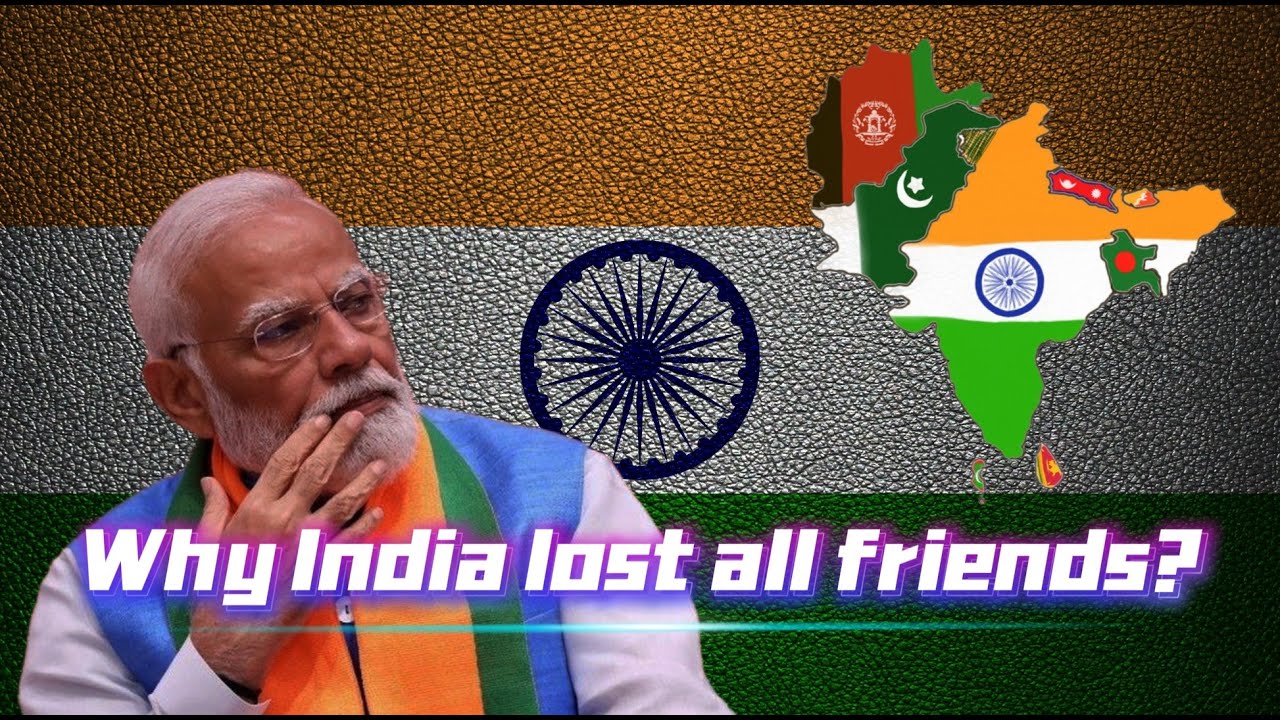
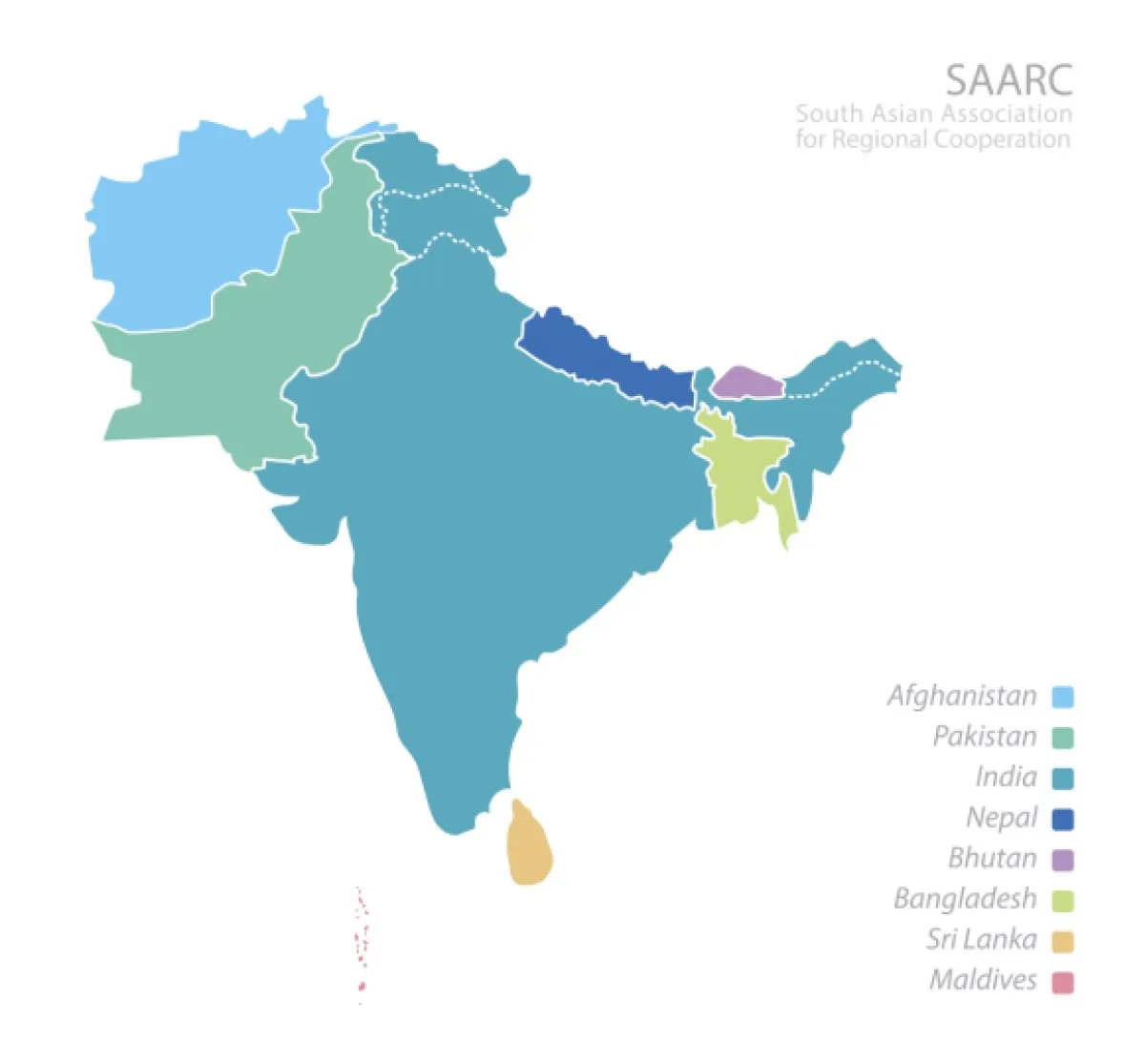
Before Modi took office, India was the dominant power in South Asia. It held the upper hand in conflicts with Pakistan. At that time, India could not only guide Bhutan’s foreign policy but also had strong influence over Nepal’s affairs. India played a decisive leading role in the South Asian Association for Regional Cooperation. Relations between Bangladesh and India were very close. Essentially, India had the final say in South Asian matters. After nearly twelve years of Modi’s rule, the situation in South Asia has completely changed. First, the Pakistani air force gained overwhelming superiority in large-scale engagements with India. It shot down multiple Indian frontline fighters, including Rafale and Su-30, with zero losses on its own side. As China continues to supply weapons and equipment, Pakistan will maintain air superiority over India after equipping PL-17 missiles and J-35 fighters.
This will exert strong pressure on India. Bhutan has advanced border negotiations with China. The two countries have resolved most border disputes. Nepal is accepting Chinese investment. Trade between the two countries continues to deepen. They are also planning to build a railway connecting them. The Maldives expelled Indian troops. Relations with China have continued to improve. Like the Maldives, Sri Lanka has become an important hub in the Belt and Road Initiative. Relations with China have rapidly deepened. As for Bangladesh, young people took to the streets and drove away former Prime Minister Hasina, seen as India’s proxy. Dr. Yunus leads the interim government, drawing clear boundaries with India while emphasizing independence and autonomy. Bangladesh has purchased warships and other weapons from China. It has cooperated with China to build multiple major infrastructure projects. Now, facing diplomatic blackmail and internal interference from the Modi government, Bangladesh has shown a tough stance and refuses to bow to India. In less than twelve years, how did Modi cause India to lose almost all its friends in South Asia and face unprecedented isolation? In this video, we will discuss this topic in detail.
To be honest, previous Indian governments liked to boast, but the Congress Party was a moderate national party. It originated before India’s independence and played an important role in the independence movement. The Congress Party was a secular party that refused to mobilize voters through religious identity. Its organizational structure was relatively loose, so it lacked combat effectiveness against the BJP. The BJP is a party established by the Indian fascist organization RSS. That organization aims to revive radical Hinduism and promotes a nonexistent ancient Bharat empire. Essentially, it is a poor imitation of European fascist organizations from the 1920s. It can be seen as a beggar’s version of the stormtroopers. Yes, this is not a metaphor. It is the real definition. In a country where hundreds of millions of people cannot eat enough, there are surprisingly many fools imitating stormtroopers. They carry sticks, conduct armed parades on the streets, hold rallies and demonstrations, and oppress other ethnic groups. In a normal country, the leaders of this organization would be immediately arrested and imprisoned for life. But in a society as ignorant as India’s, it somehow escaped government bans, grew and expanded, and eventually whitewashed itself through the BJP. It successively seized local and central power.
However, regimes that rely on populism to come to power have one flaw. They absolutely cannot show weakness externally. In other words, they must remain tough in conflicts with neighboring countries and cannot make concessions. Concessions would label them as weak and collapse the narrative for their believers. During his time ruling Gujarat, Modi fabricated the so-called Gujarat economic miracle through data falsification. But he also left a stain of shielding Hindus who persecuted Muslims. He was once sanctioned by the US government and barred from entry. The sanctions were lifted only after he was elected prime minister. After becoming prime minister, Modi naturally had to fulfill promises to RSS believers. He tolerated Hindus demolishing mosques and suppressed minority religious groups such as Muslims and Christians. To highlight his Hindu identity, he and his clown fans used Bharat to refer to India and changed the name at multiple major international occasions. Modi also passed a series of laws discriminating against Muslims, openly engaging in racial oppression. This intensified contradictions with Muslim countries. In border disputes with Pakistan, India always remained tough.
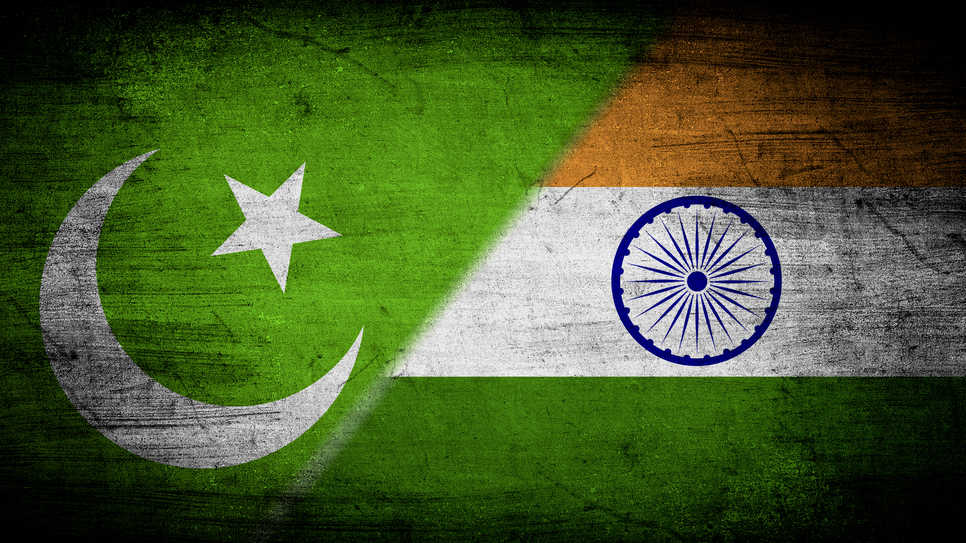
The two countries were pushed to the brink of war multiple times. Toward Nepal, India was even more overbearing, often acting like a big power and once imposing sanctions and blockades on Nepal. This caused Nepalese resentment toward India to continually rise. The hatred between Hindus and Muslims also gradually affected Bangladesh. Young Bangladeshis grew increasingly dissatisfied with India. They did not want their country to remain poor and backward like India. They hoped to introduce more Chinese capital and technology to escape India’s influence. China has invested in Bangladesh for a long time, building large amounts of infrastructure. This gave Bangladesh’s economy development support. Countries like Nepal, the Maldives, and Sri Lanka also saw that the Modi government likes to interfere in their internal affairs but cannot provide any substantial benefits. It is like someone going to a nightclub for entertainment, constantly making demands on the waitstaff, but having a wallet cleaner than their face.
The leaders of these countries have long grown impatient with such a hypocritical regime. Cooperating with China can build bridges, railways, ports, and airports for them, invest in local factories, and solve employment. Indians only hold empty promises, boasting everywhere that India is the world’s third strongest power, but in reality, they cannot provide any investment or loans. Moreover, India’s own industry and technology are very backward. It has not completed industrialization and fundamentally cannot provide industrial support or technology transfer externally. India is an extremely selfish country. It only wants to take advantages but is unwilling to give anything. The result of trusting India is like Sikkim, eventually being annexed and joining the largest Shit Hole country on earth. Note that Shit Hole is how multiple US politicians described India. This term was not invented by me.

Now is the information society. Young people in South Asian countries use Chinese-made phones. They can open the internet and download Chinese apps like TikTok. Many popular mobile games are developed by Chinese companies. Even on US social software, they can see real videos of China and India. They all know clearly that China is a clean modern industrial country, while India is a nation full of garbage and stench. Anyone with a normal mind wants win-win cooperation with China rather than being beggars with India and constantly guarding against being robbed by it. It should be said that India’s current situation in South Asia is the worst in history. But Indians do not need to be sad, because it will get worse in the future. Pakistani friends have already enjoyed the benefits of China’s advanced military technology, building national confidence in air battles. Countries like Bangladesh and Nepal have also enjoyed benefits from Chinese infrastructure and trade, activating economic development potential. In another ten years, they will enjoy more and more benefits. At that time, India will become increasingly unfamiliar in the hearts of people in these countries.
Yes, populism prevents Modi and the BJP from lowering their posture and treating neighboring countries as equals. When Indians bully neighboring countries with a big-power attitude and interfere in their internal affairs, they cannot give these countries enough benefits. The result is inevitably backlash from public opinion in those countries. India’s current problem is that hundreds of millions of its own people cannot eat enough. Environmental pollution is severe. Industrialization is not yet complete. Relations with all neighboring countries are bad. It also faces tripartite military pressure from Pakistan, China, and Bangladesh. Modi’s situation is very bad, but the situation his successor faces will be even worse than Modi’s.
Industry 4.0 and the AI revolution are unfolding in major countries like China and the US. India has fallen behind. The time left for Indians is running out. I do not know if this clown Modi stepping down will make India better, but I can be sure that as long as this clown remains in power one more day, India will take one step closer to the abyss. Jai Hind!